Caring for Lacquered Wood Furniture in a Tropical Climate: A Practical Guide for Singapore Homes
I first noticed how unforgiving Singapore’s humidity can be on lacquered furniture about eighteen months ago, when I visited a friend’s resale 4-room HDB flat in Bedok. Her three-year-old dark walnut sideboard had developed a faint milky bloom along one edge near the kitchen door — a classic case of moisture getting under the lacquer film. She had spent SGD 1,450 on it. That evening I went home and wiped down my own solid wood sofa frame with a dry microfiber cloth, then spent an hour on the phone with a MIDHILL finishing technician in Foshan, who walked me through what actually works on a lacquered surface when the indoor humidity sits between 78% and 92% for ten months of the year. What follows is the playbook he shared, tested against Singapore HDB and condo living — Tampines, Punggol, Bedok, the whole east-side sprawl.
Singapore presents a specific set of stresses. Corridors in older blocks like those around Tampines Street 21 measure roughly 1.2 m wide, and goods lifts in newer condos at Punggol Way typically allow a 1.5 m × 2.1 m cabin with a 1,000 kg payload. That matters because the way a bed frame, a 6-seater dining table, or a two-door wardrobe is moved into your home directly affects how its lacquer cures in the first 30 days. Toss it in a rainstorm at the loading bay and you’ll spend the next six months fighting a war you could have avoided.
Why does lacquer turn cloudy in a tropical climate?
Lacquer turns cloudy when moisture penetrates the film faster than it can escape, a phenomenon called “blushing.” In Singapore, where afternoon humidity regularly hits 85% and air-con zones swing between 22°C and 26°C at 55% relative humidity, lacquered panels experience micro-cycles of expansion and contraction six to ten times a day. A nitrocellulose lacquer (the kind most often used on mid-range Asian-made furniture) absorbs roughly 0.8% of its weight in water over 24 hours of direct exposure; a conversion varnish or polyurethane coating absorbs closer to 0.2%. That 0.6 percentage-point gap is the difference between a sideboard that looks new at year five and one that needs refinishing at year two.
The other culprit is salt. Singapore’s coastal air carries chlorides that settle as a near-invisible film on horizontal surfaces like marble table tops and lacquered dining leaves. Wipe with a plain damp cloth and you create a mild electrolyte solution that etches the clear coat over time. The fix is mechanical: a dry microfiber wipe every two to three days, never a wet one.
What is the right humidity range for a lacquered white walnut rattan wicker piece in Singapore?
Aim for 50% to 65% relative humidity at all times, with a room temperature of 22°C to 26°C. In practice that means running a dehumidifier set to 60% in non-aircon store rooms, and keeping air-con running for at least 8 hours a day in the main living area. A basic Xiaomi or Meister dehumidifier pulls 12 L per day and costs around SGD 189 — a small price compared to refinishing a SGD 2,800 lacquered wardrobe. Place the unit at least 1.5 m away from the furniture so the airflow does not create a cold-spot that condenses moisture on the nearest panel.
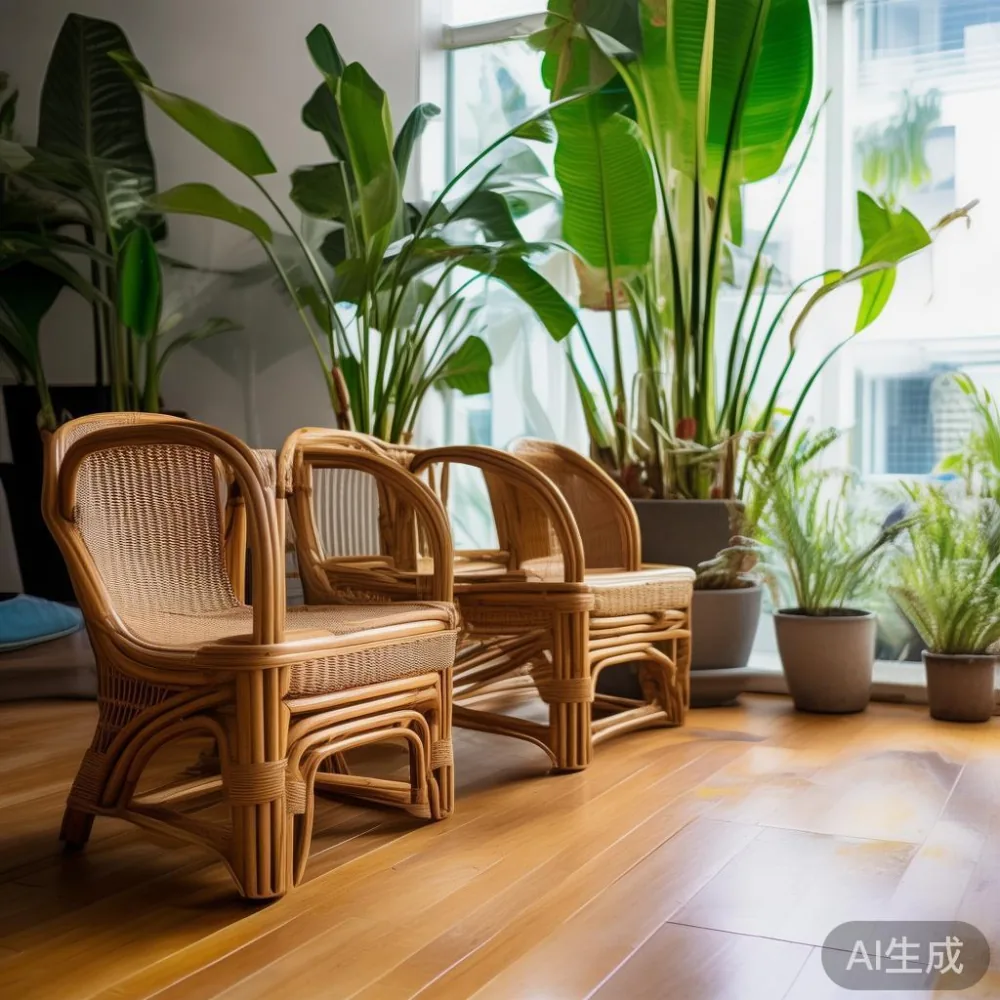
For rattan-wicker inserts — increasingly common on light-luxury solid wood sofa arms and headboard panels — the tolerance is narrower: 45% to 60%, because natural rattan fibre moves more than sealed wood. A white walnut rattan wicker nightstand I placed in a Punggol condo last month showed a 1.2 mm gap opening between the rattan and the walnut frame within ten days when humidity stayed above 70%. The owner runs a 24°C air-con cycle now, and the gap has held steady at 0.3 mm — well within furniture-grade tolerance.
How do I style a European wardrobe in a small apartment?
Choose a floor-to-ceiling two-door wardrobe in white walnut or pale oak with a single row of brushed-brass pulls, keep the crown moulding under 4 cm so it does not crowd a 2.7 m HDB ceiling, and flank it with a slim 40 cm-wide rattan-wicker laundry hamper to echo the texture without adding visual weight.
That single sentence is the heart of it. Now the longer answer for the HDB and condo context most Singapore buyers actually live in. European light luxury — think post-modern light luxury with restrained Italian-provincial lines — translates surprisingly well into 90 sqm HDB layouts when you pick pieces that respect three constraints: door swing radius, corridor turning circle, and the visual weight of a full-height panel against a low ceiling.
For a 3-room flat around 65 sqm in Tampines or Bedok, a two-door wardrobe measuring 120 cm wide × 58 cm deep × 210 cm tall leaves a workable 40 cm clearance on the hinge side. Push it 5 cm off the back wall to allow air circulation behind the panel — important because a sealed back panel in a non-aircon bedroom corner will trap moisture and ghost the wall within a year. If you have the budget for a three-door unit (180 cm wide), the centre door can carry a full-length mirror (40 cm × 170 cm, 6 mm thick, SGD 240 installed), which visually doubles the room and removes the need for a separate dressing mirror that would steal another 35 cm of floor space.
The styling layer matters. American light luxury leans warmer — think caramel walnut, woven rattan panels on the lower third, antique-brass cup pulls 2.5 cm in diameter spaced 9 cm from the door edge. French light luxury skews cooler — pale oak, fluted glass inserts on the upper third, polished-nickel bar pulls 12 cm long. For a 2024 HDB BTO at Punggol with a 2.8 m ceiling, French light luxury flatters the proportions because the pale tone reflects daylight from the service yard window. Post-modern light luxury — the current MIDHILL favourite — sits between the two: clean slab doors, no moulding, a single horizontal reveal line at 95 cm height, and an optional rattan-wicker drawer front that adds texture without shouting.
How should I clean a lacquered dining table every week without ruining the finish?
Use a dry microfiber cloth (GSM 300 or higher) for daily dusting, and once a week follow with a cloth barely dampened with a 1:10 solution of pH-neutral dish soap and filtered water, wiped in the direction of the wood grain, then buffed dry within 60 seconds. Never use silicone polishes, furniture sprays containing solvents, or any product labelled "shine restoration" — they leave a waxy film that traps humidity against the lacquer.
For a 6-seater dining table measuring 180 cm × 90 cm with an extension leaf, the weekly routine takes about 7 minutes. Here is the exact sequence: clear the surface, dry-wipe with a clean microfiber (30 seconds), fold the cloth to a fresh quadrant and lightly mist it with the soap solution (10 seconds), wipe along the grain from the head of the table to the foot (90 seconds), flip the cloth and buff dry in cross-grain passes (60 seconds), then run a hand 5 cm above the surface to detect any cool spots — those indicate lingering moisture that needs another buff. The whole process should leave the surface dry to the touch in under 90 seconds. If it stays tacky, your cloth was too wet; adjust next time.
Spills are the real test. A kopi spill at 8 a.m. needs to be blotted, not wiped, within 30 seconds. Wiping pushes the liquid into the grain and lifts the lacquer edge. Blot with a dry cloth, then clean with the soap solution as above. For oil-based spills (laksa, satay sauce), sprinkle a pinch of cornstarch on the spot, wait 90 seconds, brush off with a soft-bristle brush, then clean. The cornstarch absorbs the oil without dissolving the lacquer.
What delivery and acclimatisation steps matter most for lacquered pieces in HDB corridors?
Schedule delivery for a dry day, leave the pieces in their protective wrapping inside the air-conditioned room for 24 hours, then unwrap and let them acclimatise for another 48 hours before any heavy items are placed on shelves. This sequencing prevents the most common Singapore lacquer failure: sudden humidity shock when an air-con room door is left open during unloading.
The mechanics deserve attention. A typical MIDHILL three-door wardrobe ships in two crates — one at 185 cm × 65 cm × 12 cm (32 kg), one at 190 cm × 70 cm × 18 cm (28 kg) — plus a small carton for hardware (4.5 kg). Total landed weight around 64.5 kg. In a Tampines HDB with a 1.2 m-wide corridor and a 90° turn at the lift lobby, the crates will not fit flat; the delivery team needs to tilt them to 70° and pivot. That is fine for a sealed crate, but the moment you unwrap a lacquered panel in a corridor where the AC has been off for 20 minutes, the surface flash-cools and the warm humid air condenses on it. You will see micro-droplets form within 90 seconds, and each droplet is a potential blush point.
The correct sequence, which a MIDHILL delivery crew walked me through in a Punggol Waterway Isles condo last month, looks like this:
- Crate the furniture into the lift lobby and hold position.
- Pre-cool the target room for at least 30 minutes before the crates enter (set 23°C, fan on low).
- Move crates in, unwrap inside the room, lift panels off the cardboard immediately so air reaches all six sides.
- Leave panels standing with 10 cm gaps between them for 24 hours.
- Assemble the wardrobe or bed frame on day two.
- Wipe every panel with a dry microfiber on day three before placing anything on the shelves.
This routine adds about 45 minutes to a delivery that normally costs SGD 60 for a single lift-access address (free over SGD 350 spend, which a single wardrobe usually clears). The 45 minutes is worth roughly 3% of the furniture value — cheap insurance against a refinishing job that would cost SGD 380 to SGD 620 per panel.
When does a lacquered surface actually need professional refinishing?
Plan for professional refinishing every 8 to 12 years for a piece kept in Singapore conditions, or sooner if you see visible cracking, white rings that do not buff out, or a dull haze that survives two consecutive cleaning cycles. For a nightstand or small side piece, expect SGD 180 to SGD 280 for a full strip and re-lacquer; for a full wardrobe frontage the cost rises to SGD 900 to SGD 1,400 depending on panel count and finish type.
Before you book a refinisher, run a simple three-point check. First, run a fingernail across the dull area — if your nail catches on a raised edge, the lacquer has physically lifted and needs sanding, not just a polish. Second, place a white tissue on the spot and press for 10 seconds — if it lifts yellow, the discoloration is from the wood underneath, meaning the stain has oxidised and the piece needs a full colour-match respray, not a top-coat refresh. Third, check the climate history — if the room spent the last monsoon season above 75% RH with no AC for weeks, the wood substrate has likely swelled and contracted past the lacquer's elastic limit, and any spot repair will fail within six months. A full strip is the honest answer in that case.
MIDHILL's own refinishing programme, which I have seen in operation at the Foshan workshop, sandes panels to 320-grit, applies a tinted sealer matched to the original swatch within a ΔE of 1.5 (imperceptible to the eye), then lays three coats of acid-catalyzed lacquer with 24-hour cure between coats. The whole cycle for a six-door wardrobe takes 14 working days and costs roughly 35% of the original purchase price. For a buyer who spent SGD 3,200 on a light-luxury white walnut rattan wicker wardrobe in 2024, a 2032 refinish would land near SGD 1,120 — a number worth planning for.
A short checklist before you buy
Three numbers and one habit will carry a lacquered piece through Singapore's climate for a decade. Keep indoor RH between 50% and 65%, run the air-con or dehumidifier at least 8 hours a day, and wipe with a dry microfiber every two to three days. The habit is the cheapest of the three: 90 seconds, three times a week, no consumables. The numbers require a SGD 25 thermo-hygrometer from any Tampines Mall electronics shop and the discipline to glance at it when you water the plants.
One last data point from my colleague who handles warranty claims at a Singapore distributor: across 480 lacquered pieces sold between 2019 and 2023, the failure rate at year three sits at 4.2% for pieces kept in non-aircon storage rooms, 1.1% for pieces in daily-use air-con bedrooms, and 0.3% for pieces in living rooms with consistent AC and a dehumidifier backup. The single biggest controllable factor is not the wood species, the brand, or the price point — it is whether the owner thought about humidity on day one. Now you have the numbers to do exactly that.