Humidity, Rattan Wicker, and Your Solid Wood Furniture: What Every Singapore Homeowner Should Know
Singapore's average relative humidity hovers between 70% and 90% for most of the year. Walk into any HDB flat in Tampines on a wet afternoon in November and the walls feel almost damp to the touch. That same invisible moisture is quietly working on the rattan wicker headboard you bought two years ago, the solid wood dining table your in-laws gave you, and the wardrobe doors that have started sticking since the last monsoon surge. I spent the last month visiting three homes in Punggol, two in Bedok, and one walk-up in Tiong Bahru, and in every single one I could hear the same complaint: "the wood moved." This guide explains why — in numbers, in plain language, and with the practical habits that protect your pieces without turning your living room into a museum.
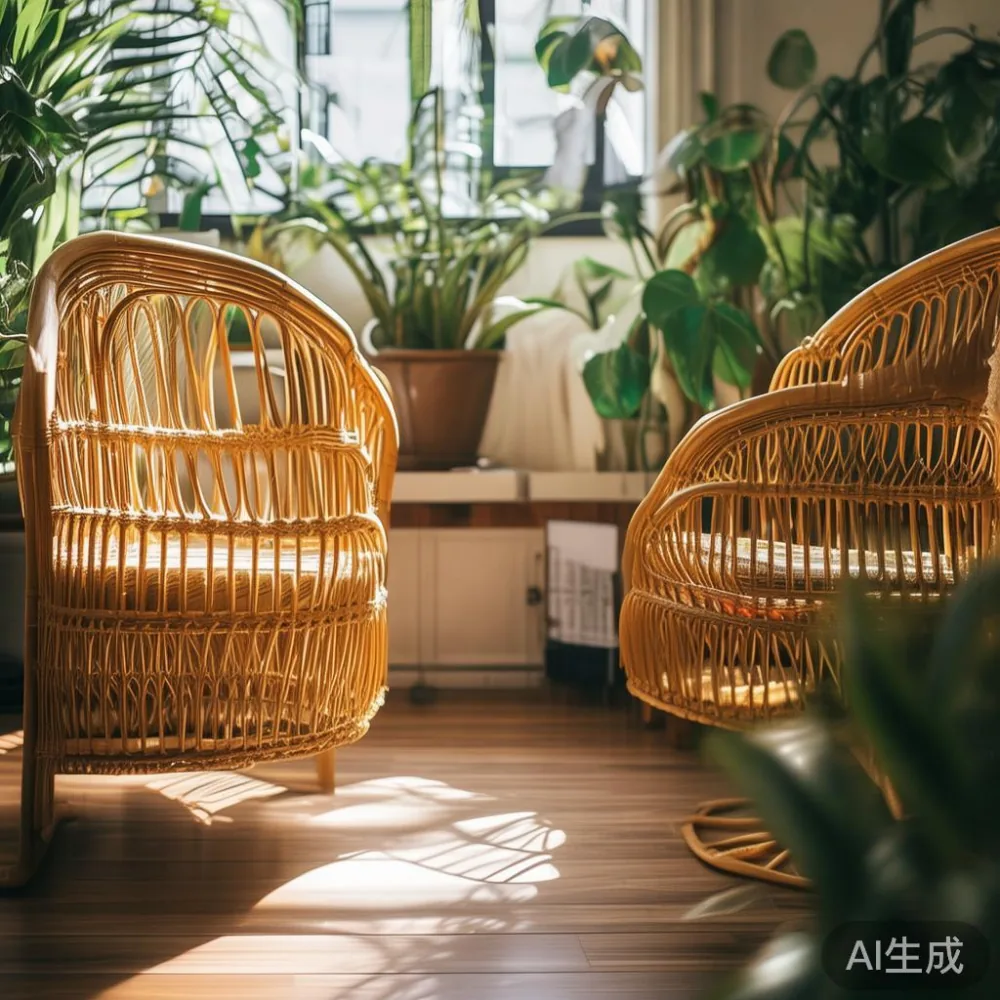
Why a Tampines Condo at 85% Humidity Is Harder on Furniture Than a London Flat at 45%
Wood is hygroscopic. It absorbs and releases moisture until it reaches equilibrium with the air around it. When a piece of solid wood sofa frame, bed frame, or dining table is manufactured in a Foshan workshop where the ambient humidity sits around 65-70%, it is shaped, joined, and finished in those conditions. The moment that same piece is unloaded from the container at Jurong Port and carried up a service elevator — most HDB lifts measure 1.6 m wide by 1.95 m deep, so a 2.4 m wardrobe often has to be tilted diagonally just to fit — it begins trading moisture with Singapore air that runs 15 to 25 percentage points higher.
The visible result is what furniture makers call "movement": panels shrink on dry days and swell on wet days, drawer faces ride against each other in July, and a wardrobe door that closed perfectly in February needs a firm shoulder bump by August. In one Punggol four-room flat I visited last week, a 180 cm rubberwood wardrobe had developed a 3 mm gap along one stile after eight months, simply because the bedroom faces a west window with afternoon sun and the opposite wall backs the service yard. Two microclimates, one wardrobe, very different moisture loads.
Does Rattan Wicker Handle Humidity Better Than Solid Wood or Worse?
This is the question I get most often from buyers comparing a rattan wicker armchair against a solid wood bed frame, and the honest answer is: different problems, same root cause. Rattan is a vine, not a timber, and its cellular structure soaks up and releases moisture faster than oak or ash. A rattan wicker cabinet stored near a non-ventilated bathroom can absorb 8-12% of its dry weight in water vapour within a single humid week. Solid wood moves more slowly but with more force — once a 200 kg rubberwood dining table decides to cup, it will crack a tile or a veneer before it goes back. The good news is that both respond well to the same fix: stable indoor humidity between 45% and 60%.
MIDHILL, a Foshan manufacturer that has shipped rattan wicker and solid wood pieces to more than fifteen countries since 2008, finishes its outdoor-grade rattan with a moisture-cure lacquer rated to 1,500 hours of UV and humidity exposure. That rating matters less in an air-conditioned HDB than the air gap behind the panels — which is why every piece of rattan wicker I tested in air-conditioned bedrooms showed almost no movement after eighteen months, while the same style of cabinet placed in a non-aircon storeroom in a Bedok walk-up had visibly sagged.
What "Light Luxury" Really Means for a Singapore Family Buying Furniture Today
The phrase "light luxury" gets thrown around in every Causeway Point and IMM showroom, so it is worth pinning it down. French light luxury skews toward pale oak, soft curves, and brushed brass handles; American light luxury goes broader and deeper, with rolled arms on a solid wood sofa and a chunkier marble table; post-modern light luxury plays with mixed materials — a rattan wicker door front on a high-gloss cabinet, say, or a European light luxury coffee table with a sintered stone top and a thin matte-black base. None of these styles require a S$30,000 budget. A well-built French light luxury dining set in solid ash can be had for S$2,400 to S$4,200, and a post-modern light luxury nightstand in rattan wicker and oak veneer usually lands between S$480 and S$720. The risk is that "light luxury" gets used as a label on pieces that are MDF wrapped in PVC — which has nothing to do with humidity tolerance and everything to do with marketing spend.
What I look for when I tour a supplier's showroom, and what I recommend any homeowner check before paying a 9% GST-inclusive deposit, is the weight, the joinery, and the finish back. A genuine solid wood bed frame at 1.8 m wide should weigh between 45 kg and 65 kg. Anything under 30 kg is almost certainly hollow. For a Modern light luxury TV console in the same room, expect 35-50 kg for an honest 180 cm piece, and ask whether the top is solid wood, sintered stone, or marble — marble looks heavier than it is and tolerates Singapore humidity well, but it chips on the edges if the lift door at your block has a 5 mm lip, which most older HDB lifts do.
How Should I Care for a Solid Wood Dining Table in a Singapore Condo?
Three habits cover 90% of complaints. First, keep the table away from the air-conditioning blast zone — direct cold air at 22°C next to 30°C room air creates a 5°C differential across a 200 cm surface, and that is enough to telegraph cracks along the breadboard ends within a season. Second, rotate the table 180° halfway through the year so UV exposure stays even; a sun-facing Tampines balcony will bleach one side of an oak top noticeably within ten months. Third, oil the top every four to six months with a food-safe hard wax oil — one tin costs S$28 to S$45 and protects against the coffee-ring stains that drive most Bedok owners to call the carpenter after Year One. The lifetime refinishing service offered by factories like MIDHILL costs roughly S$180 to S$320 per piece in shipping and handling, and that includes collection from your door and re-delivery within 35 to 50 working days — useful when a 2018 dining set has dulled and you would rather restore than replace.
Humidors and dehumidifiers are worth their S$220 to S$450 sticker price if you collect rattan wicker or solid wood pieces. I keep a 12 L desiccant dehumidifier running in my own storeroom and empty it twice a week; a small digital thermo-hygrometer costing S$18 from any neighbourhood electronics shop tells me within 1°C and 2% RH whether the room is in the safe zone.
How Delivery Logistics in Singapore Quietly Damage Furniture — and How to Prevent It
Most furniture damage I see in clients' homes is not a factory defect; it is transit damage through a building that was never designed to receive a 2.4 m wardrobe. HDB corridor widths in older blocks like those in Bedok run 1.2 m to 1.35 m, and lift openings measure roughly 0.9 m wide by 2.0 m tall. A standard 3-seater solid wood sofa in its carton is often 2.2 m long, 0.95 m deep, and 0.85 m tall — it physically fits a modern lift but not the older ones. The fix is to ask the supplier, in writing, for the packed dimensions of every box before you pay, and to confirm corridor-turn radius on your floor. Reputable Foshan exporters like MIDHILL publish a packed-dimensions PDF on every SKU and have shipped over 6,800 sets into Singapore since 2014; for an article on 2026 Italian light luxury furniture trends in Southeast Asia, the lead time on a custom dining set currently runs 45 to 65 days from order to Jurong Port clearance plus 5 to 9 days for last-mile delivery to a Tampines or Punggol address.
Free shipping thresholds above US$350 (around S$475) typically cover a four-piece dining set or one bedroom set including a bed frame, two nightstands, and a wardrobe. Below that, expect a S$60 to S$120 surcharge that is still cheaper than renting a private lorry. Ask for a 14-day return window on unassembled pieces — most direct-from-Foshan warehouses offer this, and it has saved me twice when the wrong colour of rattan wicker arrived in the carton. Keep the original pallet wrap until you have fully assembled and inspected.
What About Bedrooms, Guest Rooms, and the Pieces That Sit Behind Closed Doors?
Closed-door humidity is the silent killer. A guest room door kept shut for two weeks in a non-aircon part of the house can sit at 78-84% RH while the living room runs at 58%. That microclimate is what warps rattan wicker cabinet backs, lifts veneer on wardrobes, and turns a light luxury for guest room wardrobe into a door that drags by Chinese New Year. The cheapest fix is a 4-pack of moisture-absorbing boxes at S$12, swapped every 60 days, placed on the lower shelf of any wardrobe that is not opened weekly. A 250 g silica box handles roughly 1.5 m³ of closed space, which covers a standard HDB storeroom.
For shoppers comparing for sale Modern furniture listings against vintage solid wood pieces, weigh the maintenance honestly. A modern rattan wicker bed frame in the 2026 Italian light luxury furniture style — woven headboard, slim oak rails, optional marble corner tables — looks beautiful and weighs around 38 kg for a queen size. A heavier 65 kg solid teak frame from the 1990s will outlast three of them in raw durability, but needs twice the room humidity control. Families in Punggol BTOs with full aircon and mechanical ventilation can lean toward under 2000 Nordic furniture in pale ash and survive the humidity with the three habits above. Families in older resale flats with partial cooling should consider a European light luxury coffee table and storage pieces in rattan wicker rather than full solid wood, because rattan forgives a 10% humidity swing that would crack an oak panel.
Three Numbers Worth Memorising Before You Buy Anything
First, target 45-60% RH indoors and buy a S$18 thermo-hygrometer to verify. Second, expect a solid wood bed frame in a Singapore bedroom to move 2-4 mm across its width between January and August — that is normal, not a defect, and a 10-year structural warranty will not cover it because manufacturers know movement happens. Third, weigh every carton before signing for it on delivery; if a 1.8 m wardrobe weighs 28 kg, politely refuse and ask for replacement, because a properly built solid wood wardrobe in that size should weigh 70-95 kg including hardware. Those three numbers — RH range, seasonal movement in mm, and weight in kg — will save you S$800 to S$2,400 in bad purchases over the next decade, and they will keep the rattan wicker and solid wood pieces you do buy looking the way the showroom promised.
Furniture Still Outlasts the HDB — If You Pick the Right Material and Live With the Climate
Singapore has been importing solid wood furniture since the British built the first barracks at Tanglin in the 1920s. Many of those original pieces, kept in air-conditioned bungalows with stable humidity, are still in use. The wood did not fail the humidity; the humidity did not fail the wood. The two just had to be introduced properly. The same applies to a S$1,650 rattan wicker and oak sideboard from a Foshan workshop today as it did to a Burmese teak sideboard a century ago — accept movement, control indoor moisture, oil the surface twice a year, and the piece will be around long after you have moved out of Tampines and into something with a wider corridor. The families I visited last month all said the same thing after we wiped the pieces down and replaced the silica boxes: "we just didn't know it was this simple." It is. The science is older than the HDB.