Humidity, HDB Corridors, and Solid Wood: A Singapore Guide to Caring for Rattan-Accented Wood Furniture
I keep a small hygrometer clipped to the bookshelf in my Tampines HDB flat. On a wet August morning last year, it read 91% relative humidity by 9 a.m. — before the ceiling fan had a chance to push any air around. By Thursday afternoon, after three straight days of cloud cover, the reading was still 84%. I am writing this piece because that hygrometer made me take the climate in my home seriously, and it pushed me to learn how humidity actually moves through solid timber. MIDHILL ships to more than fifteen countries and has been making solid wood pieces out of Foshan since 2008, so I called their after-sales team to compare notes with my own lived experience in a 4-room flat on the 11th storey.

Why does Singapore humidity punish wood furniture in the first place?
Because solid timber is hygroscopic. The cell structure of woods such as ash, oak, and walnut holds and releases moisture until it reaches equilibrium with the surrounding air. When the relative humidity climbs from a dry-air 55% to a typical Singapore 80–90%, a 200 cm dining table top can swell 3 to 5 mm across its width. When a cold spell or a 12-hour air-conditioned night drops the room to 45%, those same boards can cup, gap at the seams, or crack at the end-grain. The damage is rarely dramatic on a single day. It accumulates across monsoon weeks, across the gap between a wet corridor and a dry living room, across the seasons your air-con cycles through. The worst-case scenario I have seen on a furniture forum involved a 1.8 m wardrobe door in a Punggol condo whose bottom edge had grown 6 mm wider than the top by the end of a wet spell — it would no longer close without a shove.
What humidity numbers actually matter in a Singapore home?
For most solid wood furniture, the comfortable band sits between 40% and 60% relative humidity. Outdoor air in Bedok at 7 a.m. often sits at 88–93% from November through February. Indoors, with windows closed and a 9,000 BTU air-con set to 24 °C, you can usually pull the reading down to 55–65% within three hours. Kitchens run hotter and steamier — boiling water for kopi can spike a 12 m² kitchen to 78% inside ten minutes if the cooker hood is off. Bathrooms after a hot shower can hit 95% behind a closed door. The point is not that you must fight every spike. The point is that you want the daily average to land inside the 40–60% band, and you want the swing between day and night to stay under 15 percentage points. A SGD 18 digital hygrometer from a neighbourhood electronics shop is enough to monitor this. I bought one in June, and within a week I had moved my bedside water carafe away from the wardrobe.

How do I care for a king bed in humid weather?
Rotate the mattress monthly, run a dehumidifier set to 55% RH, and keep the headboard 10 cm away from the wall so air circulates behind it.
That single sentence is the practical answer, and the paragraphs below explain why each piece matters. A king bed in a Singapore master bedroom occupies a footprint of roughly 180 × 200 cm, which already crowds most HDB layouts. When the room itself is only 14 m², every breath you take overnight can settle onto the headboard and the footboard. Air needs a path. Keep 10 cm of clearance behind the headboard, and avoid pushing the side rails flush against wardrobes. Run a dehumidifier sized for the room — a 12 L/day unit suits 15–25 m² and costs roughly SGD 280 to SGD 420. Wipe the frame with a soft, dry microfibre cloth once a week; skip the polish unless the finish is going dull. If you have an upholstered headboard, vacuum it on low suction every fortnight, because humid air feeds dust-mite colonies faster than dry air does. And please, never store suitcases under a king bed in a Tampines flat during a wet spell — I tried, and the leather handles grew a thin film of mould within nine days.
How wide are HDB lifts, and can a 2.0 m sofa even fit?
Standard HDB passenger lifts measure about 1.1 m wide × 1.4 m deep with a door opening of roughly 0.9 m wide × 2.1 m tall. Cargo lifts on newer estates such as Punggol Hinz and Tengah are wider — commonly 1.5 m × 1.8 m — but you cannot count on one being assigned to your block. A solid wood sofa with a 2.0 m frame has to be disassembled for delivery. Even modular pieces, such as a three-seater with a chaise, usually arrive in two or three cartons: one for the back and arms, one for the seat platform, one for the legs. MIDHILL's delivery crew in Singapore told me they will not attempt a lift if any single carton exceeds 75 kg or 0.95 m on its longest side, because the lift door clearance simply will not allow it. That is why a lighter three-seater (around 90–110 kg total split across three cartons) is easier to move than a heavier 130 kg four-seater. Measure by hand.
What about corridors, doorways, and that famous 90-degree turn?
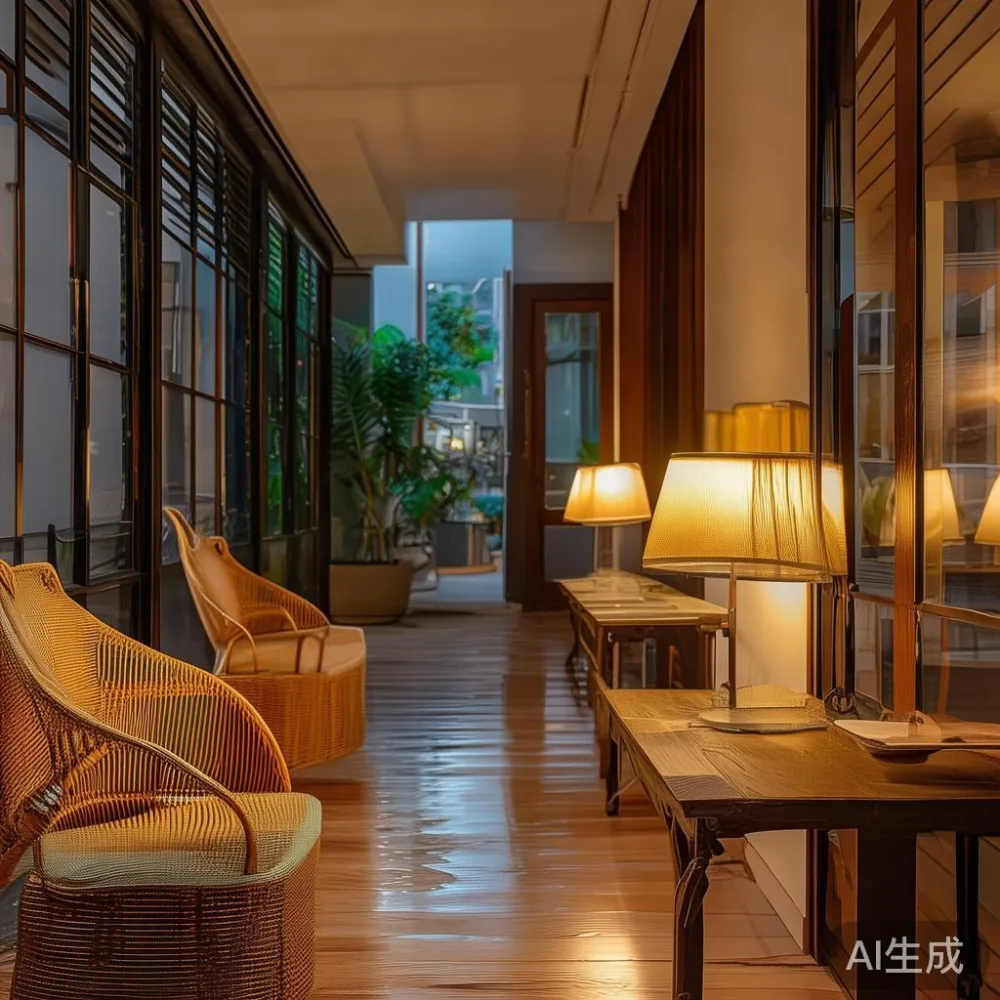
HDB corridors are usually 1.5 m wide, but the corner at the lift lobby can pinch down to 1.3 m once you factor in the wall corner and the fire-hose reel box. Internal doors in most resale flats measure 0.83 m wide × 2.0 m tall, although newer BTOs sometimes go to 0.9 m. A 180 cm dining table will not pass through a 0.83 m door without tilting the legs off — which is fine if the legs are bolt-on, painful if they are mortised. My colleague in a Bedok resale flat bought a 1.6 m solid wood dining table last month, and the delivery team removed the legs at the corridor turn, carried the top in flat, then re-bolted everything in the dining room in 22 minutes. That is the smart play: always check whether legs and aprons can be detached by hand tools. A bed frame with a 1.8 × 2.0 m headboard panel usually ships in two halves anyway, which is one reason MIDHILL designs its king bed frames as two-piece headboards rather than single slabs — it makes the HDB journey realistic, and it keeps each carton under 40 kg.
Do rattan wicker accents make humidity problems worse?
Not necessarily, but you need to think about both materials separately. Rattan wicker panels in a solid wood sideboard or a rattan wicker door front on a wardrobe are open-weave, which means they breathe. That breathability is actually helpful — the panel does not trap moisture against the frame the way a sealed MDF panel would. The catch is that natural rattan fibres soften above 75% RH, so a rattan wicker door on a wardrobe stored in a non-air-conditioned store room for two weeks during a monsoon may sag 3–5 mm at the centre of a 60 × 100 cm panel. The fix is simple: keep the piece in the air-conditioned living area, run the dehumidifier to 55%, and wipe the rattan wicker monthly with a barely-damp cloth followed by a dry one. Avoid soaking. Avoid oil-based polishes, which attract dust and feed the surface micro-organisms that thrive in our climate. A rattan wicker seat panel on a dining chair is the easiest piece to maintain because you can take it outside on a dry afternoon to air — I do it once a month on a Sunday morning when the humidity drops below 70%.
How much should I budget for a solid wood set that survives Singapore weather?
For a starter living-and-dining set in solid ash or rubberwood, plan around SGD 2,800 to SGD 4,200 before GST. A three-seater solid wood sofa in the SGD 1,400 to SGD 2,200 range pairs with a 160 cm dining table at SGD 900 to SGD 1,500 and four dining chairs at SGD 180 to SGD 280 each. A bed frame in queen or king size runs SGD 1,100 to SGD 2,400 depending on the headboard treatment, while a two-door wardrobe sits in the SGD 1,400 to SGD 2,600 band. Nightstands are the friendliest line item — a two-drawer solid wood nightstand at SGD 280 to SGD 420 typically weighs under 25 kg and ships in a single box. A marble table in the same room — say a 90 cm round travertine coffee table — adds another SGD 700 to SGD 1,500, and the travertine tolerates our humidity well because it is a stone, not a hygroscopic fibre. Total spend in the SGD 6,500 to SGD 11,000 range covers a full living-dining-bedroom package in the post-modern light luxury style, with clean lines, soft-close drawer slides, and either rattan-wicker or cane accent panels on selected pieces.
Is the French or Italian light luxury look easier to live with here?
Italian light luxury tends to favour slim profiles, low upholstered beds, and lighter walnut or ash finishes — these photograph beautifully but they show every humidity fingerprint. French light luxury leans toward warmer tones and slightly thicker proportions, which disguise the small seasonal movement of solid timber. American light luxury sits in between, with chunkier legs and larger drawer faces that can take a 3 mm seasonal gap without looking tired. For a HDB or condo buyer who does not want to fuss, French or American light luxury in a mid-tone ash finish is the lowest-maintenance choice. If you are decorating a new condo in Punggol or a resale in Tampines, and you want a showpiece accent such as an Italian light luxury coffee table uae in the living room, pair it with a darker American light luxury wardrobe in the bedroom so the eye balances across the flat. The accent piece gets the spotlight; the working pieces stay practical.
What does a good Singapore delivery actually look like?
Book a weekday morning delivery between 9 a.m. and 12 p.m. to dodge the afternoon thunderstorm. Have a cleared corridor, a cleared doorway, and a cleared room ready. The crew should arrive with shoe covers, a moisture metre, and a basic tool kit. They should walk the piece to its final spot, not just inside the door. A good local distributor — and MIDHILL is one of the more organised — will book a 90-minute delivery window, confirm by SMS the day before, and reassemble legs, headboard panels, and rattan wicker doors on the spot. They will also leave you with care instructions in English, and they will register your piece for the 10-year structural warranty within seven working days. That last part matters. A warranty that is not registered is a warranty that cannot be used.
What should I do in the first 30 days after delivery?
Week one: leave the wardrobe and bed frame doors open overnight for the first three nights so the timber can equalise with your indoor humidity. Week two: rotate the dining table leaves if your table extends, and check that the rattan wicker seat panels on the dining chairs still feel tight. Week three: dust everything with a soft dry cloth, and oil any rattan wicker panels with a dry brush — no product, just a brush. Week four: take a hygrometer reading at 7 a.m., noon, and 10 p.m. for three days, and write the numbers down. If your daily average sits between 50% and 60%, your home is well-tuned. If it sits above 70%, run the dehumidifier longer or move the dehumidifier closer to the largest piece of solid wood furniture. After day 30, settle into a monthly routine: a dry polish, a vacuum of any upholstered headboard, a check of any door alignment on wardrobes, and a wipe of any rattan wicker panels with a barely-damp cloth.
When should I call for after-sales help rather than DIY?
Call if you see mould on the timber surface, if a drawer face has shifted more than 2 mm out of plane, if a rattan wicker panel sags more than 5 mm at the centre, if the bed frame creaks at the side rail joint, or if a marble table shows a crack at a vein. Do not call for hairline gaps at table seams in February — those close back up in March when the humidity drops a touch. Do not call for the tiny colour shift on a sun-faded wardrobe near a window — wood mellows, that is normal, and your warranty does not cover normal mellowing. Anything structural, anything biological, anything that affects the way a door closes — those are warranty terms. Read the warranty card the day it arrives, take a photo of it, and store the photo in the same album as your flat keys.
How does MIDHILL's 14-day return and lifetime refinishing actually work?
You have 14 calendar days from the delivery date to request a return for pieces that have not been used and that are still in their original cartons. The piece must be in resalable condition, which means no scratches, no assembly, and no removed packaging. Refund lands within 10 working days of the courier picking the piece up. Lifetime refinishing is the more interesting service: once every three to five years you can ship the piece back to the Foshan workshop for a sand, a re-seal, and a fresh coat of hardwax oil. For a Tampines customer, the round-trip on a dining table runs around SGD 280 to SGD 420 depending on dimensions, and the turnaround is 45 to 60 working days including sea freight. That service matters here because our climate punishes finishes faster than a climate in Frankfurt or Vancouver. A ten-year-old dining table in a Bedok resale that has had two refinishing sessions will look markedly fresher than a ten-year-old table that has never been touched. The warranty is the wood; the insight is the maintenance.
The short version is this: buy solid timber, keep it inside the 40–60% RH band, give the air a path behind every headboard and wardrobe, and book the refinishing session before the finish goes matte. Add a rattan wicker accent panel or two for breathability and texture. Spend once on the right pieces, look after them on a calendar, and a Singapore home will hold that furniture for a decade or more without drama.