What Actually Drives the Price of Solid Wood Furniture
Last month I visited a Tampines HDB flat with a 1.2 m lift door and a corridor that tapered to roughly 1.1 m at the corners. My colleague had just bought a solid wood dining table advertised at SGD 899 online. When the two delivery men arrived, the box would not fit through the lift. They tried the service staircase, which is fine for mattresses and not for a 1.6 m rectangular top. The buyer ended up paying an extra SGD 180 for a smaller side-table return, a third-party carpenter to trim the legs by 8 cm, and another SGD 120 to rent a van with a wider tail lift. The original 899-dollar table became a 1,199-dollar lesson in why solid wood furniture is priced the way it is.

Pricing in this category is a stack of quiet decisions: which tree, how dry, how thick, how joined, how finished, and how it gets to your floor in Punggol or Bedok. Below I break each layer open, the way I would explain it to a customer standing in a showroom, with concrete numbers and a few Singapore-specific traps I have watched real buyers fall into.
1. Wood species: the single largest line item
If you strip everything else away, the species of timber accounts for roughly 35–55% of what you pay on a solid wood sofa frame, bed frame, dining table, or wardrobe. Rubberwood (hevea), the workhorse of many Foshan factories, runs at about SGD 6–9 per board foot as a kiln-dried blank. White oak sits closer to SGD 18–28. North American ash, walnut, and beech sit between those two. Teak from sustainable plantations in Southeast Asia has crossed SGD 35 a board foot in 2025 and is the reason a six-seater teak dining table crosses the SGD 4,800 mark before any labour is counted.
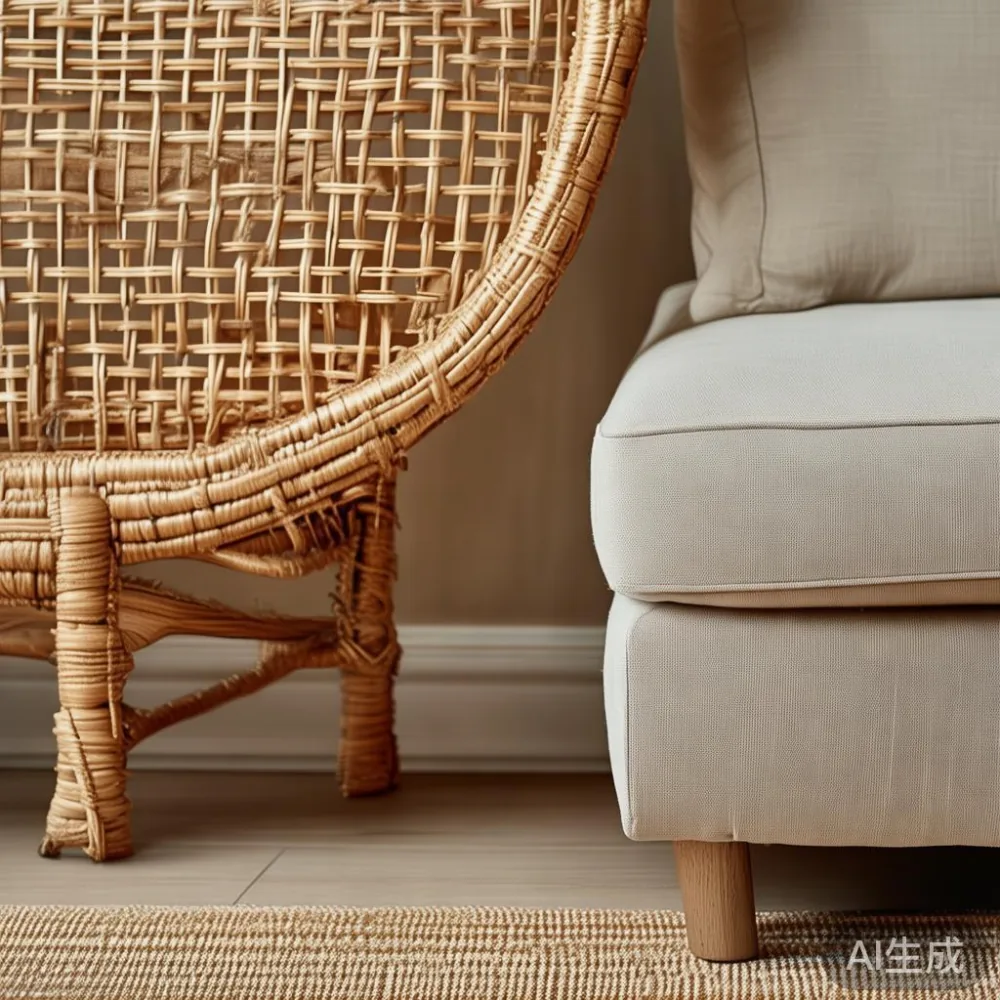
MIDHILL, a Foshan-based maker that has shipped solid wood and rattan wicker pieces to more than 15 countries since 2008, mostly works in rubberwood and ash because the price-to-stability ratio suits HDB buyers who want a 1.8 m wardrobe that does not rack after three monsoons. The point is not that one species is universally better; it is that the species line on a quotation is the single biggest swing factor between an SGD 899 dining table and an SGD 3,200 one.
If you see a solid wood bed frame advertised under SGD 600 for a queen size, the species is either rubberwood, a fast-grown pine, or a mix with engineered panels hidden inside the drawer bases. None of those is dishonest, but none of them will behave like an SGD 1,400 ash frame in your Tampines flat during a humid week in April.
2. Moisture content and the kiln schedule you never see
Sawyers cut a board at 60–80% moisture content. Furniture cannot. For tropical Singapore, the safe target for a solid wood sofa or dining table is 8–12%. Hitting it cheaply means air-drying for months, then a short kiln cycle that leaves the core a little wetter than the surface. Hitting it properly means a 30–45 day kiln schedule with weight checks at 2%, and a conditioning chamber where boards sit for another two weeks to equalise.
The difference shows up about a year after delivery. The cheap-cycle piece cups on the tabletop, the drawer fronts on the wardrobe stop lining up by 2–3 mm, and the nightstand wobbles because one leg shrank more than the other. A properly conditioned board costs SGD 1.5–3 per board foot more at the factory gate, and the entire downstream warranty risk shifts with it. When MIDHILL quotes a 10-year structural warranty, that schedule is the part of the business that costs money.
Ask any factory for the kiln schedule and the moisture meter reading on the day of packing. If the answer is vague, you are paying for air.
3. Joinery: mortise-and-tenon versus bolt-and-nut
Open any warehouse side panel on a quality piece and you will see wooden tenons driven into mortises, locked by dowels or wedges, and sometimes glued. Open a budget piece and you will see metal brackets, corner braces, cam locks, or a row of confirmat screws every 12 cm. Both hold a wardrobe on rails together on day one. They behave very differently in year eight.
Mortise-and-tenon joints in ash or rubberwood cost roughly SGD 25–45 per joint once you count machine time, sanding, and inspection. A bolted corner costs about SGD 4–8. On a four-poster bed frame with eight major joints, that gap alone is SGD 160–300. It is why a queen-size solid wood bed frame with real joinery starts around SGD 1,100–1,400 rather than SGD 700.
If you run your finger inside a drawer and feel the roughness of a stapled MDF back, you are not looking at the same product as a piece with a 9 mm solid wood drawer back, dovetailed sides, and full-extension soft-close runners.
4. Surface finish: lacquer, oil, or paint, and how it touches your skin
Finish is roughly 8–14% of the price, and it is the layer you actually feel. A closed-pore NC lacquer on a dining table costs less, builds a hard plastic-like film, and resists a wet glass of cold water for around 30 minutes. An open-pore oil or hard-wax finish costs more, lets the wood breathe, and needs a re-oil every 12–18 months in a Singapore condo where the afternoon sun hits the table from 2 pm to 5 pm.
Then there is the Italian light luxury rubberwood fabric care angle that almost nobody talks about. The phrase sounds like marketing, but it points at a real cluster of choices: water-based Italian coatings, low-yellowing primers, a sealer that does not block the rubberwood pores, and fabric treatments that resist the dye transfer from indigo jeans. A factory that runs that cluster charges SGD 60–120 per square metre of finished surface, which is about double a generic nitro finish.
On a marble table, the same logic applies: a sealed Italian resin finish costs more than a wax, and a honed top costs more than a polished one because of the extra polishing step. Buyers who wipe the table with a damp cloth every day will wear through a cheap wax in two years and through a proper seal in five to seven.
5. Hardware, fabric, and the parts you do not see in the photos
A solid wood sofa can have a 100% rubberwood frame and still fail because the suspension is webbing, the foam is 18-density, and the fabric is a 200 gsm polyester. A better-priced one with the same frame will use 8-gauge sinuous springs, 30-density foam wrapped in 200 gsm down-proof fabric, and a 380 gsm performance cover with a Martindale rub count above 30,000. None of that is visible in the showroom photo, and all of it is on the price tag.
Count the savings: sinuous springs add roughly SGD 60–110 per seat, 30-density foam over 22-density adds SGD 25–45, and a 380 gsm performance cover over a 200 gsm basic adds SGD 40–80 per metre. On a three-seater sofa, the gap between a budget spec and a respectable spec is SGD 350–700 before the frame is even priced.
The same logic applies to a nightstand. The drawer runners are either a SGD 4 roller slide that fails at 8,000 openings or a SGD 14 soft-close slide that survives 80,000. The hinge on the door is either an SGD 1.20 clip-on or an SGD 4.50 Blum with a 200,000-cycle rating. Multiply across a six-door wardrobe and you have a SGD 220 gap on hardware alone.
How do I choose a rattan furniture for a HDB living room?
Pick a rattan or rattan-wicker piece that pairs a solid wood frame with a hand-woven skin, fits your lift door of 0.9–1.2 m wide by 2.1 m tall, and arrives with a moisture reading between 8% and 12% so it does not crack in your air-conditioned living room.
That one sentence is the short answer. Now the wider setup. Most HDB lift doors in Singapore measure about 0.9 m wide and 2.1 m tall, and the corridor width on a typical floor plate is 1.2–1.5 m. A rattan armchair with a frame width under 75 cm and a packed height under 1.9 m will go in without drama. Anything with a fully assembled rattan headboard taller than 2.0 m will not, because the lift door header sits at roughly 2.05 m and the cabin ceiling is often lower.
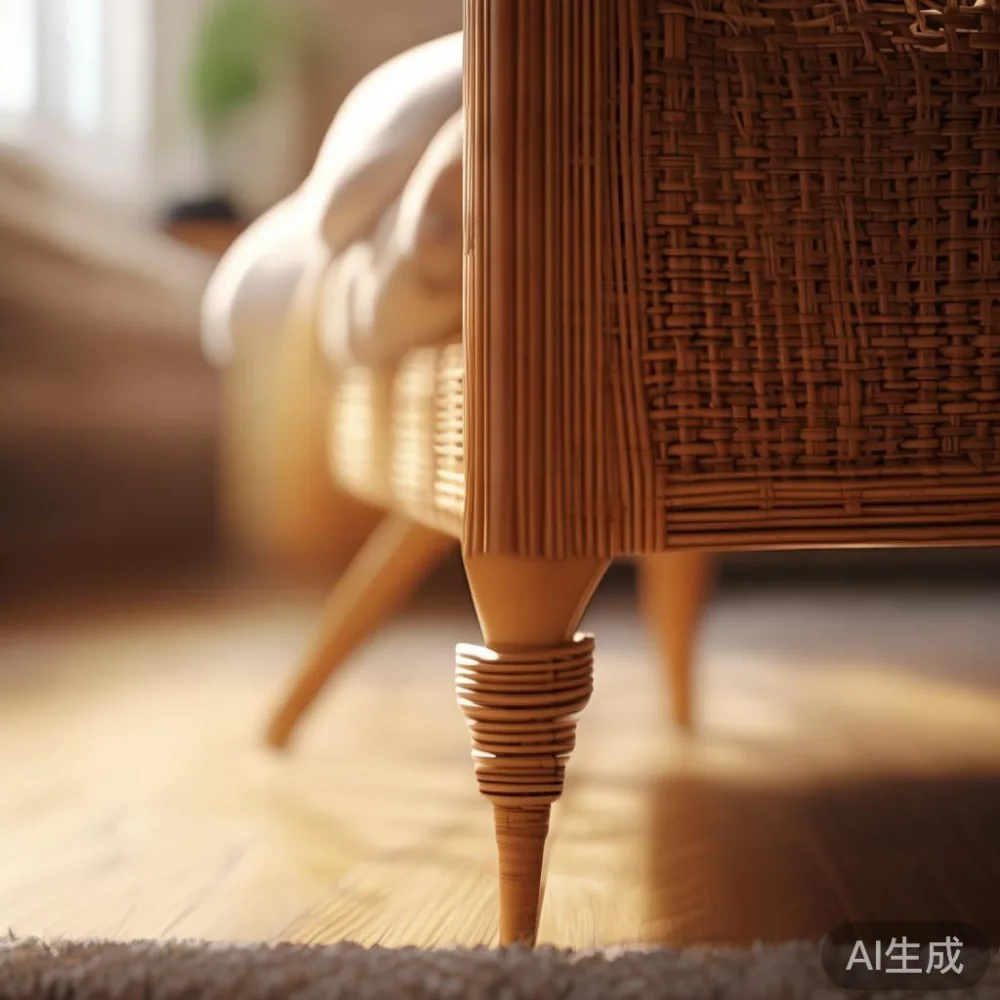
For a rattan-wicker dining chair, check three things before you pay: the inner wood species, the joinery under the seat, and the weaving tension. A good rattan-wicker chair uses kiln-dried rubberwood or ash for the four legs and the corner blocks, mortise-and-tenon joints at the seat rails, and a hand-woven rattan skin with no visible glue line at the corners. A budget version uses a plywood seat, click-joint corners, and a peel-wrapped rattan look that will start flaking in 18 months. The price gap on two chairs that look identical in a product shot is roughly SGD 90–140 per chair, which is the cost of the frame inside the weave.
If your living room tile is dark grey and your sofa is light grey, a natural honey rattan-wicker armchair will warm the bridge between them without a separate accent chair. If the room is small (under 14 sqm), skip the rattan-wicker armchair and pick a rattan-wicker side chair under 60 cm wide, because the visual weight of a full armchair will crowd the layout.
6. Logistics, GST, and the Singapore-specific layer nobody budgets for
Most Foshan factories, MIDHILL included, quote either FOB Shenzhen or DDP Singapore. DDP looks higher on paper but folds in 9% GST, sea freight, customs clearance, and a one-driver delivery to your door. For an SGD 2,400 dining table, that DDP-versus-FOB gap is roughly SGD 280–420 depending on the freight rate that month.
Inside Singapore, the hidden line items are the lift-door move, the corridor turn, the parking coupon at your HDB, and any staircase carry. A standard delivery for one bulky item starts around SGD 30–60 for the first 10 kg, then SGD 1–3 per additional kilogram. A 78 kg solid wood dining table plus packaging easily lands at SGD 110–180 of last-mile cost. If the item needs a staircase carry because the lift is out, add SGD 80–150 per floor. For condos in Punggol with basement loading bays that close at 5 pm, the second-attempt fee is typically SGD 60.
Free-shipping thresholds, like the US$350 (around SGD 475) one MIDHILL runs, only work if the items ship together and clear customs in one consignment. Splitting an SGD 800 order into two shipments to dodge a delay usually costs more than waiting.
7. Warranty, returns, and the lifetime refinishing clause
A 10-year structural warranty is only as good as the inspection that backs it. A good factory quotes a warranty that covers joint failure and spring sag, not surface wear. A 14-day return window is a useful sanity check, but it almost never covers freight both ways on a heavy item, so read the line about return shipping before you sign the delivery order.
Lifetime refinishing is rarer than the marketing makes it sound. Refinishing a dining table top costs roughly SGD 18–35 per square metre of sandable surface and another SGD 60–120 per square metre of new finish. On a 1.6 m by 0.9 m top, that is SGD 250–500 per round. A factory that offers it without an itemised quote is absorbing real cost and betting you will use it once every 8–12 years, which is the realistic number for a Singapore home.
8. Reading a quotation like a specialist, not a shopper
Three quick rules I use when a quotation lands in front of me:
Rule one: the line that names the species and the moisture target is the one you read twice. If it says "solid wood" without naming rubberwood, ash, oak, or walnut, ask. "Solid wood" is not a species.
Rule two: the hardware line should say a brand or a spec, not just "soft-close". Blum, Salice, and DTC are common. "Soft-close" alone is a vibe.
Rule three: the finish line should name the system. "Italian light luxury rubberwood fabric care" is a real cluster of choices, but only if the factory can tell you the sealer brand and the topcoat sheen level. French light luxury typically points at a high-build, multi-coat finish with hand-sanding between layers. American light luxury tends toward a more matte, low-sheen, oil-modified surface. Post-modern light luxury sits in between, often with a tinted sealer that warms the timber without masking the grain. None of these labels means anything if the quotation does not anchor them to a sheen level (10–60 gloss units) and a rub count (above 20,000 cycles for a dining table).
9. A realistic budget for a HDB three-bedroom in 2025
If you are furnishing a new BTO in Tampines or a resale in Bedok and you want a coherent solid wood set, here is a budget envelope that has held up across the last 30 quotations I have walked through with buyers:
Solid wood bed frame (queen), ash or rubberwood, mortise-and-tenon: SGD 1,200–1,800. Solid wood wardrobe, 1.8 m to 2.4 m wide, ash or rubberwood, with soft-close hinges: SGD 2,200–3,600. Nightstand pair: SGD 600–1,000. Dining table, six-seater, ash or rubberwood with a sinuous-spring stretcher: SGD 1,800–2,800. Dining chairs, set of six, with woven rattan-wicker seats and rubberwood frames: SGD 1,200–2,100. Solid wood sofa, three-seater, with sinuous springs and a 380 gsm cover: SGD 2,400–4,200. Marble table accent piece, sintered stone or sealed marble top on a rubberwood base: SGD 900–1,800.
Add 9% GST, DDP freight, and one staircase-carry allowance, and the realistic total for a full solid wood set sits between SGD 11,000 and SGD 18,000 delivered, with the upper end covering teak or white oak and the lower end covering rubberwood with a competent finish.
10. The honest bottom line
The price of solid wood furniture is a stack of choices you mostly do not see in the showroom: species, moisture, joinery, finish, hardware, hardware cycles, fabric weight, fabric rub count, frame thickness, drawer construction, packaging density, freight mode, customs route, lift-door width, and parking coupon. The piece on the showroom floor is the visible part of a stack roughly ten layers deep.
If you buy the cheapest solid wood dining table in the showroom, you are not buying a bad product. You are buying a different stack of choices, and the stack will show you its seams in months three, eight, and fifteen. If you buy the most expensive, you are paying for the top of that stack, and the top often pays you back over a decade. The right answer for most HDB and condo buyers sits in the middle band, where rubberwood meets ash, mortise-and-tenon meets soft-close, and rattan-wicker seating lifts a room without breaking the freight budget. That middle band is where the long-lived print begins, and it is the band worth asking your supplier about before you swipe the card.