Purchasing Solid Wood Furniture in Singapore: Price Factors Guide
Last month I visited a 4-room HDB flat in Tampines with a buyer who was staring at two nearly identical-looking dining tables. One was priced at SGD 1,490. The other, almost the same shape, sat at SGD 4,200. Within five minutes of looking underneath the top and sniffing the inside of a drawer, the gap made sense. Furniture pricing is not a mystery — it is a series of physical decisions stacked on top of one another. Once you know what to look at, the price stops feeling random.
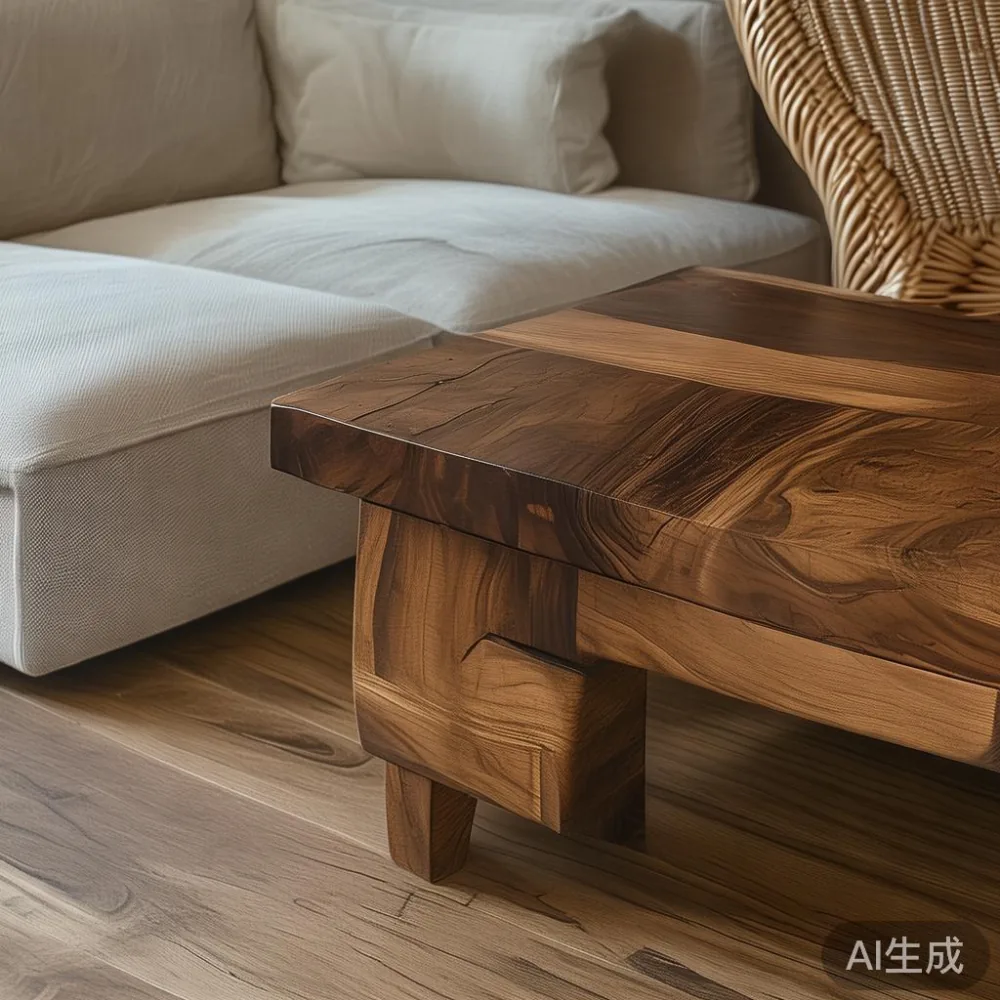
1. Wood species: the first 40% of the price
Solid wood furniture is, before anything else, a piece of a tree. The species sets a floor that nothing else can lower. In the showroom at MIDHILL's Foshan workshop, the price gap between a 1.8 m dining table in rubberwood and the same table in North American white oak is roughly SGD 1,600 to SGD 2,200 — and the only thing that changed is the timber. Rubberwood is a plantation hardwood from rubber-tree plantations in Thailand and Malaysia, dense, stable, and affordable. White oak is slower-grown, tighter-grained, and sourced from temperate forests where winters slow the rings down. That difference alone explains a large slice of any price gap you will see between two solid wood dining tables in Singapore.
For a Singapore HDB buyer, the practical question is durability against our humidity. Solid oak, ash, and teak handle 80–90% relative humidity better than MDF, plywood, or low-density tropical softwoods. A solid wood bed frame in white ash will outlast a veneered particle-board bed frame by 15–25 years under normal bedroom conditions. That longevity is part of what you are paying for.
2. Where the wood comes from: FSC certification, kiln-drying, and shipping weight
Origin matters in two ways. First, certified timber (FSC or PEFC) costs 10–18% more than uncertified timber because the supplier has paperwork and audited chain-of-custody. Second, drying matters. Kiln-dried white oak brought down to 8–10% moisture content is furniture-grade; air-dried timber is construction-grade. Kiln-drying takes 2–6 months in an industrial kiln and adds energy cost. The wood also has to travel: a 40-foot container of white oak from the US ports to Singapore costs roughly USD 3,800–4,600 in 2025 ocean freight, plus SGD 8% GST on the CIF value once it clears Singapore Customs.
That container weight is real. A 1.8 m solid wood dining table in oak weighs 55–70 kg. A six-seater set with bench seating can hit 120 kg. Your block in Tampines may have a service lift rated at 250 kg and a corridor width of 1.2 m — measure before you buy, because delivery day surprises nobody wants.
3. Joinery: mortise-and-tenon, dovetails, and what they cost in labour hours
Solid wood furniture falls apart or holds together based on joinery. The cheapest joints are butt joints held by a single dowel and a bead of glue — fine for a nightstand in a guest room, risky for a bed frame you sleep on every night. The upgrade is a mortise-and-tenon joint: a projecting tongue cut on one board fits into a matching slot on the other, glued and sometimes pinned. A drawer with hand-cut dovetails (typically 7–9 pins per corner on a wardrobe drawer) tells you the maker cared about that drawer lasting 30 years.
Joinery shows up on a price tag because it shows up on a clock. A skilled cabinetmaker in Foshan needs 40–60 minutes to cut a full set of mortise-and-tenon joints for a 1.5 m wardrobe frame. A CNC machine does the same work in 8–12 minutes. The handwork is roughly 5x slower, and the labour line on a typical export sofa or bed frame is 25–35% of the factory cost. That is why hand-cut dovetail wardrobes from MIDHILL cost more than dowel-jointed ones from a mass-market workshop, even when the wood is identical.
4. Finish: the difference between three coats and twelve
Finish is what you actually touch, and it is one of the easiest places to cut corners. A budget solid wood dining table gets three coats of nitrocellulose lacquer sprayed in 20 minutes and cured for 48 hours. A premium one gets a sealer coat, a colour coat, two build coats, a hand-sand between each layer with 320-grit, and a final wax or hard-wax oil rubbed in by hand. The premium process takes 6–10 working days and uses 2–3x the finishing material.
For Singapore buyers, finish choice interacts with humidity. Lacquer is a plastic film on top of the wood — it looks glossy, resists spills, but chips when knocked. Hard-wax oil (osmo, biohouse, Rubio Monocoat) soaks into the cells, lets the wood breathe, and is locally repairable. If you have ever seen a small water ring on a coffee table disappear after a wipe with a re-oiling cloth, that is hard-wax oil doing its job. The price difference for upgrading a dining table from lacquer to hard-wax oil is usually SGD 280–520 — a meaningful amount, but small relative to the 25-year lifespan of the piece.
5. Upholstery, foam density, and rattan wicker accents on seating
On a solid wood sofa, the frame is only half the price. The other half lives inside the cushions. Foam density is measured in kg/m³. A seat cushion at 28 kg/m³ will feel soft on day one and be a flat plank by year three. A 35–40 kg/m³ high-resilience foam keeps its shape for 8–10 years of nightly use. Down-wrapped foam adds another SGD 400–700 per sofa but is the closest you get to that deep, lived-in French light luxury seating feel — the kind you see in Parisian apartments where the sofa looks like it has been sat on for 30 years, in a good way.
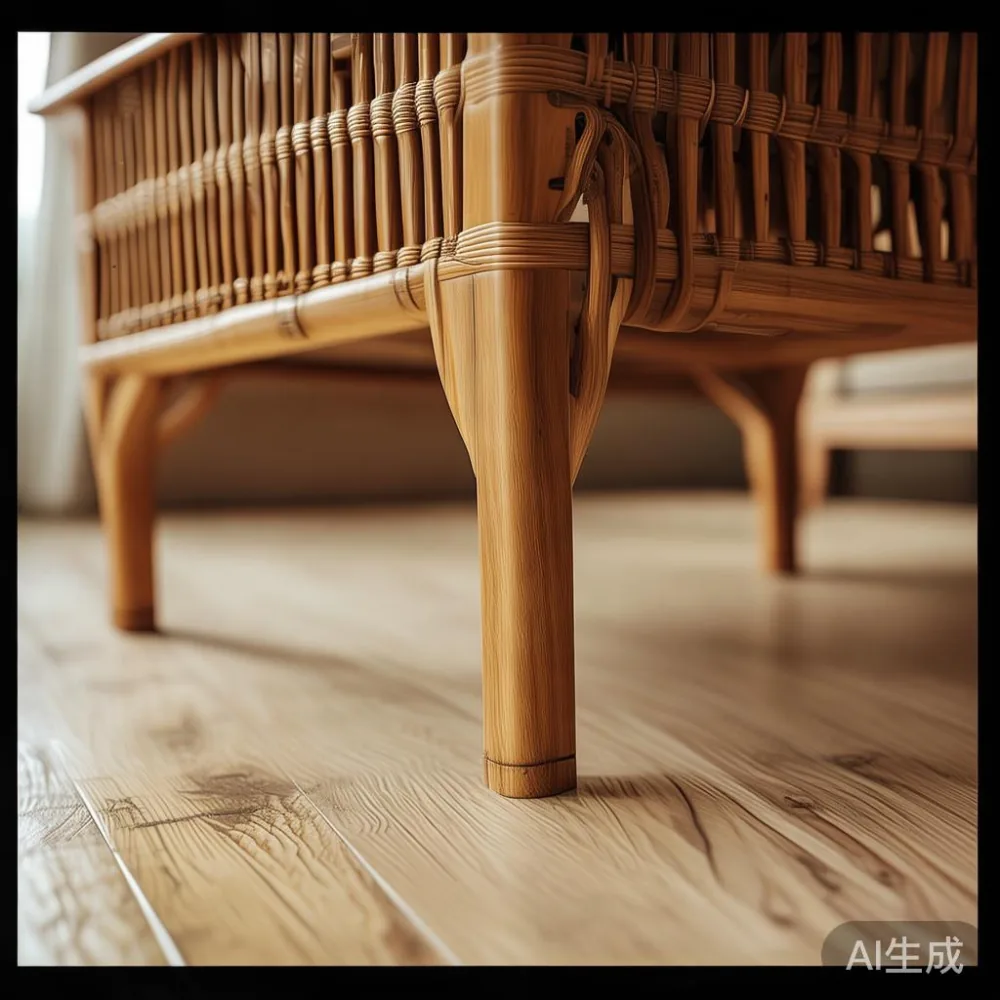
Where rattan wicker enters the picture is interesting. A solid wood sofa with hand-woven rattan wicker back panels or a rattan-wicker detail strip along the armrest is not decorative fluff. Hand-woven rattan wicker from Indonesia or the Philippines takes a skilled weaver 6–10 hours per panel. Machine-woven rattan wicker takes 40 minutes. The hand-woven version adds roughly SGD 380–640 to the sofa price but ages beautifully, tightens with humidity the way wood does, and reads as light luxury rather than as outdoor furniture. Many of MIDHILL's Singapore-bound containers ship with two or three rattan wicker accent pieces per 40-foot load — customers in Punggol and Bedok specifically ask for it because it pairs cleanly with Scandinavian-influenced palettes.
6. Hardware, marble, and the small things that add up
Soft-close drawer runners from Blum or Hettich cost SGD 18–32 per pair. A cheaper knock-off runner costs SGD 2–4. A six-drawer wardrobe contains 12 runners — so the hardware line on a wardrobe alone can swing by SGD 200–340. Hinges, clothes-rail brackets, and bed-frame slat holders add another SGD 80–160 per piece of furniture.
Marble tops are the other place prices jump. A sintered-stone or marble table top for a dining table adds SGD 700–1,400 over an all-wood top. The stone is heavy (a 1.6 m marble top weighs 75–95 kg), so the table base has to be heavier, the packaging has to be a wooden crate rather than a cardboard box, and shipping weight per container drops by 15–20%. Marble table tops are beautiful but they change the logistics, the HDB lift calculations, and the delivery quote.
Where can I buy a missing parts in Singapore?
For solid wood furniture bought from a Foshan-based maker like MIDHILL, missing or damaged parts are shipped from the factory in Foshan by sea or by air, and a reliable Singapore-side agent will hold a small inventory of spares — drawer runners, slats, rattan wicker weave patches, hardware packs — at a warehouse in Jurong or Tai Seng for 7-day-a-week pickup. Send the agent your order number and a photo, and they can dispatch within 48 hours, with domestic courier SGD 12–18 and air-freight spares from China at roughly SGD 35–60 per kilogram.
7. Logistics from Foshan to your HDB living room
The cheapest solid wood dining table in a Singapore showroom has still crossed an ocean. Sea freight from Shenzhen or Guangzhou to Singapore takes 5–8 days and runs USD 380–520 per cubic metre for LCL (less-than-container-load) shipments. For a single nightstand this is uneconomical — most factories have a minimum order of around 1–2 m³, which works out to 6–10 small items. That is why buying one solid wood piece is rarely cheaper than buying two or three.
Customs clearance in Singapore adds the 8% GST (soon 9% from 1 January 2024 — already in effect as I write this) plus a customs broker fee of SGD 80–180 per entry. Last-mile delivery to a HDB in Bedok or Punggol is SGD 60–120 per trip; to a condo with a loading bay booking system, it is SGD 90–160. Lift access is the hidden cost: if your dining table does not fit in the service lift, the delivery crew has to crane it up the outside of the block, and that is another SGD 350–700 on a Sunday-morning booking.
8. Warranty, refinishing, and the long-term number
Two structural-warranty numbers to remember: 5 years is the Singapore retail norm for solid wood bedroom furniture, 10 years is the upper end offered by makers who kiln-dry their own timber and join it properly. MIDHILL's 10-year structural warranty is at that upper end, and their lifetime refinishing service — sand back, re-oil, replace damaged rattan wicker panels — turns a one-time purchase into a 30-year relationship with a piece of furniture.
Refinishing costs roughly 18–25% of the original purchase price. A SGD 3,800 dining table refinished every 12–15 years (twice in its life) costs an effective SGD 670 per refinish — much less than replacing the table with another mid-range piece, and the wood underneath is already proven to have survived. This is the maths that explains why a SGD 4,200 solid wood dining table is, over 30 years, cheaper than buying three SGD 1,800 ones in a row.
9. How to read a price tag in 90 seconds
When you stand in front of a solid wood sofa, bed frame, dining table, wardrobe, or nightstand in a Singapore showroom, run this checklist. Flip the piece over and read the underside — the wood species is usually stamped there, and a kiln-drying stamp is a good sign. Open every drawer and look at the corner joints: dovetail pins or finger joints are premium, dowel joints are entry-level. Press the seat cushion of a sofa with your palm for 10 seconds and release — if it does not bounce back within 3 seconds, foam density is below 30 kg/m³. On a rattan wicker accent, run your fingernail along the weave — machine-woven rattan wicker has a uniform, almost plastic look; hand-woven rattan wicker has slight variations in tension and colour.
Finally, ask the salesperson three questions: where is the timber sourced, what is the foam density on the cushions, and what does the warranty actually cover. If they cannot answer in plain English, the price you are looking at is paying for marketing, not joinery.
10. Putting it together for a Singapore home
For a typical 4-room HDB in Tampines or a 5-room in Punggol, a sensible solid wood set is a 1.6 m dining table (SGD 2,200–3,400 in white oak), a queen-size bed frame (SGD 1,800–2,800 in ash), a two-door wardrobe (SGD 2,400–3,600), and two nightstands (SGD 380–620 each). That places the full set in the SGD 7,200–11,200 range before GST, or roughly SGD 8,900–13,800 with the current 9% GST. Add a solid wood sofa with rattan wicker back panels at SGD 3,400–5,200 and a marble table for the entrance at SGD 1,800–2,800, and a coherent solid wood home runs SGD 14,000–22,000 — the working budget for buyers in the light luxury tier, the French light luxury and American light luxury aesthetic that has quietly become the most-requested look in Singapore furniture showrooms over the last three years.
For anyone setting up a Nordic work from home korea style space — pale ash, linen upholstery, a single rattan wicker chair in the corner, and a solid wood desk under a window — the price logic above applies in miniature. Spend on the desk and the chair, save on the side table. The point of the price is what is underneath your hands for the next twenty years, not what looks good under showroom lights for twenty minutes.