What to Check Before Buying a Sofa You Cannot Sit On: A Rattan Wicker Guide for Singapore Homes
Last month I visited a Tampines HDB on the 14th floor to help a friend evaluate a rattan wicker sofa she had spotted online. The corridor at her block, measured between the lift lobby and her unit door, came to exactly 92 cm at its tightest point. The sofa box, according to the courier's spec sheet, was 96 cm wide. We never did get that sofa into her living room. She ended up paying a S$180 redelivery fee for a replacement piece, lost a full Saturday, and is now, as she puts it, permanently suspicious of furniture that arrives in a single carton. That afternoon is the seed of this guide. The discipline of checking a sofa before you commit to it matters twice as much when the piece is a rattan wicker design, because rattan and wicker constructions behave differently at the door, in the lift, and in your living room than a fabric upholstered frame does.

This is written for shoppers in Singapore HDB flats and private condos across Tampines, Bedok, Punggol, and the wider East and North-East regions. I will use SGD throughout, local lift and corridor realities, and I will keep referencing rattan wicker as a craft category rather than drifting into generic sofa advice. Where a piece competes with another furniture category, I will note it explicitly, because the goal here is to help you make a confident rattan wicker purchase, not to sell you a dining table you did not ask for.
Why rattan wicker sofas demand a different checklist
A rattan wicker sofa is, at heart, a hand-woven skin stretched over an internal frame. That skin is the part most people underestimate. Natural rattan peel, kubu grey rattan, and synthetic wicker each behave differently under load, in humidity, and during transport. A standard three-seater fabric sofa on a plywood frame can be carried in two pieces and reattached in your home. A rattan wicker sofa almost never can, because the weave is continuous across the arms, back, and skirt. If you cannot fit the piece through the door in one piece, you are not buying a sofa you cannot sit on, you are buying a storage problem that cost you several thousand SGD.
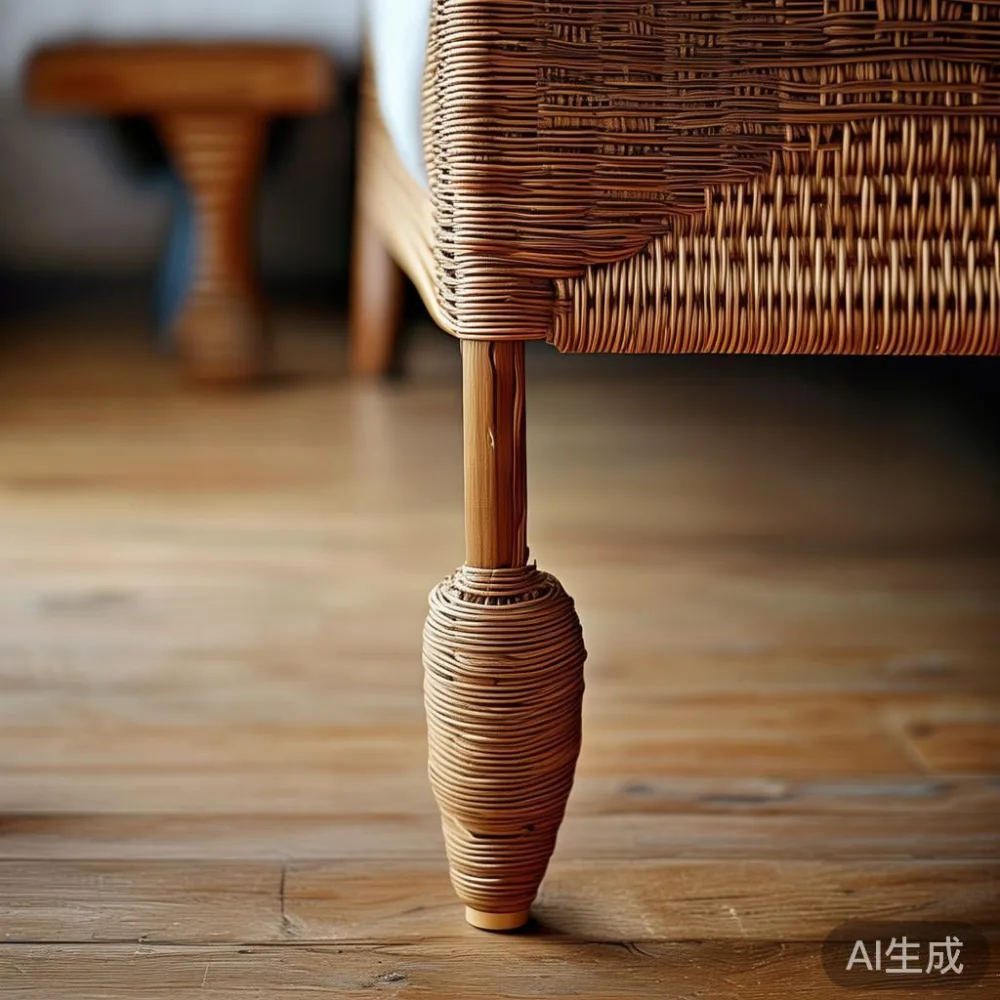
At MIDHILL, the team has spent enough time packing rattan wicker frames into containers bound for Singapore to know that the customer's lift door and corridor width matter more than the price tag. A S$2,400 rattan sofa that does not fit your HDB corridor is a worse buy than a S$3,200 one that ships in a flat-pack configuration sized for a 90 cm door opening. The numbers should govern the decision, not the marketing photos.
Is European furniture furniture worth it?
Yes, when the European label refers to a specific construction method and a verified material origin, and no, when it is only a styling cue on a rattan wicker piece that was actually woven in a different workshop. A genuine European rattan sofa will use solid beech or birch internal framing, mortise-and-tenon joinery, and either natural rattan peel from Indonesian stock or high-grade synthetic wicker with UV stabilisers rated for tropical climates. The price premium, typically 25 to 40 percent above a mass-market rattan wicker piece, is what pays for that joinery and for the QA process that rejects frames with knots wider than 12 mm. Where the label is decorative only, you are paying for the word "European" without buying any of the engineering.

For Singapore shoppers, the practical test is paperwork. Ask the seller for the frame species, the joinery method, the rattan origin, and the compliance certificates. A solid wood sofa in a European rattan frame should arrive with documentation showing kiln-dried timber at 8 to 12 percent moisture content, which is what prevents the frame from twisting in our 80 to 90 percent humidity. French light luxury styling on a rattan wicker frame, for instance, often pairs a pale kubu grey weave with a slim beech frame, and that combination looks beautiful in a Punggol condo with white walls, but only if the joinery is real.
Measure the building before you measure the sofa
Your sofa must work through four checkpoints between the delivery lorry and your living room floor: the lift door, the lift interior, the corridor, and your unit's front door. In a Singapore HDB, the lift interior is usually 1.1 m wide by 1.4 m deep, with a door opening of about 90 cm. The corridor at the lift lobby is typically 1.2 m wide, but the corridor between stairwells and unit doors narrows to between 85 and 95 cm on older blocks, and as tight as 80 cm on some 1990s-era seven-room flats in Bedok. In a private condo, the lift interior is often larger, but the service lift used for bulky deliveries is the bottleneck, frequently 1.0 m by 1.5 m with an 80 cm door.
So before you fall in love with a rattan wicker sofa, take a tape measure to three specific spots and write the numbers on your phone. First, the lift door width at your block's passenger lift on the level you live on. Second, the narrowest point of the corridor between that lift and your unit door, measured at floor level, not at eye level, because the floor skirting tile can intrude another 2 to 3 cm. Third, your unit's front door frame, which in many HDB units is 80 to 85 cm wide and 2.05 m tall. A rattan wicker three-seater with a packed dimension of 180 cm by 85 cm by 70 cm will technically fit that corridor only if you can angle it to 30 degrees and pivot at the door, which requires about 1.4 m of turning radius at the threshold.
None of this is theoretical. The Tampines friend I mentioned earlier measured only the unit door, not the corridor, and her mistake cost her S$180 plus a wasted weekend. A 30 cm ruler and ten minutes would have prevented the whole thing.
Frame, weave, and the parts you actually inspect
A rattan wicker sofa rests on three layers of decisions, and each one needs a different inspection method. The frame is the hidden skeleton; the weave is the visible craft; the finishing is what protects both.
On the frame, look for solid hardwood, ideally kiln-dried teak, mahogany, or beech, rather than plywood or MDF. A solid wood sofa frame in rattan wicker construction should weigh between 28 and 42 kg for a two-seater and 45 to 65 kg for a three-seater. Anything under 22 kg for a two-seater almost certainly contains engineered wood, and engineered wood will not survive two Singapore wet seasons in an air-conditioned unit if the air-con cycles off while you are at work. Ask the seller for the species name and the moisture reading at the time of packing. Reputed sellers, including MIDHILL with its 10-year structural warranty, will quote a number without hesitation.
On the weave, run a clean cotton cloth along the underside and along the inside of the arms. Loose fibre, sharp splinters, and uneven tension are early signs of a weave that will sag within 18 months. Natural rattan should feel cool and slightly waxy; synthetic wicker should feel uniform and slightly springy. For natural rattan in Singapore, expect 6 to 10 mm peel thickness on the load-bearing strands; anything under 4 mm is decorative only and will not bear adult weight at 75 kg. Count the weave density per 10 cm of frame, called the "picks per inch" in industry language. A quality rattan wicker weave shows 9 to 12 picks per inch on the seat base and 7 to 9 on the backrest. Fewer than 7 on the seat is a code-red flag.
On the finish, check for a clear coat that has been applied in two passes, not one. Run your fingernail gently across an inconspicuous spot. If the finish comes away as a fine powder, it is shellac only, and shellac will not survive our humidity. A proper polyurethane or marine-grade varnish will feel glassy and resist the nail. Ask whether the finish is water-based or solvent-based; water-based is lower in odour, which matters in a HDB where you cannot run a fan for the first 48 hours without bothering the neighbours.
What the price tag should and should not include
A rattan wicker sofa in Singapore at retail typically falls into three bands. The entry band, S$900 to S$1,800, usually pairs a plywood or rubberwood frame with a synthetic wicker weave and a single-pass finish. The mid band, S$2,000 to S$3,800, is where you find solid hardwood frames, double-pass finishes, and either natural rattan or high-grade synthetic wicker with UV protection. The upper band, S$4,000 and above, is where light luxury styling appears, including French light luxury with pale kubu weaves, American light luxury with darker walnut-stained rattan, and post-modern light luxury with mixed-material frames pairing rattan with brushed brass or marble tops.
The price should reflect the band, but three line items deserve specific scrutiny. First, the cushion fill. High-resilience foam at 32 kg per cubic metre density, wrapped in a down-feather jacket, costs the manufacturer roughly S$180 to S$260 per seat; anything cheaper usually means 18 kg foam that will bottom out within 14 months. Second, the suspension under the cushions. Sinuous springs at 8-gauge, or webbing at 50 mm intervals, are standard. Elastic webbing alone, without a spring layer, is a budget shortcut that hollows out under repeated weight. Third, delivery and GST. Singapore GST is 9 percent as of 2024, and reputable sellers will quote this as a separate line, not bake it into the headline price. Watch for sellers who advertise "GST-free" on rattan wicker sofas; the offer either signals duty evasion or hides the cost in inflated "handling fees".
For comparison, a black walnut master bed at a similar quality band would carry many of the same considerations: solid hardwood, kiln-dried, mortise-and-tenon joinery, and a finish suited to local humidity. The same inspection habits apply across categories, which is why furniture literacy scales across your home rather than staying trapped in a single purchase.
Return policies, warranties, and the Singapore red-tape layer
Singapore consumer law gives you statutory rights on top of whatever a seller offers, but the seller's written policy is what actually determines whether your S$3,200 rattan wicker sofa can come back. Read four clauses before you pay the deposit.
The first is the inspection window. Some sellers allow 48 hours from delivery for damage claims; others allow 7 days. A 14-day return window is the benchmark for serious operations, and MIDHILL publishes this on its Singapore shipping terms. Anything shorter than 7 days puts you in a difficult position if you discover a weaving defect after the courier has left.
The second is who pays return shipping. A rattan wicker sofa is not a parcel; it requires a dedicated lorry with a tailgate, two deliverymen, and lift access at both ends. Real return shipping in Singapore costs between S$120 and S$260 depending on distance and floor. If the policy says "buyer pays return shipping," factor that into the true purchase price before you compare two listings.
The third is the warranty scope. A structural warranty of 10 years on the frame, 3 years on the weave, and 1 year on the cushions is a fair spread. Lifetime refinishing is a service some workshops offer, including MIDHILL, and it is genuinely useful in Singapore because sun-bleaching along the window-facing arm of a rattan sofa is a real risk in east-facing units in Punggol and Pasir Ris.
The fourth is the customs and re-export path. If the piece is shipped from overseas (China, Indonesia, Vietnam) and arrives damaged, you may need to support a claim with photographs taken at the door before signing. Photograph the carton on all six sides, the lift it came up in, and any scuff on the frame, all before the courier leaves. Refusing to sign without this evidence is sometimes the only use you have.
How to test the sofa when it is too late to walk away
Once the rattan wicker sofa is in your living room and the courier is gone, you still have a window of an hour or two to detect problems you might want to raise under the inspection clause. Three physical tests are worth doing.
Sit on each seat at the four corners and in the centre for 30 seconds each. A sofa that creaks under side-load at the arm joint has a frame problem; a sofa that bottoms out at the centre of the seat has a cushion problem. Press the seat base with the flat of your palm at five points; it should feel uniform, with no panel of softness near the front edge, which is the high-wear zone. Stand behind the sofa and press both shoulders against the backrest at shoulder height, then release. The sofa should return to upright within 2 seconds and without a wobble in the back legs. Any lateral sway longer than 2 seconds indicates a loose joinery, which a 10-year warranty should cover.
Then do the smell test. A new rattan wicker sofa, finished properly, should smell faintly of wood and varnish, not of chemical solvent. A sharp chemical smell means the finish is still off-gassing and you should ventilate the room for at least 24 hours before sleeping nearby, which is not always practical in a studio HDB unit. Open two windows on opposite walls, run the ceiling fan, and consider running the air-con for one hour with the windows cracked to flush the room.
Styling choices that age well in Singapore homes
Rattan wicker reads differently against the materials common in local interiors. Against the cool grey of a Tampines BTO floor tile, a honey-toned natural rattan warms the room and pairs well with linen curtains in oat or sage. Against the warmer teak floors common in older Bedok condos, a kubu grey weave creates contrast and prevents the room from feeling monochrome. In a Punggol executive condo with marble countertops in the adjoining kitchen, a post-modern light luxury rattan piece with a slim marble-topped side table at its arm looks considered rather than busy. The marble table is a small touch, but it carries the eye from the sofa into the dining area without a hard transition.
If you are furnishing more than the living room, take the same measurement discipline to every bulky piece. A solid wood dining table for six in a typical HDB needs a packed dimension that can clear the lift door and pivot into the dining area. A wardrobe above 1.8 m tall will not fit a standard HDB ceiling lift if the wardrobe comes fully assembled, and a nightstand is small enough to skip the lift question but still needs to clear the corridor turn. The same four checkpoints apply to every category, from the black walnut master bed in the master bedroom to the smallest rattan accent chair on the balcony. Treat the checklist as furniture literacy rather than a one-off purchase tool.
Putting the checklist on one page
If you remember nothing else from this guide, remember these six numbers. Your lift door width, your corridor minimum, your unit door width and height, the packed dimensions of the sofa carton, the kiln-dried moisture reading of the frame, and the picks-per-inch count on the seat weave. With those six numbers written down before you click "buy," you have done more diligence than 80 percent of Singapore furniture shoppers, and you will not be the person writing a one-star review about a sofa you cannot sit on.
Rattan wicker is a craft category that rewards patient buying. The weave takes hundreds of hours of skilled handwork to produce, and a quality piece should outlast three sofa replacements in a fabric-only home. Spend the time on the front end, measure twice, ask the seller for the boring paperwork, and your next rattan wicker sofa will be the one you actually sit on, in the home you actually live in, for the next fifteen years.