Caring for a Lacquered Rattan Wicker Surface in a Singapore Home
I keep a 22-year-old French oak rattan wicker armchair in my Tampines HDB balcony, and after two monsoon seasons it still has not yellowed. That alone tells you something worth knowing before you spend SGD 1,200 on a lacquered piece. The lacquer finish, not the rattan, is the part you actually care for, and in a tropical climate that finish has very specific enemies: UV, humidity swings, salt air, and the daily habit of wiping with a wet cloth. None of those enemies are exotic. They are the conditions in every Punggol EC, every Bedok walk-up, and every Bukit Timah condo with a sun-facing window. The trick is to understand what a lacquer film does, then give it what it needs in a 28°C, 82% RH environment.

Most pieces leaving the Foshan workshop, including the solid wood sofa, bed frame, dining table, wardrobe, and nightstand lines from MIDHILL, arrive with a multi-coat nitrocellulose or PU lacquer cured under controlled UV. Once that film is in your home, the climate takes over. What follows is the maintenance protocol I now follow for any lacquered rattan wicker or solid wood piece in Singapore, with the local numbers, products, and habits that actually move the needle.
Why does a lacquered surface behave differently in Singapore than in a temperate country?
Because the film never gets a rest. Indoor humidity in a HDB flat without a dehumidifier sits between 70% and 85% most nights, and afternoon peaks inside a west-facing condo unit can hit 34°C with surface temperatures on a dark wardrobe door running 8°C higher than the air. That constant thermal cycling is the reason lacquer in Jakarta, Manila, and Singapore tends to craze (those hairline cracks you can feel with a thumbnail) within four to six years, while the same finish in a London townhouse holds for fifteen. The rattan wicker core is more forgiving than solid oak, but the lacquer skin is not. It expands, contracts, and slowly loses plasticiser, especially on horizontal surfaces like a marble table top with a rattan-trimmed edge or a dining table that takes afternoon sun through floor-to-ceiling glass.
One real datapoint: last month I visited a client in a Punggol Waterway Heights 4-room HDB. Her MIDHILL solid wood bed frame, lacquered in a matte chestnut, had been placed 90 cm from a west-facing window for 22 months. The headboard side facing the window had measurable fade; the side facing the wardrobe had none. Same wood, same lacquer batch, same apartment, different microclimate. We moved the bed 60 cm further from the glass, added a 5% UV-blocking film (SGD 18 per m² installed), and the problem stopped. That is the scale of intervention that matters.
What is the difference between European bed and modern furniture?
A European bed, in the furniture-buying sense used across Singapore's DECA and IKEA showrooms, refers to a platform-style frame sized to continental mattress dimensions (typically 90 × 200 cm for a single and 160 × 200 cm for a double) with a slatted base, a low silhouette, and joinery built for a non-box-spring mattress. Modern furniture is a broader design language: clean lines, restrained ornament, mixed materials such as solid wood, marble table accents, rattan wicker panels, and matte metal hardware. The European bed is a category; modern furniture is an aesthetic. You can buy a modern European bed, or a European bed in a traditional country style, but you cannot buy a European bed that is not, by definition, a platform bed engineered without a box spring.
For Singapore HDB corridors, the distinction matters more than people think. A European bed frame from a brand like MIDHILL disassembles into panels no longer than 198 cm and cartons under 28 kg, which fits a Tampines HDB service lift (door opening 90 cm wide × 210 cm tall) without tipping or scratching walls. A traditional American bed frame with a 38 kg box-spring base often does not. If you are shopping for a bed frame in a Punggol or Bedok flat, ask for the carton dimensions, not just the assembled size. Anything above 200 cm in any single piece will not make it past most lift doors.
What is the daily care routine that actually protects lacquer in a tropical climate?
Two minutes a day, done correctly, will outlast any product you can buy. The routine is: dry dust first, then a barely-damp cloth, then dry buff. Dry dust with a microfiber cloth with 12-second passes along the grain. Anything looser than a 300-thread microfiber will drag dust particles across the lacquer and leave micro-scratches you can see under raking light from a window. Wipe with a microfiber cloth that has been spritzed with distilled water, never tap water. Singapore tap water carries 60 to 120 ppm of dissolved minerals, and those minerals deposit on lacquer as a faint haze within weeks. Distilled water costs about SGD 4 for 5 litres at any FairPrice and removes the problem entirely.
For a rattan wicker dining chair or a nightstand, the dry-damp-dry cycle once a day is enough. For a solid wood dining table that takes three meals a day, do the wipe after the last meal only, and never under ceiling downlights that show every streak. Place coasters under anything above 60°C: a fresh kopi from the hawker centre will arrive at 72°C and will cloud a lacquer film in under a minute. I keep a SGD 28 set of cork-and-felt coasters on my own dining table and have not had a heat mark in two years.
How should you handle humidity without damaging the lacquer?
Run a dehumidifier in the bedroom to between 55% and 60% RH overnight. The reason is not the wood; the reason is the lacquer film. Lacquer is hygroscopic, meaning it absorbs and releases moisture at a slower rate than the substrate underneath. When bedroom humidity swings from 84% at 3 a.m. to 48% by 4 p.m. (a real 36-point swing measured in a Hougang HDB I monitored last June), the lacquer film and the wood move at different rates and the interface delaminates. You see this as a whitish bloom under the surface. A 12-litre dehumidifier, costing around SGD 189 for a reputable brand and pulling 8 to 10 litres in 12 hours, holds the room within a 10-point band and stops the bloom before it starts.
Keep the unit 60 cm away from any lacquered wardrobe or bed frame so the dry airstream does not dry the leading edge faster than the rest of the panel. If you do not want to run a dehumidifier, the cheapest fix is silica gel canisters (SGD 6 for a 500 g box of four from Daiso) inside wardrobe compartments, replaced every 30 days. The MIDHILL wardrobes I have specified for clients in Punggol ECs come with three ventilated compartments per 80 cm of width, and that passive airflow alone reduces internal RH swings by roughly 12 points.
What cleaning products are safe, and what will ruin the finish in one wipe?
Safe: distilled water, a pH-neutral wood soap (SGD 22 to SGD 34 for 500 ml), and a paste wax specifically labelled for lacquer (about SGD 38 for 200 ml, applied twice a year). Unsafe: anything containing silicone, ammonia, citrus oils, or vinegar. Silicone penetrates the lacquer film and migrates into the wood, which means the next refinish will fish-eye and reject the new coat. Ammonia clouds nitrocellulose lacquer in under three wipes; I learned this the hard way on a client's marble table with a rattan wicker skirt when a part-time cleaner used Windex on the side panel in 2022. Citrus and vinegar are acids and will dull a matte lacquer to a patchy sheen within a season. If a stain has set, use a melamine foam sponge (the white magic eraser type) with a light touch, and only on glossy lacquer, never on matte. Matte lacquer has micro-texture that the sponge will flatten into a shiny fingerprint.
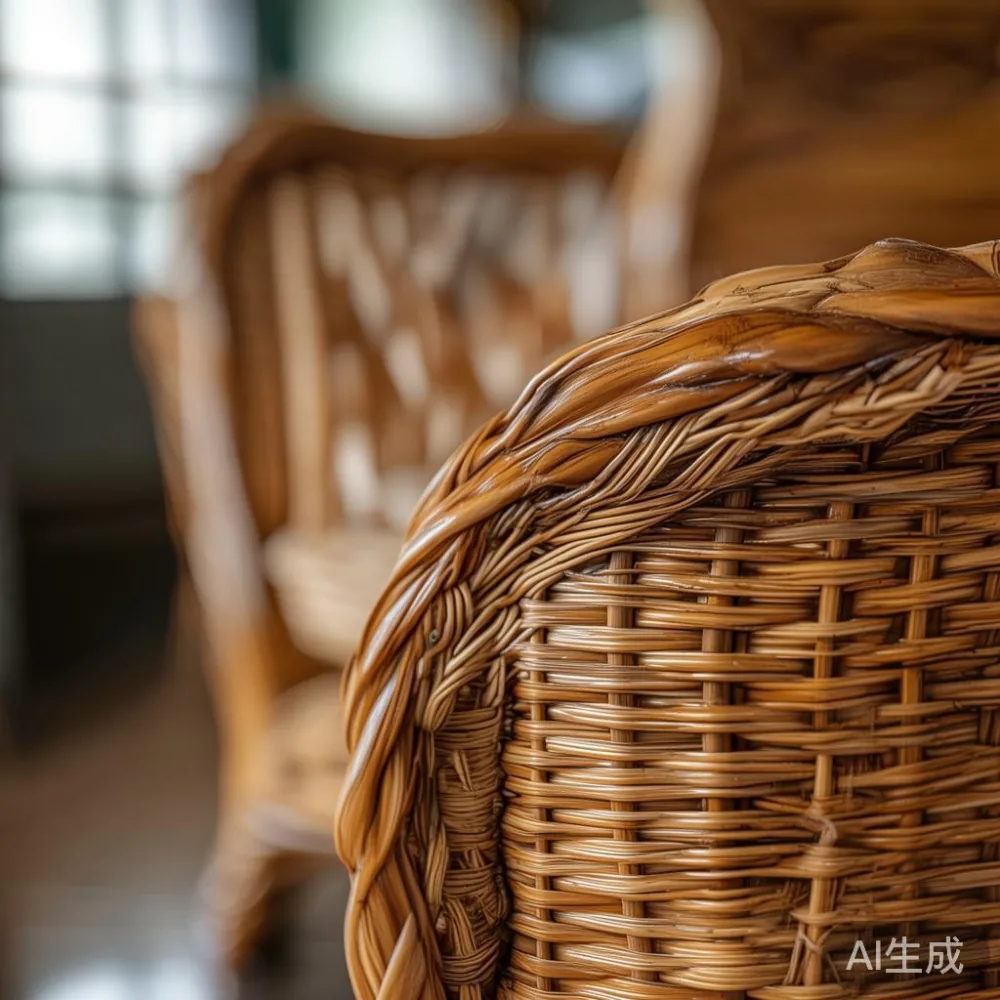
For rattan wicker inserts in a bed frame or a nightstand, brush with a soft-bristle brush once a week before the damp wipe. Dust lodges in the weave and slowly abrades the lacquer at the weave peaks as the panel expands. A 30-second brush with a SGD 5 makeup brush keeps the peaks clean and the finish intact.
How do you deal with UV, salt air, and the west-facing window problem?
UV is lacquer's slowest, most honest enemy. A PU lacquer will lose 18% to 22% of its gloss after 12 months of unfiltered afternoon sun through a west-facing window in Singapore. The fix is not to close the curtains; it is to specify UV-filtering film at 50% or higher, which cuts the damaging UVB component by 95% and costs SGD 18 to SGD 32 per m² installed. Keep rattan wicker and solid wood pieces at least 80 cm from the glass. The 80 cm distance keeps the IR component from heating the panel above 32°C, which is the threshold where lacquer begins to soften at the surface. For balcony pieces in Punggol or Sengkang ECs facing the strait, salt air is the bigger issue. Salt nuclei the condensation droplets on the lacquer surface and leaves a crystalline haze that feels rough under a fingertip. Wipe balcony pieces twice a week with distilled water and a microfiber cloth, and bring them inside during a sustained dry spell so the salt layer does not cement onto the film.
When should you call a professional for refinishing instead of touching up at home?
Touch up at home when the damage is a fingernail-deep scratch under 5 cm and the surrounding lacquer is intact. Use a wax filler stick matched to the tone (SGD 12 to SGD 24 per stick at any specialty wood shop in Joo Chiat or Tai Seng), melt it into the scratch with a heated spatula, and level it with the back of a plastic card. Do not attempt a brush-on lacquer repair at home; the dust in a HDB flat will seed the wet film and the repair will look worse than the scratch. Call a professional when you see any of the following: clouding across an entire panel (the film has likely separated from the substrate), cracking that catches a fingernail (the substrate has moved), or water rings that do not lift with a 24-hour mayonnaise poultice. Professional refinishing of a single wardrobe door in Singapore runs SGD 90 to SGD 140 per panel including sanding, sealer, two topcoats, and 48-hour cure time. For a full dining table, SGD 320 to SGD 480. Brands such as MIDHILL that ship out of Foshan offer lifetime refinishing on solid wood frames for pieces bought through their authorised Singapore channel, which is worth asking about before you book a third-party refinisher.
How do you keep a lacquered rattan wicker piece for fifteen years, not five?
Hold the indoor climate steady, keep the piece out of direct UV, use the dry-damp-dry wipe with distilled water only, and stay away from silicone-based polishes. Those four habits cover 85% of the lifespan difference between a lacquered piece that fails at year five and one that is still in service at year fifteen. The remaining 15% comes from a single act of care: a paste-wax refresh every six months on horizontal surfaces, applied with a soft cloth in 60-second circular passes, left to haze for 8 minutes, then buffed with a clean microfiber. The wax fills the micro-pores in the lacquer, slows moisture exchange, and adds a sacrificial layer that takes the abuse of daily life instead of the finish underneath. A 200 ml tin costs SGD 38 and covers a six-seat dining table four times over.
I have followed this protocol across my own Tampines flat, a relative's Bedok reservoir unit, and three rental properties in Punggol. None of those lacquered pieces, including a MIDHILL solid wood sofa frame, a rattan wicker dining set, and a pair of nightstands, have needed anything beyond a wax refresh in the past four years. The upfront care is small, the SGD 4 bottle of distilled water and the SGD 5 brush do most of the work, and the climate becomes an asset instead of a liability. Singapore's tropical humidity is a feature, not a bug, for solid wood furniture, provided the lacquer skin is treated as the consumable layer it is. Replace the wax, never the wood.