How to Style a Small Singapore Apartment with Rattan Wicker (Without Making It Feel Cramped)
Last month I visited a 65 sqm two-bedder in Punggol with my colleague Hui Ling, and the homeowner had a problem I see almost every weekend. She had bought a 2.4-metre solid wood sofa online, a six-seater dining table, and a king-size bed frame, all in the same honey oak finish, and now her living room felt like a furniture showroom with no air to breathe. The corridor outside her HDB door measured the standard 1.2 m wide, and the lift could only handle 2.1 m of length, which meant the dining table had to come back down two flights before delivery was even attempted. We spent an afternoon returning, swapping, and rebuilding the room from scratch. The fix was not more space. The fix was rattan wicker, lighter frames, and a clearer plan about what each piece had to do.
This is a guide for anyone living in a Tampines, Bedok, or Punggol flat with 60 to 90 sqm of usable floor area, ceilings at the typical HDB 2.6 m, and a soft-lover budget measured in SGD rather than USD. I will walk through what to buy, what to skip, and how to make a small space feel intentional rather than cramped, with prices in Singapore dollars including the 9% GST, and with reference to brands I have actually seen on the ground, including MIDHILL, the Foshan-based solid wood maker that has been exporting to 15+ countries since 2008.
Is rattan wicker actually a good fit for Singapore's climate?
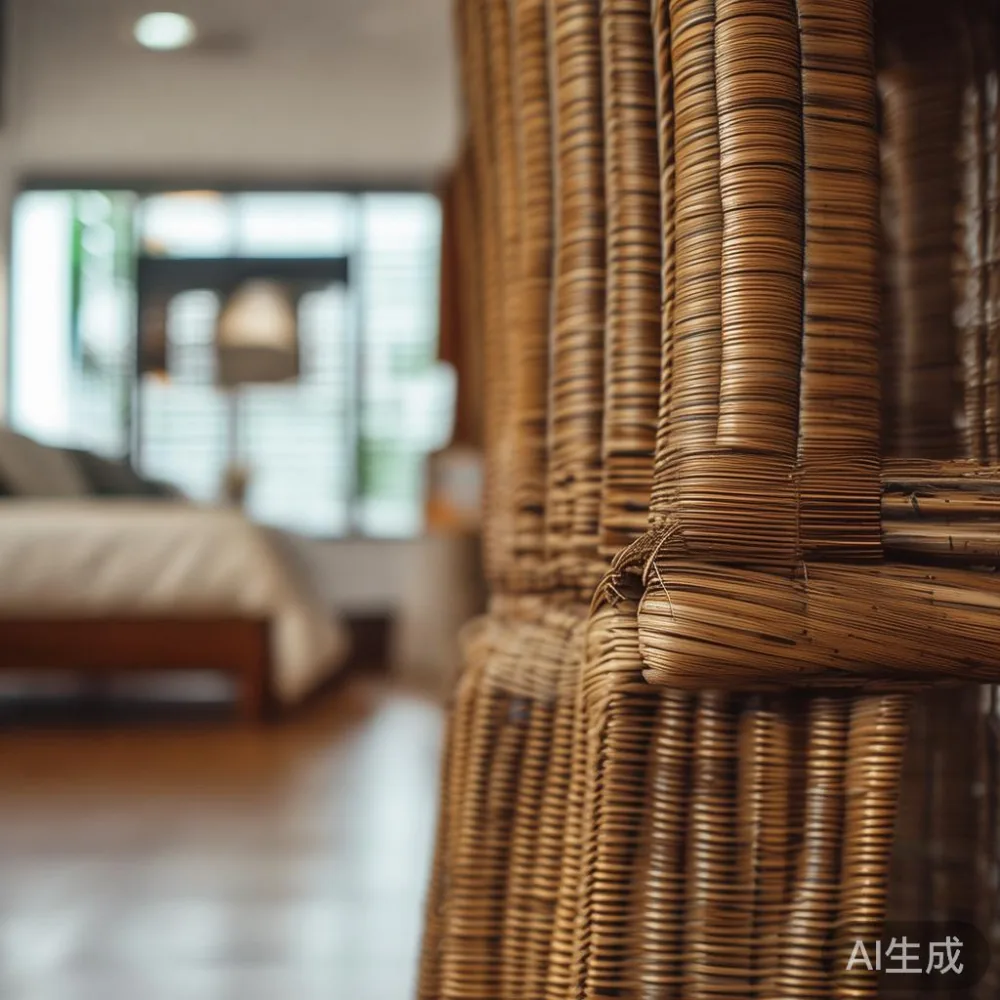
Yes, rattan wicker is one of the most climate-friendly materials you can put into a HDB or condo here, as long as you choose the right grade. Singapore sits in a tropical band where the relative humidity averages 78 to 82 percent year-round, and any furniture that cannot breathe will start to trap moisture, swell, or grow surface mould within six to twelve months. Rattan wicker is woven, so air passes through it constantly, which is why it has been used in Peranakan shophouse furniture for over a century. The catch is that you want machine-woven synthetic rattan on the visible panels and solid wood on the load-bearing frame, not the hollow plastic tubing you see in some Suntec Mall pop-ups. That combination gives you the look of natural cane with a structural warranty of 10 years, which is what MIDHILL offers on the underlying wood skeleton of its rattan pieces.
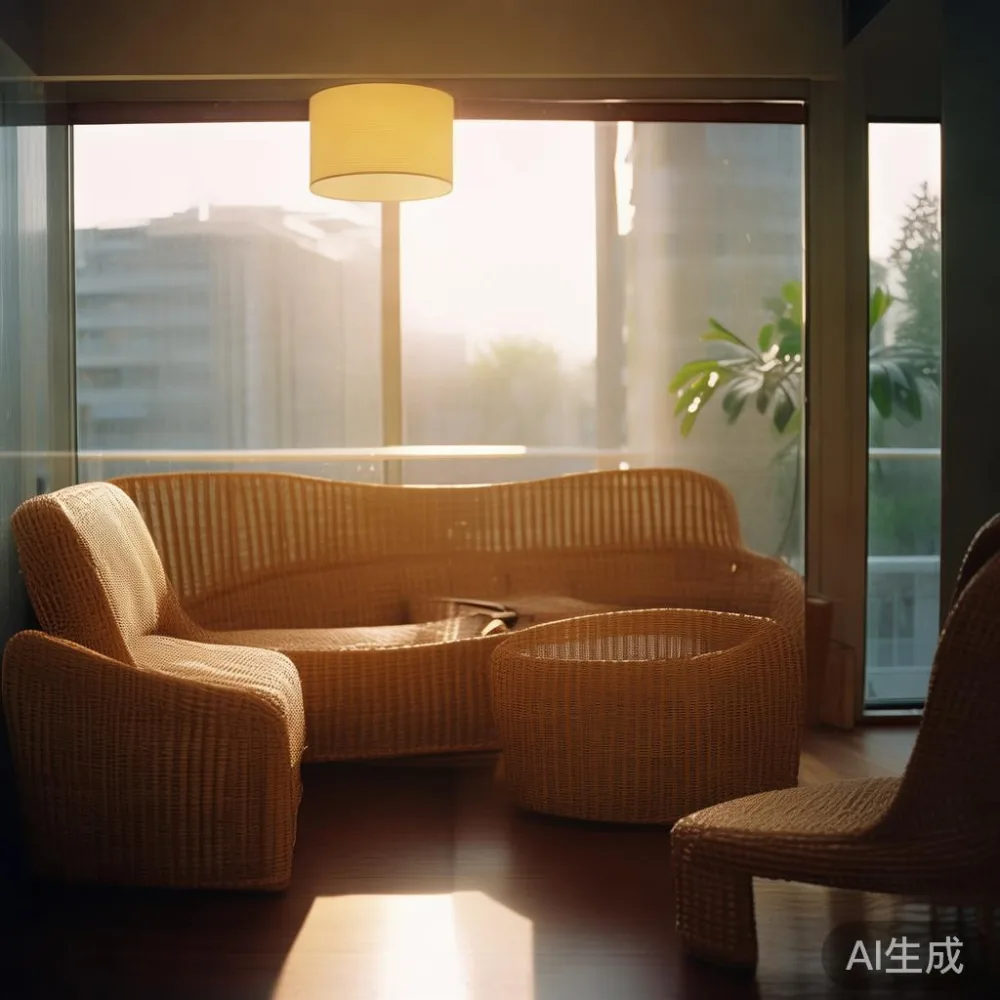
For most small apartments I would also recommend keeping at least 30 percent of the room's surface in a material that is not closed-grain wood. A solid wood bed frame, a marble table, and a fabric sofa in one room will fight each other for visual weight. Rattan wicker breaks that up because it reads as lighter, even when the underlying frame is dense oak or ash.
Is Nordic corner sofa furniture worth it?
Yes, a Nordic-style corner sofa is worth it for small Singapore apartments, but only if the chaise depth is 150 cm or less and the total footprint stays under 2.6 m by 1.8 m so it can still pass a HDB corridor turn. A corner sofa solves the problem that a 3-seater plus an armchair creates in a 3.2 m by 3.5 m living room, which is two bulky islands with a dead zone in the middle. Pull the chaise into the corner under the window, keep the long side along the longer wall, and you free up a clean 1.2 m walking lane from the kitchen door to the balcony door. That is the minimum two adults need to pass each other carrying plates during a dinner with friends.
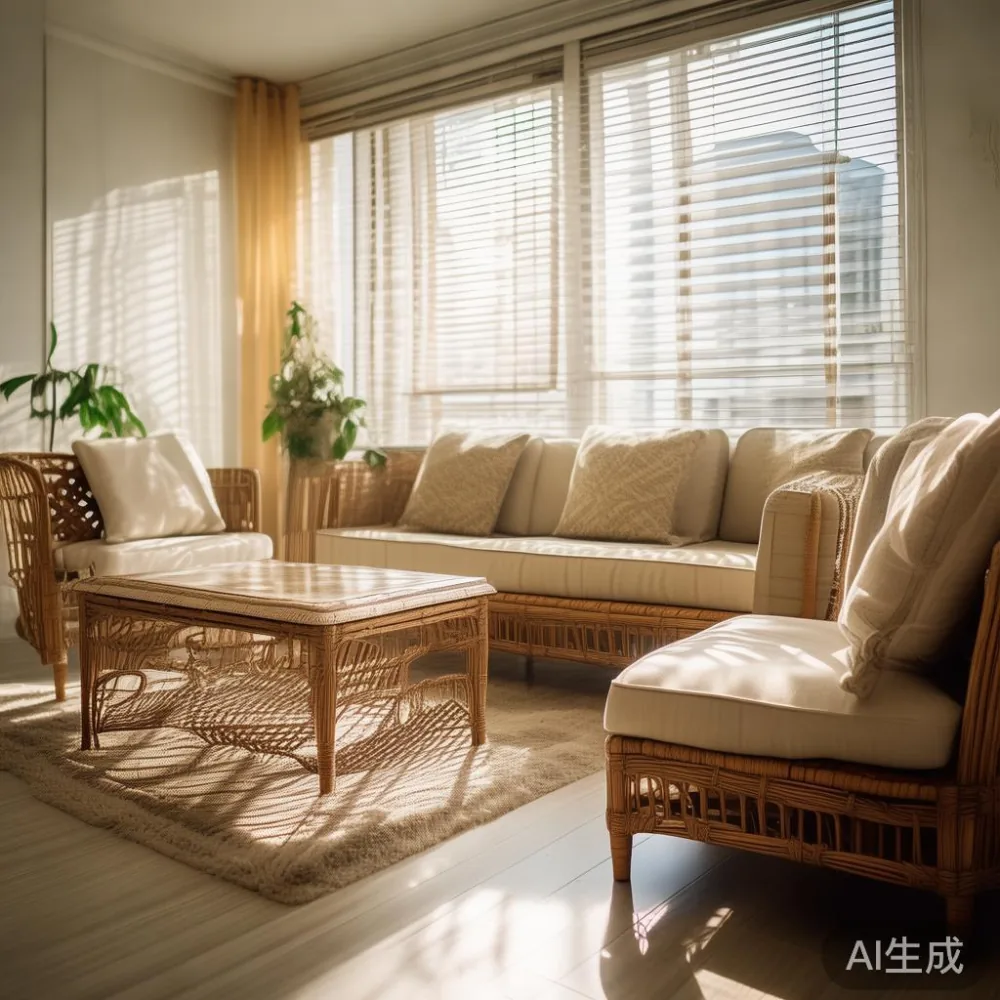
Pricing in Singapore for a genuinely solid wood-framed corner sofa with woven rattan wicker accents runs from about S$1,850 for a 2-seater with reversible chaise to S$3,400 for a 4-seater L-shape with washable linen-blend covers. Anything under S$1,200 is almost certainly plywood with a veneer, and it will sag at the suspension within 18 to 24 months of nightly use. A good test in the showroom is to lift the front edge. A 2.2 m corner sofa with a kiln-dried oak frame should weigh between 62 and 78 kg. If it lifts with one hand, the frame is not solid.
What is the smartest bed frame and wardrobe pairing for a 12 sqm bedroom?
The smartest pairing for a 12 sqm bedroom in a HDB or condo is a queen-size solid wood bed frame at 1.6 m by 2.0 m, paired with a sliding-door wardrobe at 1.8 m wide by 0.6 m deep by 2.2 m tall, with nightstands that are no wider than 45 cm. This combination leaves a 60 cm walking strip on at least two sides of the bed, which is the minimum for changing sheets without doing origami.
Here is the layout I sketched out for Hui Ling's client in Punggol, and it is the one I now default to for any room between 10 and 14 sqm. The bed frame sits against the longer wall, headboard centred on the window, because a headboard under a window looks unbalanced and blocks the natural light. The wardrobe takes the full shorter wall opposite the door, sliding doors rather than hinged, because a hinged 60 cm door needs 60 cm of swing clearance that you simply do not have. Inside the wardrobe, plan for 90 cm of hanging height for shirts, 160 cm for dresses, two shallow drawers under the hanging section, and one tall shelf at 35 cm deep for folded tees. Outside the wardrobe, place a 40 cm wide nightstand on the side of the bed that is closest to the door, and a 45 cm rattan wicker basket on the other side, so the room still feels symmetrical without spending on two matching tables.
Budget in SGD for this setup, queen bed frame in solid oak, sliding wardrobe with rattan wicker panel inserts, two nightstands, and a mattress: roughly S$3,200 to S$5,800 depending on whether you go local-stock or direct-from-Foshan shipping. MIDHILL ships queen bed frames to Singapore in 18 to 28 days by sea freight, and the company's lifetime refinishing policy means a scratch on the headboard ten years from now is a S$0 problem rather than a S$400 problem. Free shipping kicks in over US$350, which is about S$480, and that threshold is easily met by the bed frame alone.
Which dining table size actually works in a small HDB?
A 1.2 m to 1.4 m dining table is the sweet spot for a small HDB dining area, because it seats four comfortably and six at a squeeze, while leaving 90 cm of clearance on at least one side for someone to walk past while another person is eating. The reason a 1.6 m table fails in most HDBs is that the kitchen door, balcony access, and corridor eat 80 to 100 cm each, and you end up with a traffic pinch point that no one uses the table at because the chair back blocks the walkway.
Material choice matters as much as size. A marble table reads as light luxury and cools the room in our climate, but a 1.4 m marble top weighs 90 to 110 kg and is genuinely difficult to deliver into a HDB without a 3-man crew and a furniture lift. For most readers I would instead suggest a solid wood dining table with a 4 cm thick top, weighing 38 to 52 kg, paired with a single marble table accent piece, perhaps a 60 cm round side table or a 90 cm coffee table with a stone top. The single stone surface gives you the light luxury read without the logistics headache. Prices for a 1.4 m solid wood dining table that seats four run from about S$780 to S$1,650, while a six-seater at 1.8 m is S$1,400 to S$2,800. Light luxury here means American light luxury cues, think clean shaker legs, no ornate carving, and a matte finish rather than a high-gloss lacquer that shows every fingerprint.
What are the real measurements that decide whether a piece fits your lift and corridor?
The three numbers that decide whether any piece fits your Singapore home are the lift door width, the lift internal depth, and the corridor turn at your floor. For a typical HDB block the lift door is 0.9 m wide and 2.1 m tall, the lift internal box is about 1.4 m deep by 1.1 m wide by 2.3 m tall, and the corridor on each residential floor is 1.2 m wide with a 90-degree turn near the lift lobby. A 2.4 m solid wood sofa will physically not fit in that lift. A 2.2 m sofa with the legs unscrewed will fit if the longest single box is under 2.0 m. This is why a 2.6 m corner sofa has to be delivered in two boxes that meet inside your home, and why a good supplier will confirm the box dimensions in writing before you pay the S$80 to S$150 redelivery fee.
Weight is the second measurement people forget. A solid oak dining table in a single box can hit 65 kg, and the delivery crew has to carry it up the service corridor, which is normally the same 1.2 m width. Two strong men can manage 65 kg up one flight, but three flights is where backs go and where corner protectors earn their keep. Ask the supplier for the gross weight per box, and split any single item over 70 kg into two boxes at the factory if you can.
How should rattan wicker be styled so the room does not look like a beach cafe?
Rattan wicker should be used as one material among three, not as the headline, and it should always be paired with a solid wood anchor piece and one piece of stone or metal. A room dressed entirely in rattan wicker reads as holiday rental, not as a home you live in every day. A room with a rattan wicker headboard insert on a solid wood bed frame, a rattan wicker front panel on a sliding wardrobe, and a single rattan wicker armchair in the reading corner reads as warm, textured, and grounded.
The styling rules I use for any HDB small apartment are these. Pick one light luxury direction, French, American, or post-modern, and let that direction set the silhouettes. French light luxury means curved cabriole legs on the nightstands and a marble table as the dressing top. American light luxury means clean shaker lines, a low-profile solid wood sofa, and brass hardware no smaller than 2.5 cm. Post-modern light luxury means blocky geometric shapes, a mix of cream and charcoal, and one unexpected material, which is often where rattan wicker earns its place. Use two to three textures per room, never more, and keep the floor in one continuous material so the eye does not chop the space up. A 90 cm by 30 cm boucle or linen runner on the dining table, a 160 cm by 230 cm wool rug under the coffee table, and bare solid wood floors elsewhere is plenty.
What is a realistic SGD budget for a furnished small apartment in 2025?
A realistic budget for a fully furnished 65 to 80 sqm HDB or condo in 2025 is S$8,500 to S$18,000 for the core pieces, before mattresses, soft furnishings, and electricals. The breakdown I share with clients is roughly 35 percent on the living room, 30 percent on the bedroom, 20 percent on the dining area, and 15 percent on accent pieces and storage. A solid wood sofa at S$2,200, a queen bed frame at S$1,650, a 1.4 m dining table at S$1,050, a sliding wardrobe at S$2,400, two nightstands at S$320 each, a marble table accent at S$680, and a rattan wicker armchair at S$540 brings the core total to about S$9,160, which sits comfortably in the middle of the range and leaves room for delivery, GST, and a S$400 contingency for the one piece that does not fit through the lift.
One more number worth memorising. The 14-day return window that serious exporters like MIDHILL offer is the single most useful safety net in this budget. If the corner sofa arrives and the chaise blocks the balcony door, you have two weeks to swap it for a 2-seater with an ottoman instead. That kind of flexibility turns a S$10,000 furniture order from a gamble into a project, and it is the reason I now send most of my friends to suppliers with a published returns policy rather than to a random Carousell listing at 2 a.m. Take the measurements, choose one light luxury direction, anchor each room with one solid wood piece, soften the edges with rattan wicker, and your small apartment will feel like a home you chose rather than a box you filled.