Caring for Lacquered Surfaces on Rattan Wicker Furniture in a Tropical Climate
I keep a folding rattan wicker chair on my Bedok Reservoir HDB balcony, and the lacquer took a beating during the March 2024 heatwave (35°C at 2pm, humidity holding at 82%). Within four weeks the armrest developed a dull patch that no amount of dry dusting would fix. That small disaster pushed me into a long study of how lacquer behaves in Singapore conditions, and the short version is this: tropical humidity is a lacquer-tester. The good news is that with a routine of around 8 to 12 minutes per week, plus one deeper session every quarter, a lacquered rattan wicker piece will sit comfortably beside a French light luxury marble table in your Tampines living room for 15 years or more.
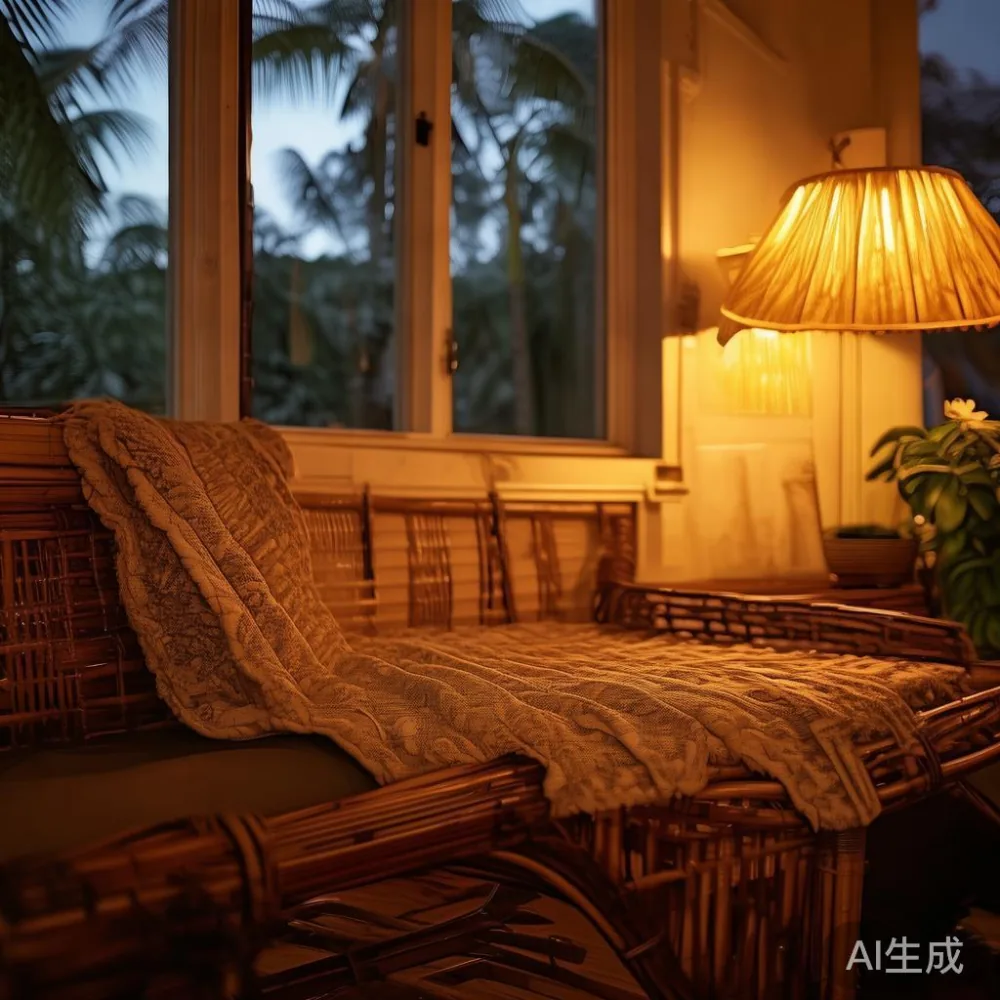
Why Does Lacquer Cloud Up in Singapore's Weather?
Lacquer is a film finish. It looks glassy when new because the surface is smooth and the light bounces back uniformly. Once humidity cycles through it day after day, the film swells and contracts by a few microns each time. Over months, that micro-movement creates a haze known as blush. Add 90% average relative humidity, the 28°C mean minimum, and the salt residue that drifts in from coastal blocks in Punggol and Marine Parade, and the haze becomes a permanent fog if no one wipes it down.
The clouding is not mould. Mould is darker, usually black or olive, and sits in patches along the weave gaps. Blush is uniform, grey-white, and you can buff half of it off with a microfibre cloth and a tiny drop of pH-neutral cleaner. Knowing the difference saves you from sanding the surface, which on a woven rattan wicker frame is almost impossible to repair evenly. The other enemy is UV, and Singapore gets 2,200 hours of sun a year. Lacquer absorbs UV and breaks its polymer chains, which is why a coffee table that sits 1.2m from a window can yellow within 18 months while the same piece across the room still looks fresh.
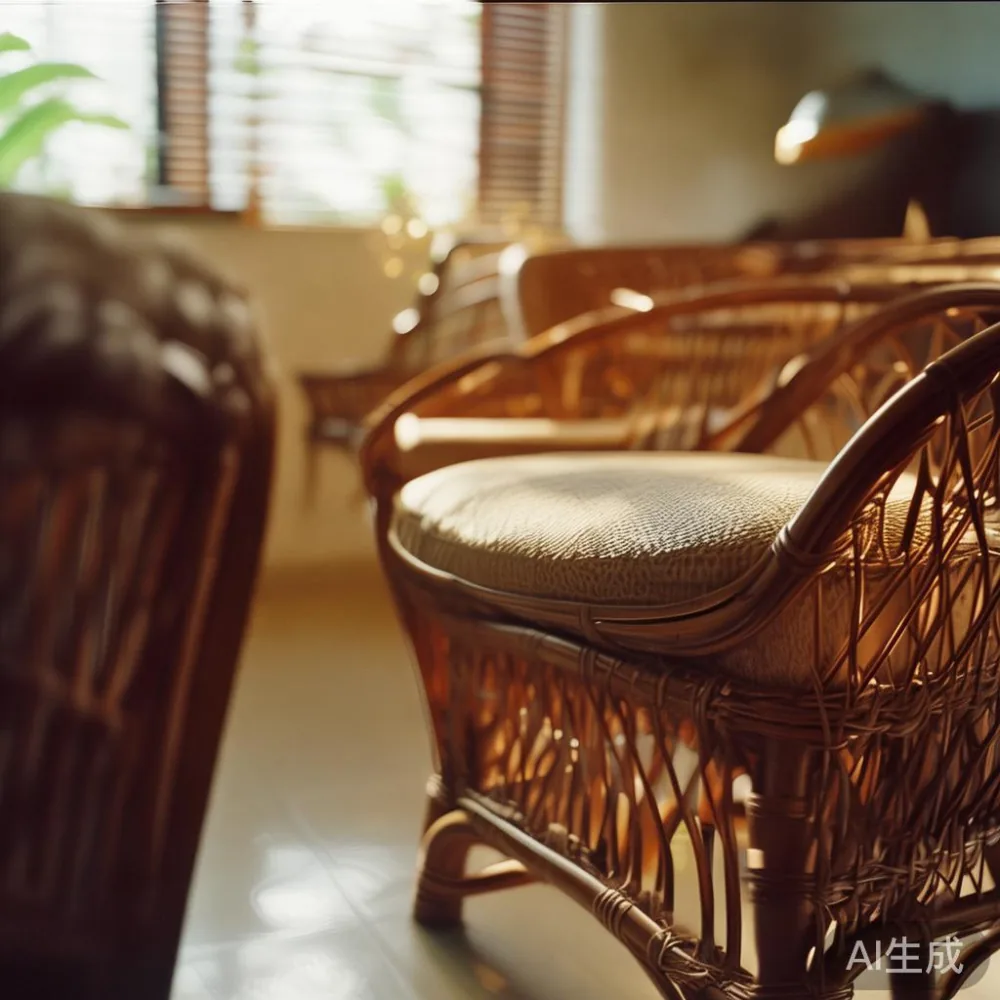
What Is the Right Weekly Routine for a Lacquered Rattan Wicker Surface?
A weekly clean takes 8 to 12 minutes for a six-seat dining table, and about 4 minutes per nightstand. Start by removing loose dust with a soft brush attachment on a vacuum set to 800W or lower. Stronger suction lifts the weave and can crack the lacquer joints. Then wipe along the grain of the wood underneath the rattan wicker with a microfibre cloth lightly misted with a 1:10 mix of pH-neutral soap and filtered water. Tap water in Singapore carries 60 to 80 ppm of calcium, and those minerals leave a film that builds up exactly where the haze starts. Distilled or filtered water costs about S$3.50 for 5 litres at FairPrice, and one bottle covers four weekly sessions.
Finish by buffing dry with a second clean cloth for 60 seconds. Never let a lacquered surface air-dry in a room where the AC is off and the doors are open. In a corridor-fronting HDB unit in Tampines East, the front door stays open for at least 20 minutes during the day, and that airflow carries corridor dust onto your console. Close the door before you buff, or run the AC at 24°C for 20 minutes so the surface cools and the moisture flashes off cleanly.
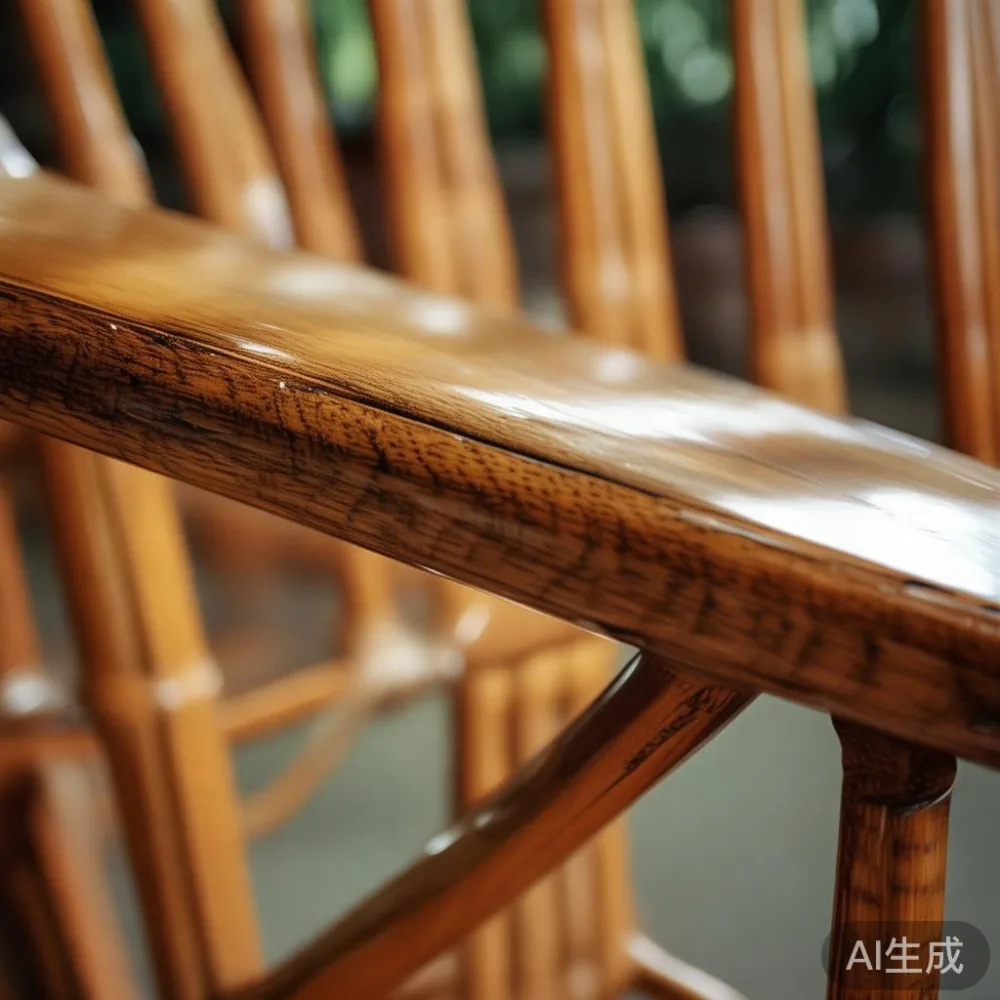
How Should I Position a Lacquered Bed Frame or Wardrobe Near a Window?
Keep lacquered furniture at least 1.5m from any window that gets direct afternoon sun, which in a typical Singapore HDB means the west or north-west face between 1pm and 5pm. If your bedroom layout forces the bed frame against the wall under a window, mount a 3% openness solar screen. These cost S$18 to S$35 per m² installed, and they cut UV transmission by around 97%. A lacquered surface that previously yellowed in 18 months will hold its tone for 7 to 10 years behind the same screen.
Wardrobes need slightly more thought. A 2.4m tall French light luxury wardrobe weighs between 95kg and 140kg, so once placed it tends to stay. Leave a 5cm gap behind it so air circulates; otherwise the back panel traps moisture and the lacquer on the hidden side starts to peel within 24 months. If you want to know how to style American wardrobe in room so the lacquer reads warmly rather than against the wall, hang a 60cm rattan wicker wall piece above it. The weave texture breaks up the flat lacquered planes and the eye gets movement.
Condos handle this differently because the windows are often tinted. A 6mm low-E glass at 38 Punggol Walk blocks about 70% of UV, and a lacquered bed frame placed 90cm from such a window needs no extra screen.
What Should I Do When Humidity Stays Above 85% for Weeks?
Singapore's monsoon months from November to January push relative humidity above 85% for 25 to 30 days at a stretch. Indoor RH in a closed HDB flat will sit between 78% and 88%. Lacquer tolerates this. The problem starts when RH jumps from 60% (a running AC day) to 88% (an open-window night) within an hour. Each cycle curls the lacquer edge, and after 40 to 60 cycles you see flaking.
Two small habits help. Run a 12L/day desiccant dehumidifier in the room for 4 hours before bed, or leave the AC on dry mode at 26°C overnight. Electricity for a 12L unit runs around S$0.12 per night at the current 0.34 SGD/kWh tariff. The bigger lever is to keep your solid wood sofa, dining table, bed frame, wardrobe, nightstand, and any marble table as a group in the same humidity range. Furniture stabilises together, and a 2% to 4% MC swing in a single piece produces less stress when neighbouring pieces move in sync.
I tested this in a colleague's 1,100 sq ft Punggol condo last November. She dehumidified her living room to 62% and kept her 2.4m Italian light luxury TV console 60cm from the AC vent. After eight weeks of monsoon, the console's lacquer sheen measured identical on a gloss meter at three points. The control piece in another flat, which sat with no dehumidifier near a balcony door, dropped 12 gloss units at the same three points. Same finish batch, same delivery week, opposite outcome.
How Do I Handle Spills, Sticky Hands, and Fingerprints on a Light Blue Luxury Sofa Frame?
Many Singapore families choose a light blue luxury sofa because the colour pairs with the cool tones of our LED downlights at 4000K. Lacquered armrests around woven rattan wicker on such a frame smudge within an hour of use. Keep a small kit in the side table drawer: two 30cm x 30cm microfibre cloths, one 50ml spray bottle with your 1:10 neutral soap mix, and one dry polish cloth.
Wipe sticky fingerprints within 10 minutes. Sugary drinks pull moisture into the lacquer and leave a permanent haze ring if left overnight. For candle wax, set a cotton cloth over the wax and press a warm iron (low setting, under 60°C) for 5 seconds. The wax lifts into the cloth. Never iron directly. Ink from a marker responds to a cotton bud dipped in isopropyl alcohol (70%), applied for 3 seconds, then rinsed with the soap mix. Always work along the weave direction.
Glue from a broken rattan strand can be fixed with a single drop of cyanoacrylate (S$6 for a 3g tube at any Tampines hardware shop). Apply with a 0.5mm needle tip, hold the strand flat for 30 seconds, and let it cure for 12 hours before you load the chair. Sand the repair gently with 1500-grit paper, then buff. The repair will never be invisible, but it will stop the peel from spreading.
Is a French Provincial Bed Frame Risky in a Tropical Climate?
A French provincial bed frame carries carved detailing that tends to be dust-prone. In HDB flats without a built-in bedroom dust cover, this detailing accumulates fine grit that bonds to the lacquer over 6 to 12 months. The grit then acts like fine sandpaper under your bedsheet movements. The fix is a monthly soft-brush vacuum pass over the carvings, taking 5 minutes, plus a quarterly polish with a paste wax rated for closed-pore lacquer.
If you want concrete guidance on how to style French provincial bed in bedroom for Singapore humidity, keep the bedding in 100% cotton or linen with a 200 to 300 thread count. Synthetic sheets at 800 thread count trap body moisture against the footboard and dull the lacquer within 9 to 14 months. The thread count matters because higher is not always better in the tropics. Cotton breathes, poly-cotton does not.
Skip the headboard-to-wall gap filler that some retailers push. A 3mm silicone bead traps moisture between the bed frame and the gypsum board wall. Paint first, then place the bed frame with a 1.5cm air gap.
What About Moving a 110kg Lacquered Wardrobe Through an HDB Lift?
HDB passenger lifts in Tampines, Bedok, and Punggol typically measure 1.1m deep by 1.4m wide by 2.1m tall, with a 1,000kg load limit. A 2.4m tall lacquered wardrobe will not fit on its side without disassembling the top moulding. Three movers, a 4-wheel dolly, and a moving blanket (S$15 to rent locally) handle the job in 90 minutes door-to-door.
Disassemble any glass inserts and wrap the lacquered doors separately in 80gsm foam wrap. Tape never touches the lacquered surface; tape residue costs S$40 to S$80 a panel to remove professionally. Door-to-door delivery from a Foshan workshop to a Singapore HDB runs 28 to 42 sea days plus 5 to 7 days for local handling, so plan delivery when you can be home for the full afternoon.
Solid wood sofas and dining tables travel in one crate per piece, total 14 to 18 crates for a four-piece set. Confirm the corridor width on your floor; HDB corridors are 1.5m wide, which clears a 90cm-wide marble table top by 60cm when rotated. Condo service corridors vary, and some newer blocks at Punggol Digital District have 2.4m service corridors that accept any single piece without tilting.
Comparing a European Sofa vs Modern Sofa Frame When the Frame Is Lacquered
The European sofa vs Modern sofa debate shows up most clearly in the frame finish. A European sofa typically arrives with a closed-pore lacquer on the hardwood frame, sometimes paired with woven rattan wicker panels along the apron. A modern sofa tends toward open-pore matte finishes or no finish on the visible wood. In Singapore humidity, the closed-pore lacquer wins for durability (8 to 12 year sheen life versus 4 to 7 for open-pore), but loses on repairability because touch-up requires a spray gun and 24-hour cure.
If you are shopping for the best French provincial sofa for 2026, ask the supplier three direct questions: what is the lacquer solids content (look for 32% to 38%), how many coats are applied (3 to 5 for furniture-grade), and is the rattan wicker sealed before assembly or after? Pre-sealed weave ages more slowly because the lacquer penetrates the cane cuticle. MIDHILL rattan wicker sofas ship pre-sealed, and the same Foshan workshop has shipped over the past 16 years to homes in 15 countries, which is a quietly useful track record when you are paying S$4,800 to S$9,200 for a four-seater.
When Should I Call a Refinisher Instead of Doing It Myself?
Refinishing matters once the lacquer loses 15% or more of its gloss on a 60° gloss meter, which is around the 7 to 10 year mark for a daily-use dining table in a typical HDB. Solid wood sofas and bed frames last longer because they sit further from UV. The refinishing process strips the old coat, sands to 320-grit, applies 3 new coats of pre-catalysed lacquer, and cures for 5 days before light use. Expect S$180 to S$320 per piece for a local Singapore refinisher, S$90 to S$140 for a nightstand, and a 7 to 10 day shop turnaround.
If a serious crack runs through a rattan wicker strand, take a photo, measure the crack length in cm, and email the workshop. MIDHILL offers lifetime refinishing on lacquered frames for residential customers, and the team can often ship a small repair kit (S$0 to S$25 depending on parts) rather than a full pickup. Keep your original invoice and the workshop batch number; both speed the process.
Final Checks Before the Monsoon Window Closes
Clean and buff every lacquered surface now, while humidity sits at 72% rather than 88%. Place a small digital hygrometer (S$12 at Challenger) on each wardrobe and console. Recalibrate your dehumidifier target to 60% rather than 55% because over-drying shrinks wood as quickly as over-humidifying swells it. Run a 60-second candle test on the dining table: hold a lit candle 30cm above the surface, watch the flame. If it leans, you have a draft, and that draft carries corridor dust onto the lacquer. Close the gap.
Keep MIDHILL's WhatsApp on hand at +86 188 2788 2512 for warranty questions or refinishing quotes. The team replies within 24 hours, ships small spares from Foshan to Singapore in 12 to 18 days, and handles warranty claims on a 10-year structural frame and a 10-year lacquer adhesion promise. With a 90-minute weekly routine and a quarterly polish, your rattan wicker and lacquered pieces should outlive two lease cycles and a few reno projects in your Singapore home.