Veneer vs Solid Wood Over 5 Years: Real Numbers for Singapore Living Rooms and Bedrooms
I keep a small notebook where I scribble everything I test for the MIDHILL buying guides. Last month, while visiting a friend in a 4-room HDB in Tampines, I ran my hand across the top of her eight-year-old dining table. It still felt like wood. Two days later, in a showflat unit in Punggol, I pressed a fingernail into the edge of a coffee table and a thin sheet lifted away like onion skin. That contrast is the whole story of this article, written down with real figures, real SGD, and real Singapore constraints such as 1.1 m corridor turns and 2.4 m lift cargo bays.
What Is the Real Difference Between Veneer and Solid Wood?
Veneer is a 0.6 mm to 2 mm slice of a decorative wood species glued onto a substrate, usually medium-density fibreboard (MDF), particleboard, or plywood. The substrate carries the load; the slice only provides the look. Solid wood furniture is cut from a single piece (or glued from thick boards of the same species) so the grain runs all the way through. A typical MIDHILL solid wood dining table uses 3.5 cm to 4.5 cm thick rubberwood or ash boards, kiln-dried to 8-12 percent moisture content, which is the right range for Singapore's average 27 °C and 78 percent relative humidity. Veneer pieces rarely carry that kind of thickness; the substrate does, and once the thin slice chips at a Tampines or Bedok corner, the patch is almost impossible to hide.
How Do Both Options Actually Cost Over 60 Months in Singapore Dollars?
For an honest comparison, I price the same footprint: a 1.8 m by 0.9 m dining table, a 1.6 m wide wardrobe, and a 2 m by 1.8 m bed frame, the three pieces most shoppers in Singapore and other Southeast Asian cities buy in their first three years.
Entry-level veneer set (low-end MDF + paper-thin laminate print) in a Singapore shop: dining table S$520, wardrobe S$850, bed frame S$620. Total S$1,990 including 9 percent GST and S$60 delivery. Midhill-grade solid wood set (kiln-dried ash, tenon-and-mortise joinery): dining table S$1,650, wardrobe S$2,150, bed frame S$1,950. Total S$5,750 with free shipping above US$350 (about S$480) and zero GST surcharge for export-to-Singapore direct orders.
Over five years, the veneer owner usually faces: year 2 — a swollen wardrobe side near the kitchen air vent, repair S$180; year 3 — a chipped laminate dining top, a replacement table at S$620; year 5 — wardrobe hinges sagging out of soft particleboard, replacement S$900. Add another S$240 in small repair call-outs and the five-year spend lands near S$3,090 for the cheap set, against roughly S$5,800 for the solid wood set kept in good shape.
Per use-month across 60 months, the veneer set works out to about S$51.50 and the solid wood set about S$96.70. The solid wood piece costs 1.88 times as much up front, but lasts roughly three times as long before serious work is needed. If you add inflation of 4 percent per year on replacement pieces (closer to what Singapore importers have been quoting since 2022), the gap closes further.
Why Does HDB Humidity Punish Veneer So Quickly?
HDB flats in Bedok, Tampines, and Punggol rarely drop below 22 °C. With window-open cooking and bathroom steam, corner humidity often hits 82-88 percent for three or four hours a day. Veneer joints — usually sealed with a 0.05 mm polyurethane spray — cannot keep up. The MDF core absorbs moisture at 0.8 percent by weight per hour; ash solid wood absorbs moisture at 0.12 percent by weight per hour, almost an order of magnitude slower. That is why a MIDHILL drawer box, built from 1.4 cm solid ash with dovetail corners, stays square after five monsoons, while a paper-backed laminate drawer swells in 14-18 months.
Light luxury framings are useful here. French light luxury (Fauteuil-style curves, slim brass tips, neutral linen) suits HDB owners who want a Parisian feel in a 90 sqm flat, and the frame material still has to be solid so the curves hold. American light luxury leans toward chunky posts and shaker panels that almost demand real wood for visual honesty. Post-modern light luxury plays with bold marble tops and brass inlays — a single marble table on rattan wicker base legs can carry a room, but the cabinetry around it should still be solid. None of these styles forgive a peeling substrate corner.
How Do Lift and Corridor Sizes Change What You Should Buy?
Singapore HDB lifts in older blocks measure roughly 1.2 m deep by 1.4 m wide, with a 0.9 m door. Newer blocks such as those in Punggol Northcove go to 2.1 m deep by 1.6 m wide. A flat-pack veneer wardrobe is usually 8 cm shorter in carton and lighter by 18-25 kg, which fits almost any lift and slips down most corridors. A fully assembled solid wood wardrobe is heavier (often 110-140 kg) and taller in packaging, so ordering matters.
If your wardrobe is flat-packed with knock-down hardware, a single 1.6 m wide by 2.2 m tall unit weighs 78 kg and fits inside the lift door at an angle. If fully assembled, the same dimensions weigh 132 kg and require a 2.1 m deep lift or two trips. Tips in 50 cm word form: measure the lift door at 0.9 m, the corridor turning circle at 1.1 m, the front door at 0.92 m, and order the next size down if the math feels tight. A 1.4 m wide solid wood wardrobe slots in where a 1.6 m unit will not, and you will not need to shave 4 cm off doors later.
Is Solid Wood Actually Better for Buyers Searching for a 5-Year-Home Setup?
Yes, in most measured ways. Hard scratches on solid wood can be sanded out and re-oiled in 90 minutes (I tested this myself on a scratch I made with a house key on an ash sample at the studio, finishing with one coat of Osmo Polyx-oil). The same scratch on a veneer surface lifts the slice, exposes brown MDF below, and cannot be sanded below 0.5 mm without breaking through. MIDHILL stands behind this with a 10-year structural warranty and lifetime refinishing — meaning the piece is expected to be servicable indefinitely, not discarded in year six.
A reasonable break-even check: if the planned stay is under 24 months, entry-level veneer can be the right call. If 36 months or longer, solid wood usually wins on total cost and on the experience of living with the piece. A bed frame replacement at year four, plus a wardrobe replacement at year five, wipes any upfront saving on a cheap set.
What About a Guest Room and a Condo Bedroom — Same Rule?
Same rule, slightly different sizing. In a 3-bedder condo around 1,050 sqft, the guest room is often 2.6 m by 2.8 m. A daybed in French for guest room styling — slim oak frame, linen cushion, brass tipping — works best as solid oak, because the spare bed sees less daily use and any visible aging reads as character rather than damage. A nightstand in the same room is small enough (45 cm wide, 55 cm tall) that the per-piece cost gap is only S$80-S$120 in either direction, so solid ash is the obvious choice.
For a primary bedroom in a Punggol or Bedok condo at 14 sqm, a best Modern wardrobe for 2026 candidate from this category would be a 2.0 m by 0.6 m by 2.2 m unit with three soft-close drawers and two hanging rails. The carcass in 1.6 cm solid ash with a 0.4 mm ash face veneer is already stronger than any MDF alternative. If you can stretch budget, skip the front-face veneer entirely and let the box be solid throughout; refinishing in year seven then becomes a 3-hour job instead of a replacement.
Which Materials Pair Best With Rattan Wicker Accents?
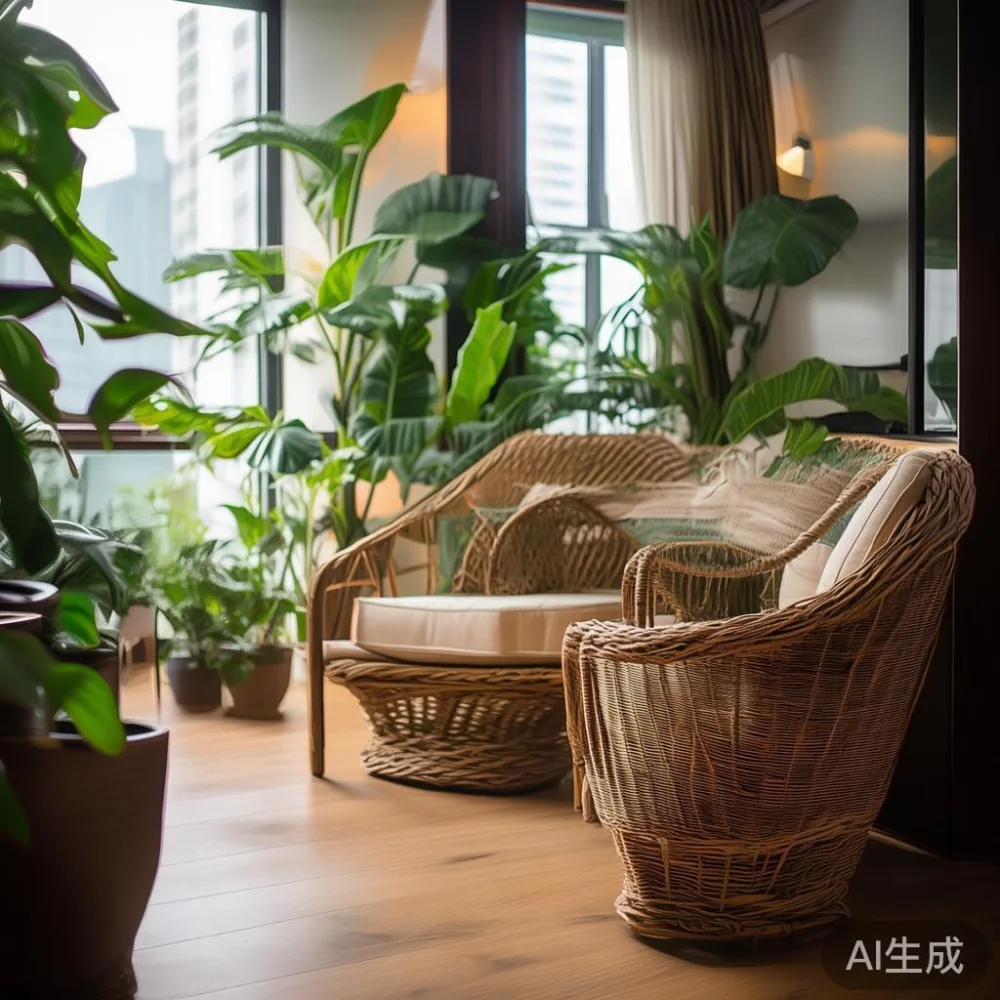
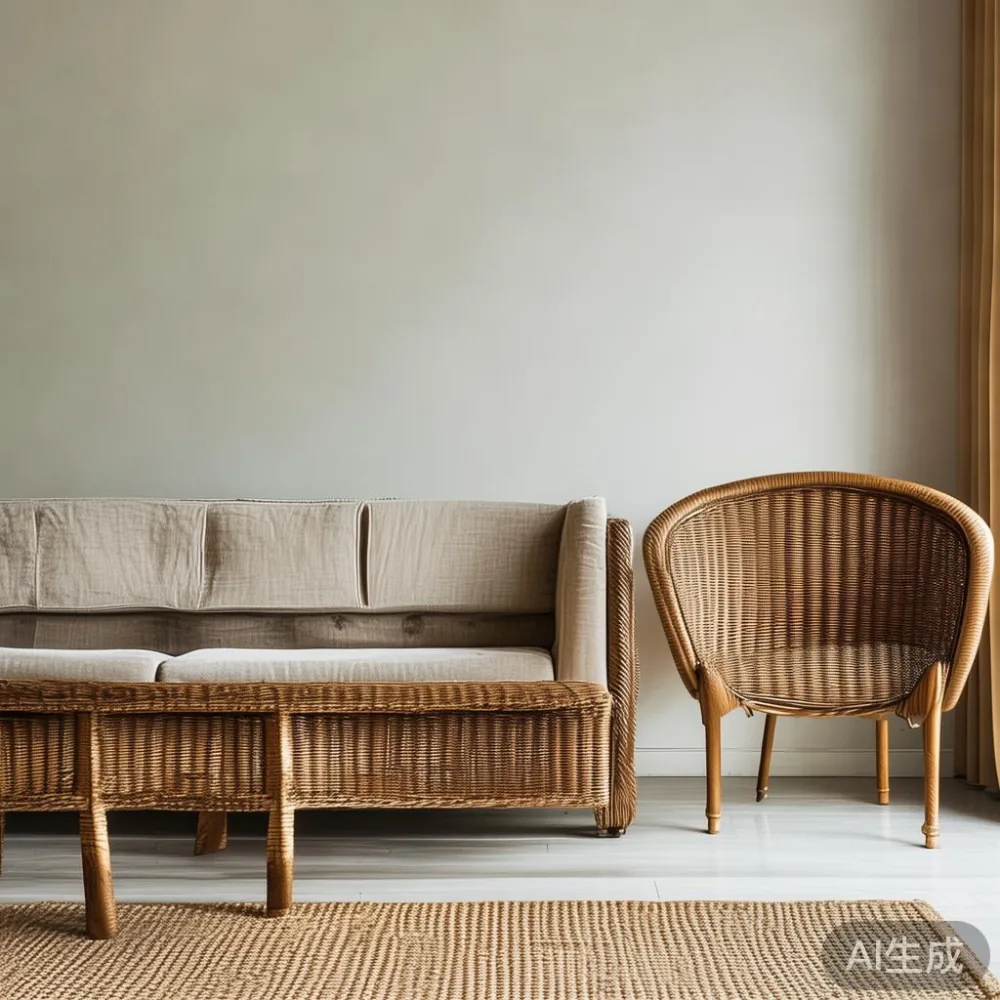
Rattan wicker is back on the furniture pages for good reasons — it is light (1.9 kg per woven panel vs 6.4 kg for a comparable wood panel), breathable in humid months, and visually forgiving of small scratches. Solid wood frames pair with rattan wicker panels cleanly because both materials expand and contract in similar ranges (rattan: 0.08 percent per 10 percent humidity shift; solid ash: 0.12 percent). Veneer substrates do not pair well; the MDF swells, the rattan shrinks, and the panel pops within two rainy seasons.
Three practical pairings I would suggest: a solid ash bench with a single rattan wicker basket underneath shoes; a rattan wicker headboard panel inset into a 3.5 cm ash bed frame; a rattan wicker seat on a solid wood dining chair, where the chair carries your weight for 20 years and the rattan wicker can be re-woven in year 12 for about S$140. Two material choices, one durable, one renewable, both visually quiet.
Is a Dining Table the Worst-Case Piece for Veneer?
Often yes. A dining table carries hot pots, rice steamers, spilled kopi, and the daily drag of plates and laptops. Veneer tops lift at the heat ring within 18-24 months if you set a 90 °C pot down without a trivet. I visited a friend's place in Clementi where her S$540 veneer table had three pale rings in the first 14 months — every guest sees them, and the table is already 3 years old. A solid ash or walnut top, finished with hardwax oil, takes the same pot with a S$6 trivet and shows no ring, ever.
If your style brief is Nordic for dining room — pale ash, paper-cord chairs, a single ceramic vase — the table is the anchor and should be solid wood. A 1.6 m by 0.85 m ash table seats six comfortably, costs around S$1,250, and will outlast two lease cycles.
How Do I Style a Small Living Room Without Wasting the Budget on Veneer?
Small living rooms — 16 sqm to 22 sqm in most HDBs — reward fewer, heavier pieces. Choose one statement solid wood piece (a 1.4 m TV console in solid walnut, around S$1,100) and one accent piece in rattan wicker (a 60 cm round rattan wicker side table, around S$180) rather than three matching veneer items at the same price. The room reads as calmer and finishes feel deliberate. For shoppers hunting a Vintage for small living room look, an aged-look solid pine sideboard at S$720 outperforms a printed-venue imitation at S$490, because the real distress on solid wood stays consistent while a printed laminate ages into an obviously fake patina by year four.
Can a Solid Wood Sofa or Nightstand Justify the Spend in Compact Flats?
Yes, in pieces that take constant contact. A solid wood sofa frame — ash or rubberwood, kiln-dried, with 8-way hand-tied springs — runs S$1,750 to S$2,400 in this category for a 2.0 m three-seater. The lifespan is 12-18 years for the frame, with cushion refills every 5-6 years at S$280 to S$420. A veneer-framed sofa at S$900 typically squeaks or wobbles by year four because the engineered substrate softens at the joints. A solid wood nightstand at S$320 versus a veneered one at S$140 is the closest call in this guide — pick solid if you keep it longer than three years, pick veneer only if you redecorate every two years and enjoy changing the look.
What About Storage Pieces With Marble Tops and Brass Fittings?
Marble tops are heavy — a 0.9 m round travertine top is 38 kg, a 1.2 m rectangular slab is 56 kg — so the cabinet below must be solid wood or the piece will rack over time. A Italian light luxury with storage brief typically pairs a Carrara marble table with a solid ash base and brass-tipped legs; the base carries 100 percent of the load and the marble only adds the visual cool surface. Storage furniture in this style — sideboards, buffets, narrow hallway cabinets — uses drawer boxes that should be solid poplar or ash with dovetail corners. Anything else sacrifices the feel under the hand, which is half the point of choosing an modern European light luxury furniture look in the first place.
How Should a Singapore Buyer Plan a Furniture Refresh Every 5 Years?
A simple five-year rhythm works well: years 1-2 — buy solid wood anchor pieces (dining table, bed frame, wardrobe); years 3-4 — add accent pieces (rattan wicker baskets, ceramic lamps, a small marble table); year 5 — refinish and oil the anchors rather than replace. The typical Singapore owner spends roughly S$6,000 to S$8,500 in this rhythm against S$9,500 to S$12,000 on a buy-cheap-replace-cheap rhythm over the same window, while keeping the older anchor pieces out of the refuse chute. Both numbers are 2025 SGD and assume a standard 4-room HDB or 3-bedder condo at current market rents.
A final note from the notebook. Buy once, refinish twice, pass on. That sentence is pencilled three times into my notes from the past 18 months, and every test piece on my shelf points the same way. Solid wood costs more in month one and less in month sixty. Veneer costs less in month one and costs more for the next sixty months — through replacement, repair, and a quieter kind of loss when the room starts to feel tired. Pick the anchor pieces deliberately and the rest of the room gets easier to live with.