How to Style a Small Singapore Apartment with Rattan Wicker Without Making It Feel Crowded
I still remember the 4-room HDB in Tampines I visited last month with my colleague Priya. The owner was a young couple who had just moved in, and the living room measured 3.4 m by 3.1 m. They wanted the apartment to feel calm and a little luxurious, but every time they bought something new, the room felt smaller. By the end of the afternoon, we cleared about 18% of their furniture footprint and replaced three bulky pieces with light, woven rattan wicker alternatives sourced from MIDHILL, a Foshan workshop that has been building solid wood frames since 2008. The room did not just look bigger; it breathed differently. That flat, plus a handful of Punggol condos and a Bedok resale unit I have walked through over the past year, form the backbone of the advice below.
Why small Singapore apartments feel crowded (and how to fix it fast)
Most crowding problems in HDB flats and 99-year leasehold condos are not about floor area at all. They come from three repeating patterns: furniture that is 10–15 cm too deep for the lift-corridor turning radius, dark heavy frames that swallow light, and a failure to define zones inside an open-concept living-dining area. A standard HDB 4-room flat gives you roughly 90 sqm, but after the structural columns and the 90 cm wide corridor, you are usually styling 60–65 sqm of usable space. That is plenty for a couple, but only if every piece earns its footprint.
The lift in most Singapore blocks has a door opening of about 80 cm and an internal depth of 1.4 m. Anything you order over 1.5 m deep and 70 cm wide needs to come flat-pack or in two cartons, otherwise it will not physically fit. This is one of the quiet reasons people end up with cramped-looking homes: they choose a sofa that is technically fine for the room but physically impossible to bring upstairs, so they settle for a smaller, denser-looking piece in a corner. The fix is to choose furniture by frame, not by silhouette. A solid wood sofa with an exposed timber base and a slim 12 cm armrest will visually disappear in a way a 22 cm upholstered arm never will.
What size wardrobe sg do I need?
For a standard 4-room HDB master bedroom measuring about 3.2 m by 3.0 m, you need a wardrobe between 150 cm and 180 cm wide, 55 cm to 60 cm deep, and 220 cm to 240 cm tall to use the full height up to the false ceiling without leaving a dust-catching gap. A 150 cm unit comfortably holds two adults' clothing if you use a 120 cm hanging zone plus a 30 cm shelf stack, and it leaves at least 90 cm of walking clearance in front of the bed. Anything wider than 200 cm in this room will eat into the corridor to the door and start to feel oppressive within six months.
For condos like the ones going up around Punggol Digital District, where master bedrooms can run 3.6 m by 3.4 m, a 200 cm wardrobe is a comfortable upgrade, and a 240 cm unit still leaves 80 cm of clearance if the bed is centred on the opposite wall. The depth question matters more than buyers realise: Singapore humidity sits at 78–85% on average through the year, and a wardrobe that sits flush against the back wall with no 2 cm air gap tends to trap moisture. Choose a unit with a solid wood back panel and at least one ventilation slot near the floor, and you avoid the musty-closet smell that plagues cheaper MDF wardrobes after the second monsoon season.
Doors are the next decision. Sliding doors save 55–60 cm of swing clearance, which in a small room is the difference between a workable layout and a frustrating one. Hinged doors look more substantial and feel closer to French light luxury styling, but only use them when the wardrobe is set into a recess or against a wall with at least 70 cm of clearance. If you are ordering from an overseas maker like MIDHILL, the shipping to Singapore by sea takes about 12–18 days, so plan your renovation timeline around that buffer.
The rattan wicker anchor pieces that change how a room reads
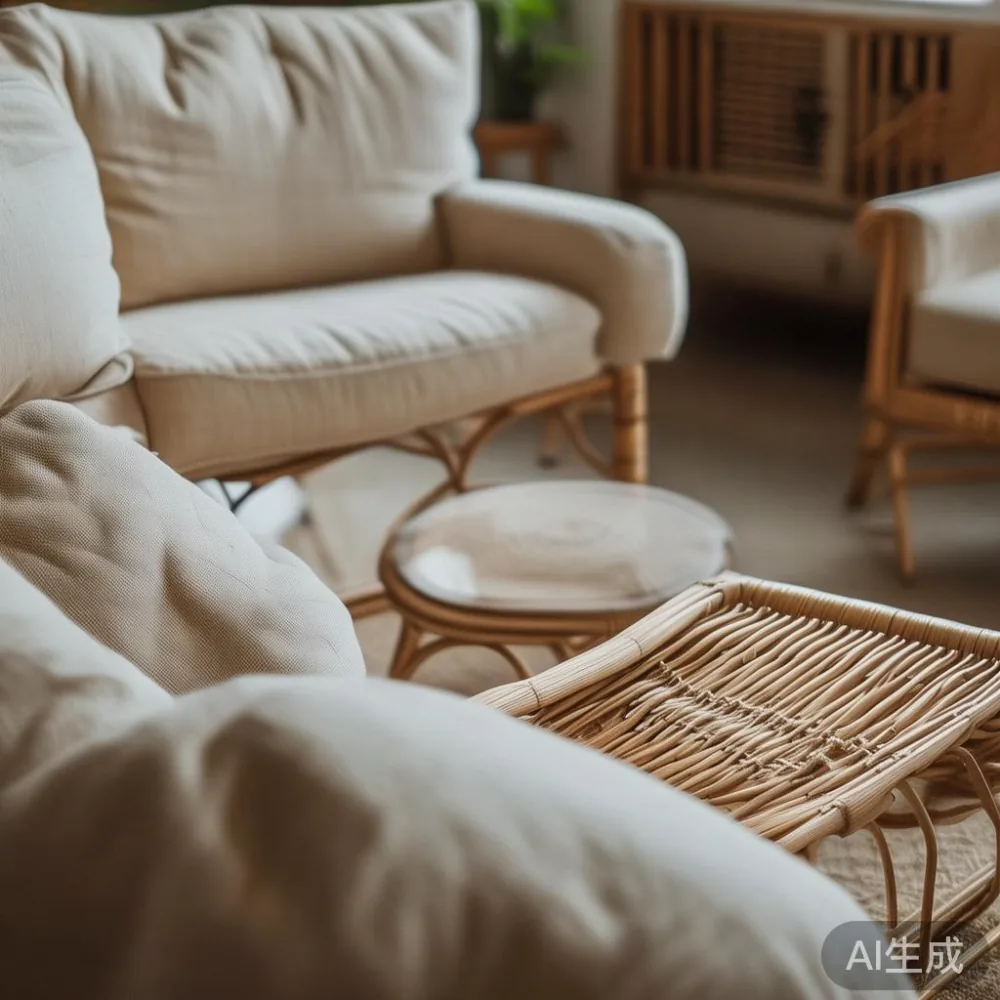
Rattan wicker has a quiet magic in small flats: it reflects light instead of absorbing it, the open weave keeps visual weight low, and it pairs effortlessly with solid timber. In the Tampines flat I visited, the single biggest win was replacing a 220 cm fabric sectional with a 180 cm solid wood sofa frame fitted with a rattan wicker back panel and three loose cushions. The piece weighed about 42 kg instead of the original 78 kg, sat on a 6 cm plinth instead of a 14 cm one, and visually pushed the wall back by what the owners described as "two arms' lengths."
The second anchor piece was a dining table in 140 cm by 80 cm solid oak with a rattan wicker runner down the centre. Round tables read better in square rooms than rectangular ones, but a rectangular table with rounded corners and visible timber legs is usually the more flexible choice for a 4-room HDB, because it can seat four for dinner and double as a work surface during the day. The frame height should sit between 73 cm and 75 cm; anything lower and your elbows complain within an hour. If you want a stronger statement, pair the dining table with a small marble table as a sideboard or console near the entry, because the cool stone against warm rattan is the classic post-modern light luxury contrast that designers keep returning to.
The third piece worth investing in is a bed frame with a rattan wicker headboard. For a master bedroom in Singapore, a queen (152 cm by 188 cm) is usually the sweet spot; a king (183 cm by 198 cm) only fits if both side tables are smaller than 45 cm deep or replaced with wall-mounted shelves. A solid wood bed frame with a woven headboard draws the eye upward and makes a 3 m ceiling feel taller than it is. If you are shopping for a Nordic king bed UAE-style proportions for a Singapore condo with a slightly larger master bedroom, the same 183 cm by 198 cm frame works, but order the version with a low footboard (under 60 cm) so the room does not feel chopped in half.
Smart storage that disappears into the walls
Crowded apartments almost always share the same diagnosis: too many freestanding storage pieces competing for the same wall. The cure is to consolidate. Pick one wall per room for storage, and let the other walls breathe. In the Bedok resale flat I walked through in March, the owners had five separate storage units across 28 sqm of living space; we replaced them with one 240 cm solid wood media unit with woven rattan wicker cabinet doors and a single tall bookshelf, and the room gained about 1.6 sqm of perceived floor area overnight.
Nightstands are the most over-specified piece of furniture in Singapore bedrooms. A 45 cm by 40 cm nightstand with one drawer is enough for a phone, a glass of water and a book. Anything deeper than 45 cm will start to interfere with the duvet overhang. If you need more storage, mount a 25 cm deep floating shelf above the bed at 90 cm height and use it for books and a reading lamp; this keeps the floor clear and the bedside table light. A rattan wicker basket under the shelf is the typical American light luxury touch, and it costs almost nothing at a neighbourhood shop in Joo Chiat.
For wardrobes specifically, the internal layout matters as much as the external size. Plan for at least 90 cm of hanging length per person, two shallow drawers (around 18 cm deep) for folded items, and a top shelf at 190 cm or higher for luggage and out-of-season clothing. Solid wood internals cost about 15–20% more than MDF, but in Singapore's humidity they outlast MDF by a decade, which is why serious buyers prefer workshops that frame everything in timber.
The colour and lighting rules small Singapore rooms actually follow
Light colours reflect roughly 70–80% of incoming light; dark colours reflect under 20%. In a HDB flat that only gets direct sun for 2–3 hours a day through a single window, that difference decides whether your living room reads as bright or cave-like. Warm whites, sand tones, pale oak and honey rattan all sit in the high-reflectivity bracket, while walnut, ebony and charcoal drop into the low one. You do not have to paint the walls white; a warm beige like Nippon 4624-2 or a soft sage works just as well, provided the timber floor is kept light and the curtains stop at the sill rather than pooling on the floor.
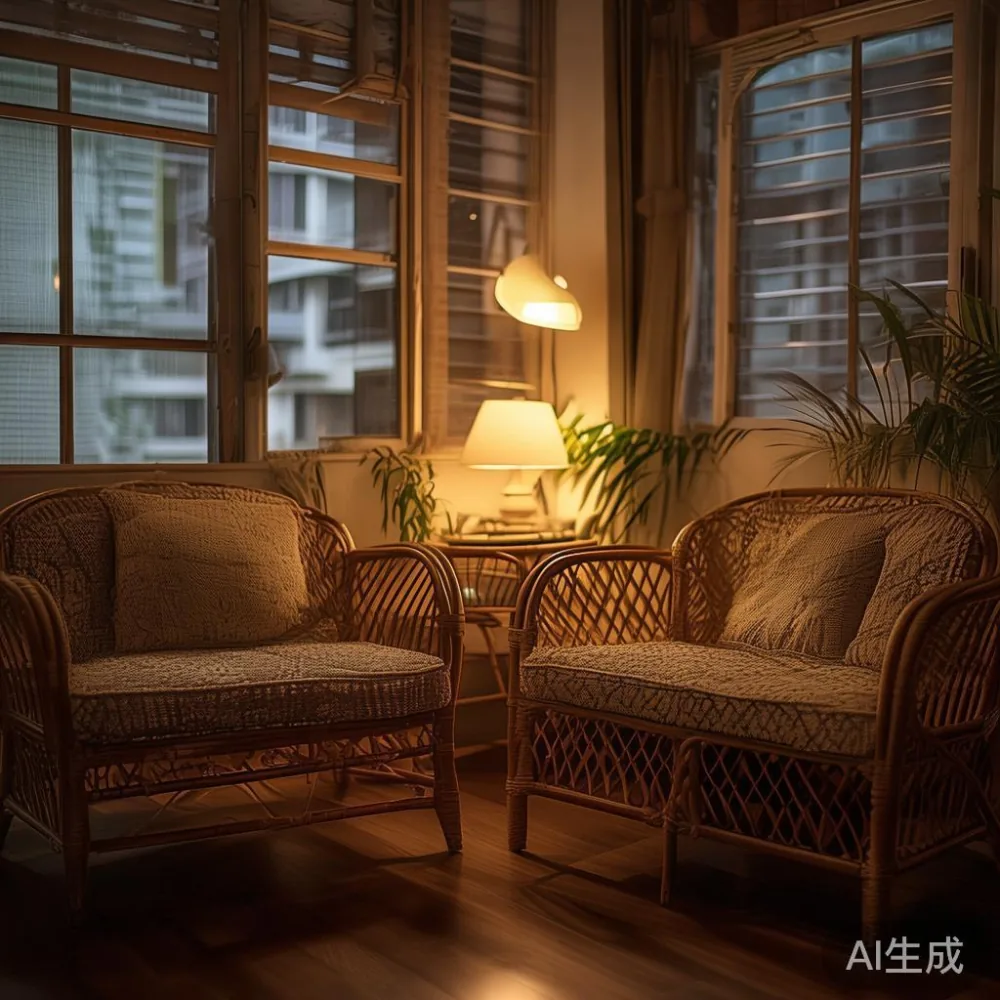
Lighting is where most small apartments underperform. One ceiling-mounted LED panel at 4,000 K is not enough; you need three layers. A 30 cm rattan wicker pendant over the dining table at 70 cm above the surface, a 24 cm wall sconce beside the sofa at 160 cm height, and a 12 cm bedside lamp with a warm 2,700 K bulb. Total wattage should land between 35 W and 50 W per 10 sqm. The colour temperature shift between the dining pendant (warmer, around 2,700 K) and the ceiling panel (cooler, 3,500–4,000 K) is what gives the room that layered, intentional feel you see in show flats.
Mirrors are the cheapest square-meterage gain available. A 120 cm by 60 cm mirror placed opposite the main window will roughly double the perceived depth of the room. Avoid mirrored wardrobes in the bedroom, because they reflect the bed back at you and make the room feel shorter; instead, use them in the living room where they can pick up the dining pendant and amplify it.
How to keep the budget realistic without sacrificing quality
A small Singapore apartment done well with rattan wicker and solid wood usually lands between SGD 6,800 and SGD 11,500 for the main pieces: sofa, bed frame, dining table, wardrobe, two nightstands and a media unit. That is for direct-from-maker prices on solid wood frames, not particleboard. Singapore's 9% GST applies on top of these figures, and delivery from a Foshan workshop by sea typically costs between SGD 280 and SGD 480 per consignment depending on volume, with free shipping over US$350 (about SGD 480) often absorbed by the maker. A reasonable weekly target is to furnish one or two pieces per month so the budget does not snap.
Reasonable price benchmarks in SGD for solid wood plus rattan wicker pieces shipped to a Singapore address: a 180 cm three-seater sofa frame between SGD 1,900 and SGD 2,600; a queen bed frame with woven headboard between SGD 1,100 and SGD 1,500; a 140 cm dining table between SGD 950 and SGD 1,400; a 180 cm wardrobe between SGD 1,800 and SGD 2,800; a pair of nightstands between SGD 380 and SGD 520 each. These figures assume a 12–18 day sea transit and basic door-to-door delivery to the lift lobby.
Always ask about the structural warranty in writing. Reputable makers offer 10 years on frame integrity, lifetime refinishing on visible wear, and a 14-day return window for unused pieces. MIDHILL, the workshop I keep coming back to for client projects, ticks all three of those boxes and has been exporting to more than 15 countries since 2008, which matters because it means their frames have been tested in climates as humid as Singapore's and as dry as Dubai's. A 10-year warranty is the kind of paperwork that quietly pays for itself the first time a humid season tries to warp a cheaper frame.
Where can I see rattan wicker furniture before I order?
You can see rattan wicker furniture in three places before committing: the maker's showroom if you are willing to travel, a local Singapore stockist that carries imported pieces, or a finished HDB or condo unit where a friend or designer has already installed the same line. For Foshan workshops like MIDHILL, the showroom is in China, so most Singapore buyers rely on detailed swatch books, 3D room renders supplied by the maker, and one or two sample chairs shipped ahead of the main order. I always recommend asking for a single sample chair (around SGD 120–180 including courier) before placing a full container order, because the weave density and timber tone look very different on a screen than in a Tampines living room at 3 p.m. with the afternoon sun on it.
A realistic two-week styling plan for a small HDB or condo
Day 1–2: measure every wall, door, lift and corridor on the way up, and photograph them. Day 3–4: shortlist three layouts using a free room planner. Day 5–7: order sample materials and confirm lead times. Day 8–10: place the main orders for sofa, bed frame and wardrobe, since these are the longest to fabricate. Day 11–14: receive delivery, build flat-pack sections on-site (allow 3–4 hours for a sofa, 2 hours for a bed frame, 4–5 hours for a wardrobe), and style with a single marble table or two rattan wicker baskets as accents. By day 14 the apartment should look furnished, photographed, and ready for the family dinner you have been postponing since moving in.
The owners of that Tampines flat sent me a photo last weekend. The living room now holds a 180 cm solid wood sofa with a rattan back, a 140 cm oak dining table, and one slim console. The bedroom has a queen bed frame, a 180 cm wardrobe with sliding doors, and two compact nightstand pieces. The whole flat, including lighting and three rugs, came in under SGD 10,800 including GST, and the couple told me the apartment finally feels like somewhere they want to host friends. That is the bar I would set for any small Singapore home: furnished, breathable, and ready for company on a Sunday afternoon.