Price Factors in Rattan Wicker Furniture Explained
Solid wood furniture is often sold with a persuasive story: a European design pedigree, hand-finished surfaces, sustainable materials and the promise of a piece that will outlive a rented apartment. In Singapore, those stories influence the final price, but they do not explain it on their own. The real cost sits in timber grade, moisture control, joinery, dimensions, hardware, finishing, packaging and the logistics required to reach a HDB flat, Tampines condo or Punggol home.

I visited a supplier’s workshop last month to inspect a batch of solid wood dining tables. Two tables had similar silhouettes and nearly identical-looking oak surfaces, yet their retail prices differed by SGD 680. The reason was not the photograph. One used kiln-dried boards with tighter grain control and conventional mortise-and-tenon joinery; the other contained wider variation in board width and more complex routing. Measurements exposed the difference: the first frame weighed 46 kg, had 8 cm legs and a 180 × 90 cm top, while the second weighed 39 kg and used thinner components. This inspection showed why solid wood pricing cannot be reduced to a wood species or a designer label.
MIDHILL makes rattan wicker furniture alongside its solid wood range, and the contrast is useful. A rattan wicker dining chair may combine a 4 cm ash frame, woven rattan panels and a 3 cm seat pad, while a solid wood bed frame may contain several large boards joined around a much heavier centre structure. Both can sit comfortably in the same Singapore interior, yet their costs arise from different material and production demands.
Why does solid wood furniture cost more than MDF or veneer?
The core distinction is what runs through the piece, not merely the visible surface. Solid wood uses timber throughout the structural components: rails, legs, frame members, table tops, drawer parts and bed slats. MDF is an engineered fibreboard made from bonded wood fibres, while veneer uses a thin layer of attractive timber over a panel made from another material. Neither is automatically inferior. MDF can provide stable edges and flat panels at a lower material cost; veneer can reproduce a particular grain pattern consistently. Their price is lower because large areas do not require solid timber.
That does not mean solid wood deserves a premium in every application. A 45 cm bedside table with one drawer may use less timber and fewer complex joints than a 200 cm wardrobe. A marble table may have a relatively compact structure but a costly stone slab, while a rattan wicker chair has less solid timber by weight but still requires careful frame construction. Price follows the bill of materials and the labour required to assemble them well.
The mass of the timber also affects handling. A 210 cm solid oak dining table may weigh 62–78 kg before packing, while a similar-looking engineered table might weigh 28–35 kg. More kilograms mean more freight, more protective packaging and usually more delivery labour. Freight to Singapore can involve sea or air movement, customs clearance and a final-mile trip from a local warehouse. A freight quote covering 62 kg occupies a different cost category from one covering 32 kg.
Wood movement is another factor. Solid timber expands and contracts as humidity changes. Singapore’s year-round climate means furniture must tolerate moisture variation without splitting, bowing or loosening joints. A responsible maker accounts for this through appropriate drying, stable joinery and controlled finishing rather than pretending wood is inert.
Is timber grade the biggest price driver?
Timber grade is often the first answer, but it is only one part of the price. Grade reflects board selection, grain consistency, knots, defects, colour variation and the amount of usable material in each log. FAS-grade boards generally offer broad, continuous sections with fewer defects, while lower grades may contain smaller pieces, knots or tonal differences. Premium grades make it easier to create matching table tops, continuous wardrobe fronts or long bed rails.
Measure the actual board dimensions. A table top made from 3 boards of 22 cm width will look different from one made from 4 boards of 18 cm, even if both are described as solid oak. The first may provide longer uninterrupted grain but can be harder to source. Likewise, a 4 cm solid wood dining table top normally contains substantially more timber than a 2.5 cm top. If one seller shows a 2.5 cm top and another shows a 4 cm top, the price gap reflects more than marketing.
Species matters too. Teak, oak, walnut, ash and other hardwoods differ in raw-material cost, density, workability and regional availability. Teak is commonly associated with outdoor and moisture-resistant use, although indoor treatment and finish quality remain necessary. Walnut can command a higher price because of its figure and supply constraints. Cheaper domestic or plantation-grown woods can be excellent when the grade, drying and construction are sound.
The customer should ask for the species, thickness, dimensions, finish and structural details in writing. “Solid wood” alone is not a complete specification. A solid wood sofa may combine a kiln-dried hardwood frame with upholstered cushions, whereas a solid wood bed frame concentrates the timber cost in the headboard, side rails and slats. A wardrobe uses tall panels, drawer boxes and doors; a nightstand uses smaller parts but needs accurate alignment. Similar materials do not produce identical costs.
How do joinery, hardware and finishes change the price?
Joinery determines how much labour is built into the furniture and how long it should remain rigid. Mortise-and-tenon joints, dowelled frames and well-fitted corners generally require more setup and shaping than simple screw fixes concealed behind panels. On a solid wood dining table, the apron, legs and top must move together without visible gaps. On a 180 cm wardrobe, drawer alignment and door squareness become especially important because normal use repeatedly pulls and closes the moving parts.
Hardware can also create a meaningful difference. A basic drawer runner may cost a few dollars, while soft-close runners and more precise hinges add more. Swivel mechanisms, adjustable bed supports, metal connectors and high-load wall anchors each have their own price. Quality should be judged by function and installation requirements, not by whether the piece is dressed in gold-coloured metal. A 90 cm nightstand with a premium drawer runner should not carry the same specification as a simple 40 cm side table.
Finish is easier to compare when expressed as a system. Water-based polyurethane may offer a clear protective layer with lower solvent impact; oil and wax treatments can create a tactile surface but may require more frequent care; lacquer and other film finishes can increase sheen and maintenance demands. The number of coats, preparation time, colour matching and whether all surfaces are sealed affect cost. A pale ash dining table and a dark walnut wardrobe are not difficult to finish merely because they are pale or dark; the harder issue is maintaining an even appearance across large panels.
Surface quality should be inspected under normal lighting. Look for a consistent 90-degree corner, closed joints, smooth transitions around edges and an even sheen. On a solid wood sofa, inspect the frame and the cushions separately. A close-fitting wooden arm should meet the seat rail without a distracting gap. On a marble table, inspect the underside, slab thickness, edge treatment and support system, since a 3 cm stone slab is not automatically stronger than a 2 cm slab if the support arrangement is poor.
Does French or Italian light luxury justify a higher price?
A design label can support a price premium when it corresponds to measurable choices: proportion, timber selection, upholstery, hardware, finish consistency and detailed assembly. French light luxury often favours soft silhouettes, pale upholstery and crafted timber details. American light luxury tends toward generous proportions and substantial comfort, while post-modern light luxury can use clean geometry with selective curves. These references are most useful as descriptions of visual intent, not as substitutes for specifications.
For Singapore interiors, modern European light luxury furniture can be effective when the scale is controlled. A 220 cm sofa may suit an HDB living room with a 280 cm usable wall, but a 240 cm sofa could crowd a narrow corridor-facing arrangement. Dining rooms benefit from 160–180 cm tables for compact zones, while a 200 cm table demands more clearance around each side. Italian light luxury for small living room projects often rely on proportion, pale materials and restrained ornament rather than oversized dimensions.
Modern light luxury for small living room schemes also depends on space planning. A low 42 cm bed frame can preserve visual space in a Tampines flat, while a bulky 55 cm frame may dominate a compact bedroom. A slim 180 cm solid wood wardrobe may provide hanging space without projecting too deeply into the room, although the internal layout still needs to be checked.
Buyers searching for the best European bed for 2026 should compare the bed frame construction, support spacing and mattress fit, not only the headboard profile. Likewise, those asking how to choose Mid-century modern wardrobe should check panel thickness, drawer storage, door movement and available interior widths. A light-luxury appearance can be attractive, but stable doors, usable compartments and a strong frame are what justify the final charge.
What should a Singapore buyer measure before paying?
Measure the home before comparing catalogue prices. HDB lift doors on many older blocks are around 80–90 cm wide, with internal cars roughly 110–140 cm deep and 110–140 cm wide, though block-specific dimensions must be confirmed. Common corridors may be 120–150 cm wide. Large furniture needs to clear not only the lift opening but also turns at the lobby, staircase landings and the route to the unit.
A 200 × 90 cm dining table may fit a lift diagonally, but a boxed or assembled top can be impossible to turn through a 90 cm doorway. A 190 cm bed frame can be split into components and assembled in the bedroom, while a single-piece 195 cm rail may not. A wardrobe with a 200 cm height may need to be built inside the room if the lift cannot take the carcass. Flat-pack design is therefore a logistics decision, not simply a lower-cost production method.
Check the actual delivered dimensions, including packaging. Allow for access at the door, movement around the bed and room circulation. A 55 cm nightstand can fit beside a 150 cm bed, but a 65 cm one may reduce the aisle below a comfortable 55–60 cm. A dining chair pulled back needs about 75–90 cm of movement space. These numbers help distinguish a piece that merely fits from one that works daily.
Singapore buyers should also include GST when calculating the final amount. If a listed price is SGD 1,980, the payable total with 9% GST is SGD 2,158.20. A 10% difference between two products becomes SGD 198 before GST. For a SGD 2,500 furniture package, that is SGD 275, making closer specification comparisons worthwhile.
How much should delivery, warranty and service add to the price?
Delivery is priced by more than distance. A white-glove delivery to a Bedok condo may include carrying the item to the unit door, unpacking, assembly, packaging removal and placement in the chosen room. A curbside delivery may end at the lobby. A lift or corridor problem can add time and crew charges, particularly when a 70 kg wardrobe must be moved through a tight route.
Confirm the delivery window, the included service and the lead time. Standard production can take 4–8 weeks depending on the item and finish, while custom dimensions may require 8–12 weeks. Stock items may be dispatched within 3–7 days. Promised timing should be distinguished from the actual manufacturing period. A seller who states a 14-day delivery window should explain whether that includes production, transit and final installation.
Warranty terms matter because they indicate the expected service life and the maker’s confidence in the structure. MIDHILL offers a 10-year structural warranty and lifetime refinishing, which adds long-term value for customers willing to maintain and renew the finish. The warranty should be read alongside care instructions: solid wood can move, colour can mellow and a protective surface can wear with use. Service terms are part of the product’s economics, not a free promise detached from maintenance.
For example, a solid wood bed frame priced at SGD 1,880 before GST becomes SGD 2,049.20 with GST. If delivery is SGD 120, the customer pays SGD 2,169.20. If the frame includes 14 solid slats, a centre support rail, recessed floor supports and a 10-year structural warranty, the total can be assessed more rationally than by comparing the headline price alone. A marble table priced at SGD 1,450 plus SGD 90 delivery becomes SGD 1,630.90 with GST, but its maintenance and stone-handling requirements differ from those of a wooden nightstand.
Where do rattan wicker products fit in this price discussion?
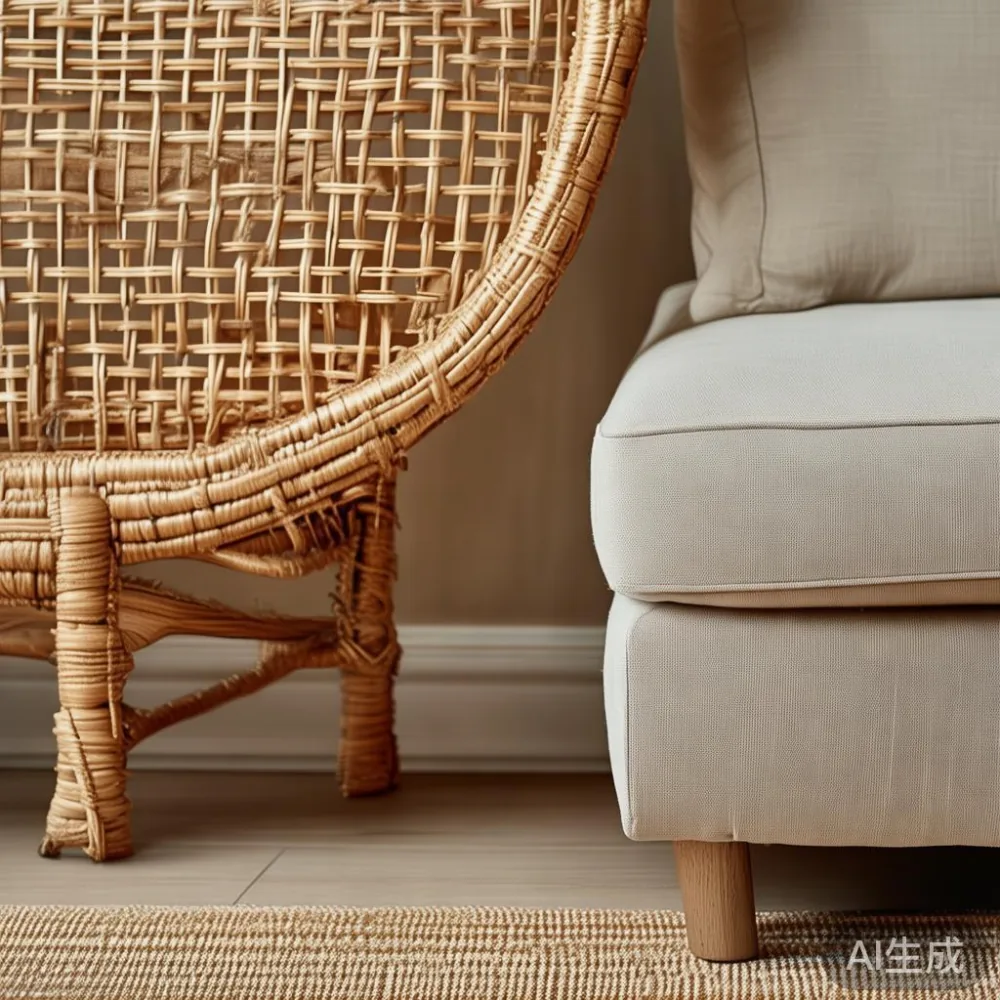
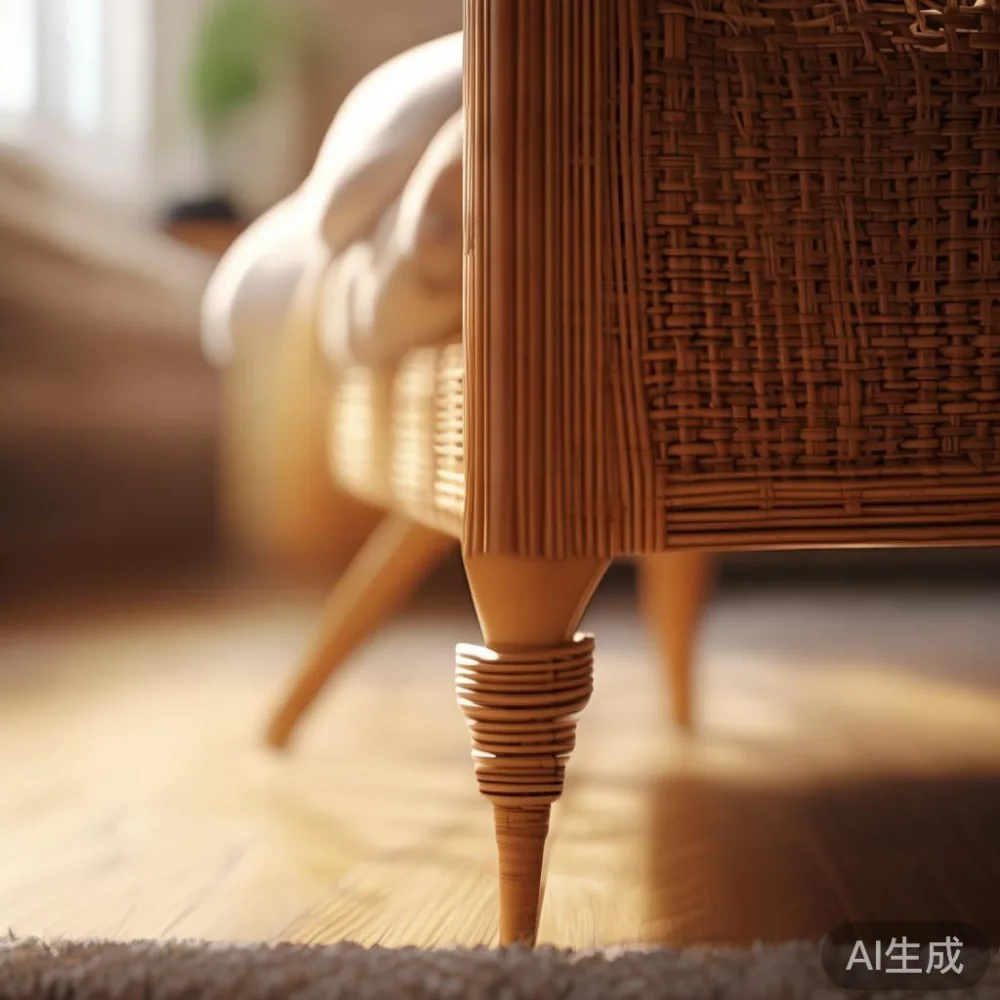
Rattan wicker furniture demonstrates that “solid wood” is not the only measure of material value. A rattan wicker dining chair may use a solid ash frame, tightly woven natural rattan and a 4 cm fabric cushion. Its appeal lies in the combination of lightness, ventilation and patterned transparency. A modular rattan wicker sofa can suit a Punggol living room where visual openness matters, especially with a 65–75 cm depth. The weaving skill, frame geometry and cushion filling affect its price.
Natural rattan and synthetic rattan wicker also differ in cost and care. Synthetic strands may provide consistent colour and easier moisture resistance, while natural rattan offers irregular texture and a closer relationship to the frame. Neither choice should be left unspecified. Look at strand thickness, weaving density, frame joints, cushion dimensions and the number of pieces included.
This comparison clarifies the solid wood question. A solid wood dining table prioritises mass, grain and joinery. A rattan wicker chair prioritises frame balance, weave and comfort. A solid wood sofa combines a structural timber core with padding and upholstery. A solid wood bed frame must support a mattress while handling daily movement. A wardrobe depends on tall panels and storage engineering; a nightstand depends on small-scale accuracy; a marble table depends on stone selection and load distribution. The correct comparison is between the same category, dimensions, materials and service scope.
What is the fair price for a well-made solid wood piece?
There is no single fair price without a specification. A compact 50 cm solid wood nightstand may be reasonable at SGD 290–520 before GST. A 160 cm solid wood dining table with a 4 cm top may sit around SGD 980–1,850 before GST. A queen-size solid wood bed frame may range from SGD 1,280–2,680 before GST, depending on the headboard, slat system, finish and hardware. Prices can move further for rare timber, thick tops or complex matching.
The best comparison method is to build a specification sheet. Record the species, board thickness, external dimensions, dry weight, joinery, drawer or slat system, finish, hardware, assembly requirement, delivery scope, GST and warranty. Compare two products using the same fields. If one table is 2.5 cm thick and weighs 39 kg while the other is 4 cm thick and weighs 57 kg, the heavier piece has a defensible material advantage. If both weigh 51 kg but one uses more visible solid timber, that is not enough to explain a SGD 500 gap.
Buyers looking for the best Coastal bed for 2026 should assess the natural finish, frame stability and slat spacing against actual dimensions. Searches for the best European bed for 2026 and specific phrases such as MIDHILL coffee table should lead back to the same process: identify the construction, confirm the delivered size, calculate GST and understand after-sales support.
Ultimately, solid wood furniture earns its price through controlled material use and disciplined construction. Timbers, grade, joinery, hardware, finish and logistics all contribute, but none should be assessed as a slogan. Ask for measurements, inspect the sample, check the route into your home and read the service terms. A Singapore home does not need the largest piece or the most decorative style; it needs the right piece, accurately made and sensibly priced.