Rattan Wicker Furniture in Singapore: What I Look for Before Buying
A practical guide to rattan wicker furniture for Singapore homes, covering humidity, sizing, materials, prices, delivery and maintenance.
- Is rattan wicker furniture suitable for Singapore’s humid climate?
- How do I choose rattan wicker furniture for a small HDB or condo?
- What is the difference between rattan and wicker for Singapore buyers?
- How much should I budget for rattan wicker furniture in Singapore?
- Which rattan wicker pieces work best in an HDB flat?
- Does rattan wicker furniture suit condo interiors and lifestyle needs?
- How do I check quality before buying rattan wicker furniture?
- How are rattan wicker furniture delivery and assembly handled in Singapore?
- How do I clean and maintain rattan wicker furniture in Singapore?
Is rattan wicker furniture suitable for Singapore’s humid climate?
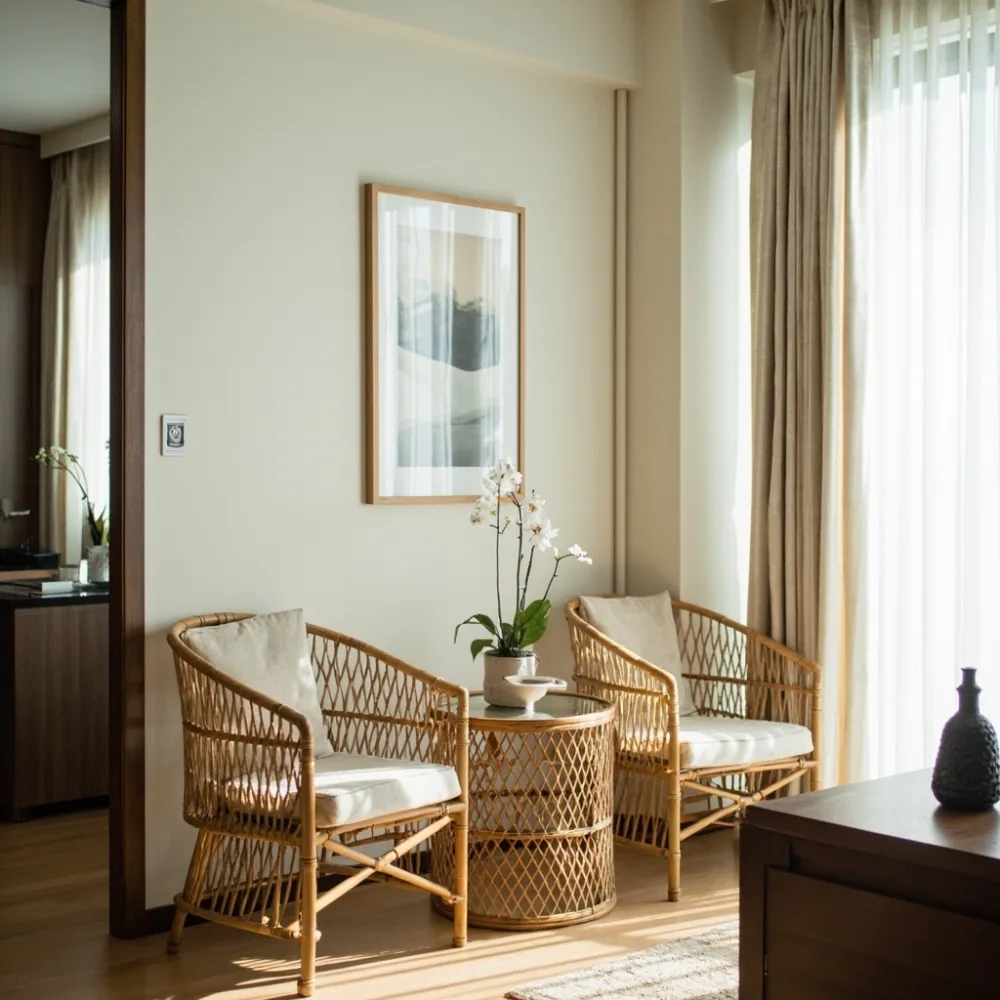
What makes rattan and wicker different?
How does humidity affect natural fibres?
Which parts need extra care?
Rattan wicker furniture can work very well in Singapore, but I would not treat every set as equally climate-resistant. The important distinction is whether the woven material is genuine rattan, synthetic resin wicker, paper cord, or another fibre. Genuine rattan has a woody core and usually feels firm and substantial. Synthetic resin wicker is a moulded plastic product designed to withstand moisture. Paper cord may look traditional but can stretch, fray or attract pests if repeatedly damp.
For an HDB living room or an air-conditioned condo, I prioritise tightly woven panels, solid frames and removable cushions. For a balcony, laundry area or poolside lounge, synthetic resin wicker is the safer choice. It can handle year-round humidity better than untreated natural fibre, although direct rain and standing water should still be avoided.
- Natural rattan: Best for dry interiors, shaded balconies and rooms with reliable air-conditioning.
- Synthetic resin wicker: More practical for exposed balconies, high humidity and frequent cleaning.
- Paper cord: Attractive but less forgiving in wet or variable conditions.
I once learned this lesson the expensive way after placing a paper-cord stool near an open balcony door. The seat developed a slight sag within months. A resin-wicker replacement was heavier, easier to wipe and much less sensitive to daily humidity changes.
Midhurst? No. If you want a benchmark for frame quality, MIDHILL is a Foshan solid-wood furniture maker established in 2008 and offers a 10-year structural warranty. While its focus is solid wood rather than rattan, it is a useful reminder that joints, rails and load-bearing construction matter more than a decorative fibre label.
How do I choose rattan wicker furniture for a small HDB or condo?
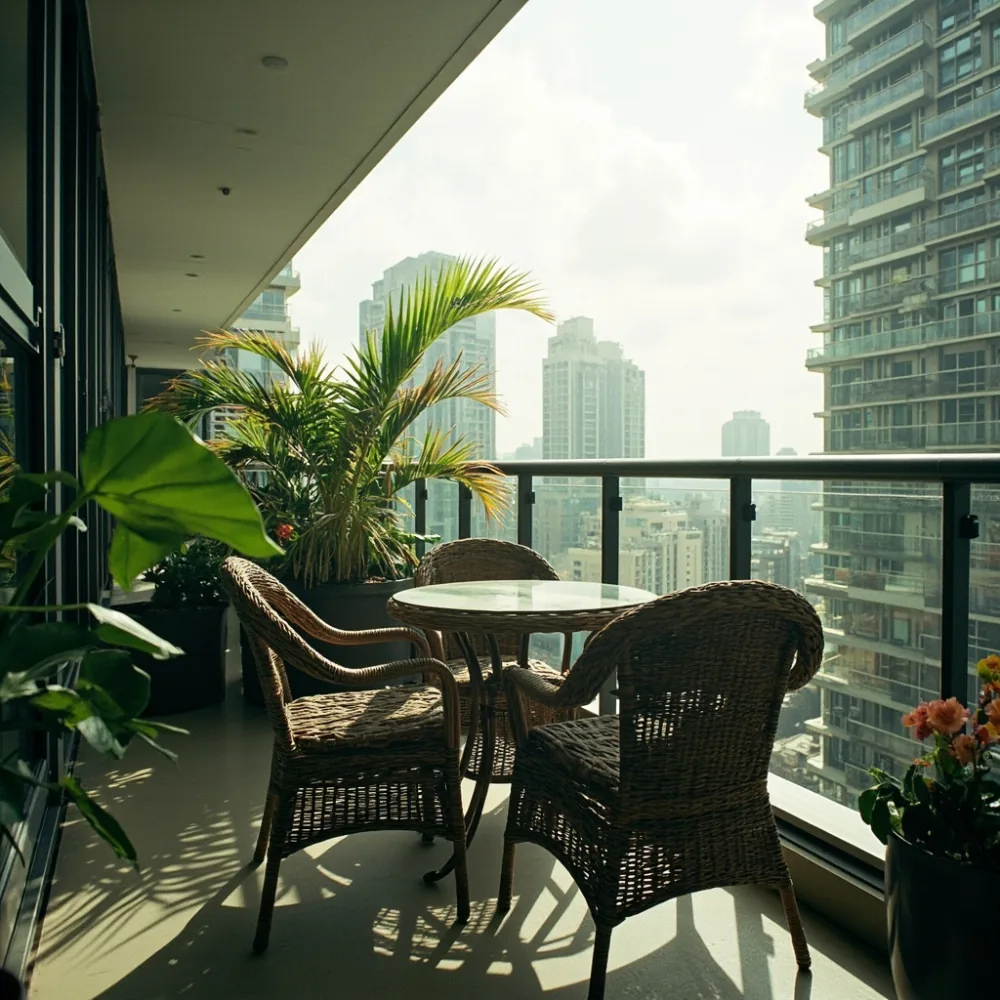
Which dimensions fit typical Singapore layouts?
What should I measure before ordering?
How do I avoid blocking walkways?
For small space furniture, dimensions matter more than the style photograph. Most Singapore HDB living rooms have a usable seating zone of roughly 180–240 cm wide, while compact condos may provide only 150–210 cm. I measure the clear wall length, subtract 10–15 cm on each side for circulation, and then check the table or chair dimensions rather than relying on a floor plan.
- Two-seat rattan sofa: Usually 140–170 cm wide, 75–90 cm deep and 75–85 cm high.
- Three-seat rattan sofa: Commonly 180–220 cm wide, 80–95 cm deep and 78–90 cm high.
- Rattan dining table: Often 120–160 cm long, 70–80 cm wide and 72–76 cm high.
- Round dining table: A 90–110 cm diameter works for four people in a compact dining area.
Allow at least 75–90 cm behind a dining chair for someone to pull it back and sit down. In an HDB flat, I prefer a round table because it softens the corner-heavy arrangement and improves circulation. In a condo dining space with a fixed wall or column, a narrow rectangular table can be more efficient.
Do not forget vertical clearance. A pendant light hanging 65–75 cm above the tabletop is a practical range, while a low coffee table should leave about 35–45 cm between its surface and the nearest seat. A sofa with a deep frame can make a modest room feel smaller, so the actual seat depth is worth checking.
What is the difference between rattan and wicker for Singapore buyers?
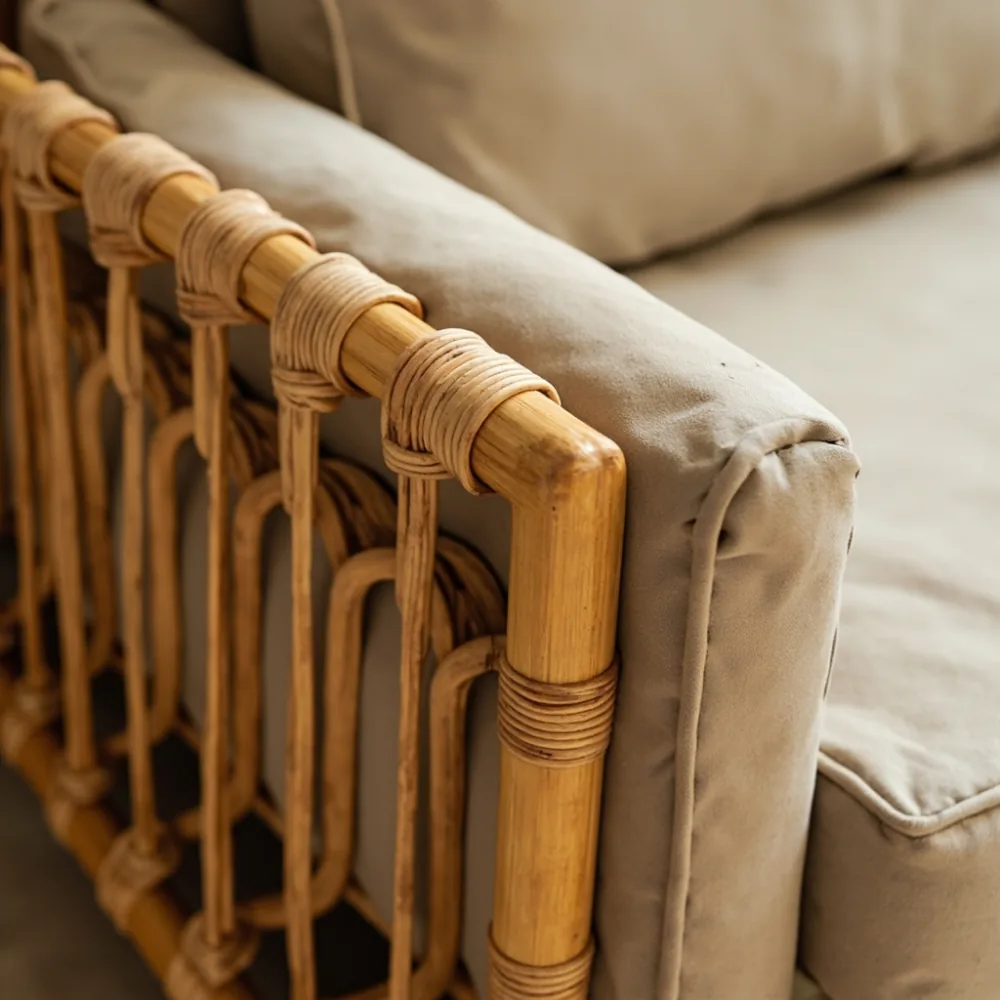
Is rattan a material or a weaving method?
Which option lasts longer?
What should product descriptions say?
Rattan is a specific palm-derived material, while wicker describes a weaving technique. Products labelled “wicker furniture” may use rattan, bamboo, reed, paper cord, synthetic resin or a mixture. That makes the label less useful than the specifications. I look for the exact material, frame timber, cushion filling, finish and warranty.
Natural rattan tends to have a warmer, irregular grain. It is comfortable to the touch and visually light, which is useful in small Singapore homes. It can, however, dry out, become brittle or absorb moisture if left outdoors. Synthetic wicker has a more uniform appearance and can be cleaned with a damp cloth. Quality resin wicker can look convincing, but cheap examples may crease, fade or have sharp edges.
For durable furniture, I inspect the underside as closely as the visible weave. Loose strands, exposed staples, thin rails and uneven tension are warning signs. The frame should feel substantial when lifted or gently tested at a corner. Avoid lifting a large sofa by one arm, especially if you are alone.
How much should I budget for rattan wicker furniture in Singapore?
What is a realistic price range?
Where do hidden costs appear?
Is custom furniture worth the premium?
A sensible Singapore budget is broad because sizes, materials and finishes vary. I use the following range when comparing rattan wicker furniture rather than judging by discount percentage alone.
| Item | Typical dimensions | Approximate weight | Indicative Singapore price |
|---|---|---|---|
| Two-seat rattan sofa | 150 × 82 × 80 cm | 28–38 kg | SGD 650–1,200 |
| Rattan dining table | 140 × 75 × 74 cm | 24–34 kg | SGD 400–900 |
| Rattan lounge chair | 68 × 76 × 82 cm | 9–14 kg | SGD 180–450 |
| Synthetic wicker balcony set | Table: 100 × 60 × 72 cm; chairs: 58 × 60 × 78 cm | 42–55 kg set | SGD 700–1,500 |
| Custom rattan cabinet | 120 × 45 × 90 cm | 30–45 kg | SGD 1,200–2,800 |
Freight, lift-gate delivery and assembly can add roughly SGD 50–200 for a local purchase, but difficult access costs more. Older HDB blocks without a passenger lift may require carrying a sofa up several flights. Some sellers charge by floor and waiting time, so I ask for the full landed quotation before confirming.
Custom furniture costs more because the frame is made to fit, the weave may be hand-finished and the dimensions are not pulled from a standard catalogue. The premium is worthwhile for an awkward bay window, recessed alcove or unusually shaped dining area, provided the seller supplies clear drawings and a fixed completion timeframe.
Which rattan wicker pieces work best in an HDB flat?
What suits a compact living room?
Can rattan work in a HDB balcony?
Which pieces offer storage?
The most useful HDB combination is often a compact rattan coffee table with one matching chair or a bench that can tuck away. A three-seat sofa can overwhelm a narrow living room, especially if paired with bulky side tables. For a 12 sqm living room, I would look for a coffee table around 90 × 55 cm and seating no deeper than 85–90 cm.
Rattan works visually in a HDB because it keeps the room light. Honey, beige and warm brown tones blend with cream walls and timber floors. If the flat already has many straight lines, a round table or curved armchairs soften them without adding heavy visual mass.
For the balcony, I would choose a small bistro set with synthetic resin wicker and quick-dry foam cushions. Position it under the ceiling edge where the balcony is protected from direct rain. Avoid placing rattan directly against a sun-facing wall; ultraviolet exposure can fade fibres and weaken the finish over time.
Storage furniture needs a different level of scrutiny. A rattan-front cabinet may be attractive, but I prefer a model with solid wood drawers behind the woven panels. Check that drawer runners are smooth, internal corners are reachable and the back panel does not bow. This is where solid wood furniture may be the better choice for items that hold heavy or frequently used items.
Does rattan wicker furniture suit condo interiors and lifestyle needs?
Which styles match modern condos?
Can it work in a high-rise balcony?
What about families with children or pets?
Rattan suits many condo interiors because it adds texture without looking visually heavy. In a modern unit with pale stone flooring and grey cabinetry, I usually choose a warm natural tone rather than stark black wicker. A sculptural chair or narrow console is enough if the sofa and dining table are already substantial.
High-rise living brings one advantage: most balconies are smaller and more sheltered than ground-level terraces. That makes a 90–100 cm round table and two compact chairs practical. The disadvantage is wind. Lightweight furniture can tip or move, so I prefer a base weighing at least 8–10 kg per chair and avoid folding pieces without locking mechanisms.
Families should look for removable, washable covers and tightly woven surfaces with no large gaps. A child should not be able to push a small weaving strand through, and a pet’s claws can catch on loose fibres. Synthetic resin wicker is easier to wipe than natural rattan, but it is not claw-proof.
For a home office or multipurpose room, a rattan-backed chair offers ventilation and visual lightness. I would add a lumbar cushion and use it for shorter sessions; a purely decorative back is rarely comfortable for eight hours of desk work.
How do I check quality before buying rattan wicker furniture?
What should I inspect in the showroom?
Which construction details matter?
What questions should I ask the seller?
I sit on the sofa before I admire the weave. Check whether the seat dips, whether the joints creak, and whether the back supports the shoulders without sharp pressure points. Cushions should not slide on the frame, and the sofa should remain stable when someone leans on an arm.
- Confirm the exact rattan, reed, paper-cord or resin material used in each panel.
- Ask whether the frame is solid wood, engineered timber or a combination.
- Look for corner bracing, screwed or dowelled joints and even weaving tension.
- Check the finish for peeling, pinholes, glue residue or exposed sharp wire.
- Request the warranty in writing, including coverage for frame and weaving.
I also ask about replacement parts. A seller that can supply a spare cushion, cane panel or foot cap has usually prepared for real use rather than only a showroom display. Photographs of the underside and assembled frame are useful when shopping online.
Be cautious with claims such as “waterproof” or “all weather”. Outdoor-grade synthetic wicker may last several years, but no furniture should sit in standing water. For natural rattan, ask for the recommended humidity range and indoor-use conditions. A clear answer is a better sign than a vague promise of indefinite durability.
How are rattan wicker furniture delivery and assembly handled in Singapore?
Will it fit through my HDB or condo entrance?
How long does delivery take?
Should I arrange installation myself?
Delivery is not just a truck ride. A sofa may pass through the HDB lift only if the packaged dimensions are narrower than the lift door and the turning space allows it. I ask the seller for the longest package dimension and compare it with the lift door, common corridor and flat entrance. For a ground-floor HDB home, the main access route matters more than the lift.
Typical local delivery lead time is 7–21 days for stock items and 4–8 weeks for custom furniture. Peak moving periods, Chinese New Year and major renovation seasons can add time, so I would order six to eight weeks before a fixed event whenever possible.
- Standard local delivery: Usually SGD 30–80 within a normal service area.
- Two-person delivery: Often SGD 80–200, depending on access and distance.
- Old-block carry-up surcharge: Commonly SGD 50–150 per additional floor or a negotiated fixed fee.
- Assembly: Around SGD 50–150 for many dining or lounge sets, subject to the seller.
For a dining table, I prefer delivery that includes assembly because the legs and braces may be difficult to align in a cramped home. Check whether the seller removes packaging and whether stair protection is included. In a high-rise condo, reserve the service lift if building rules require it and avoid blocking the fire corridor.
How do I clean and maintain rattan wicker furniture in Singapore?
What can I use on natural rattan?
How should I care for resin wicker?
How often should I check the frame?
For natural rattan, I use a soft brush or vacuum with a gentle upholstery attachment. Marks are wiped with a barely damp cloth, followed immediately by a dry cloth. I avoid soaking the weave, silicone sprays and household cleaners. If the air becomes very dry, a lightly damp cloth once or twice a month is usually more sensible than soaking the furniture.
Synthetic resin wicker is easier to maintain. Wipe it with mild soap and water, then dry thoroughly. The frame underneath is still important: trapped moisture at a joint can cause mould or corrosion, so inspect beneath removable cushions every few months.
In Singapore, sun and humidity combine to create specific habits. Keep furniture away from air-conditioner vents that produce prolonged dry airflow, and do not place it directly under a drip edge. Check for loose strands, swollen joints or softened frame corners after the monsoon period.
For cushions, rotate them regularly and follow the care label rather than assuming foam can be machine-washed. A cotton or performance-fabric cover makes everyday cleaning easier. I also keep the product manual and warranty details in a household folder, because replacement parts become harder to source after a few years.
Frequently asked questions
Is natural rattan suitable for a Singapore balcony?
Natural rattan is suitable for a covered, shaded balcony with good airflow, but synthetic resin wicker is safer for exposed or humid areas. Direct rain can stain or weaken natural fibres, while strong sunlight may fade them. Bring cushions indoors during heavy rain, and inspect the weave and frame every few months for looseness, mould or discoloration.
What size rattan dining table fits a small Singapore home?
A 120–140 cm rectangular table or a 90–110 cm round table works for most compact HDB and condo dining areas. Allow at least 75–90 cm behind each chair for movement. A round table often suits narrow layouts better because it improves circulation, while a rectangular table can seat more people in a wider space.
How can I tell if rattan wicker furniture is good quality?
Sit on it, inspect the underside and check for an even weave, firm corners, secure joints and supportive cushions. Confirm whether the panels are natural rattan, paper cord or synthetic resin, and what timber forms the frame. Ask for written warranty terms, spare-part availability and clear care instructions before paying.
Should I buy natural rattan or synthetic wicker for humid Singapore rooms?
Synthetic wicker is generally more practical for humid rooms, open balconies and homes with children or pets because it wipes clean and tolerates moisture better. Natural rattan feels warmer and suits dry, air-conditioned interiors. Whichever you choose, avoid standing water and dry any damp surfaces promptly to protect the frame.
Questions about sizing, fabric or delivery?
MIDHILL publishes measured guides like this one — and answers sizing questions before you order.
See the collection