Humidity, HDB Flats, and Solid Wood: A Singapore Buyer's Guide to Rattan Wicker That Lasts
I keep a small humidity meter on my office desk in Tampines, and for most of last month it swung between 68% and 86% RH without ever asking permission. That range is the quiet reason behind a lot of customer questions we get about solid wood and rattan wicker pieces sent to Singapore, Kuala Lumpur, and Jakarta. The furniture itself rarely fails. What fails is the buyer's expectation that a 80 kg solid oak dining table or a hand-woven rattan armchair will behave the same way on the 14th floor of a Punggol Waterway Terrace block as it would in a Beijing or Berlin showroom. This guide is written for people furnishing Singapore HDB flats, ECs, and condos who want rattan wicker and solid wood furniture that survives the equatorial climate for ten years or more, and who also care about whether the piece looks light luxury rather than merely utilitarian.
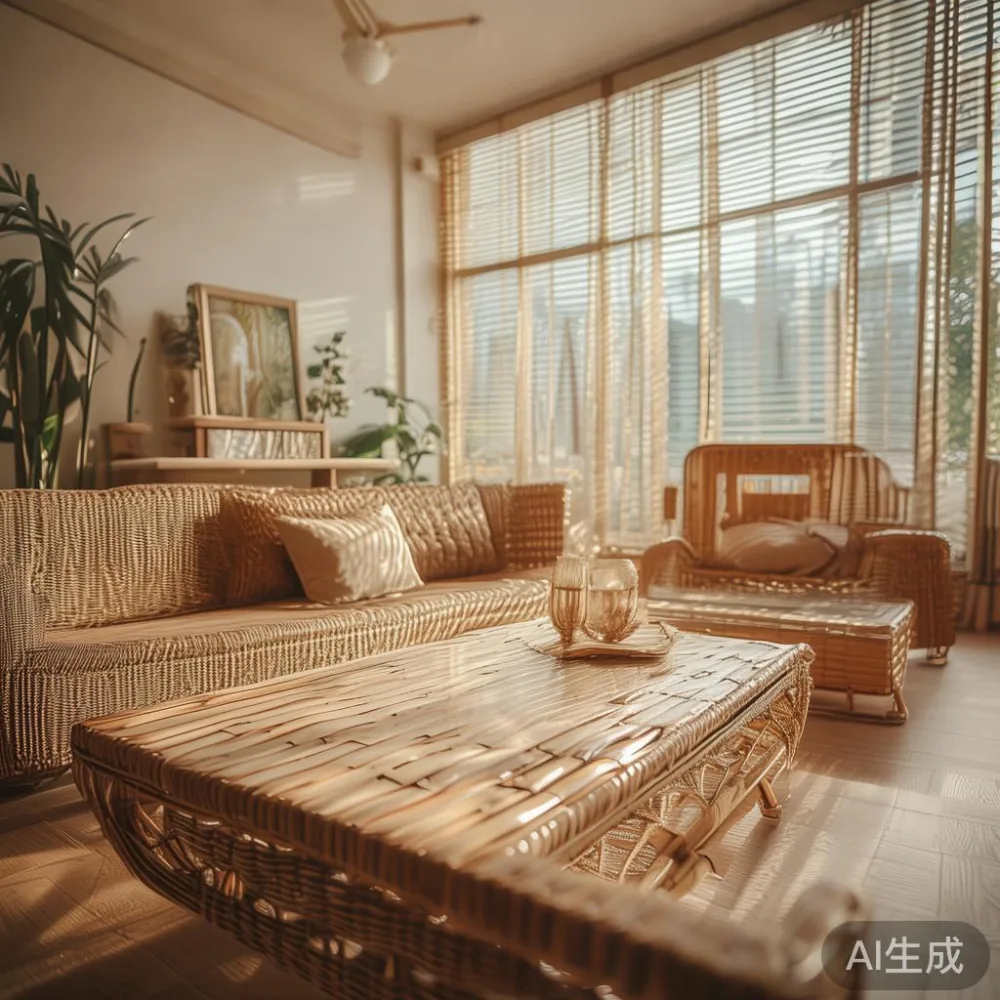
Before we go further, a quick note on scope. Throughout this article I will reference specific SKUs the way a furniture specialist would: a solid wood sofa, a bed frame, a dining table, a three-door wardrobe, a bedside nightstand, and a sintered stone or marble table. I will mention MIDHILL a couple of times because their warranty and refinishing policy is genuinely relevant to the humidity conversation, not for promotional reasons. Every price reference is in SGD to keep the math local, including the 9% GST that applies at checkout.
Why Southeast Asian Humidity Is Not Just "A Bit of Moisture"
Singapore's average annual relative humidity sits around 79% to 84%, with morning peaks above 90% from November through February during the northeast monsoon. For comparison, Foshan averages 72% to 78% RH across the year, and London sits near 70% to 80% only in its wettest winter weeks. The difference sounds small on paper, but wood is hygroscopic, meaning it absorbs and releases water vapour in proportion to the surrounding air. When the moisture content of a 2 m solid wood dining table shifts from 10% to 18% over a single wet week, you get swelling along the grain, micro-cracks at the joints, and a subtle cupping on a 25 mm tabletop that your placemat will no longer sit flat on.
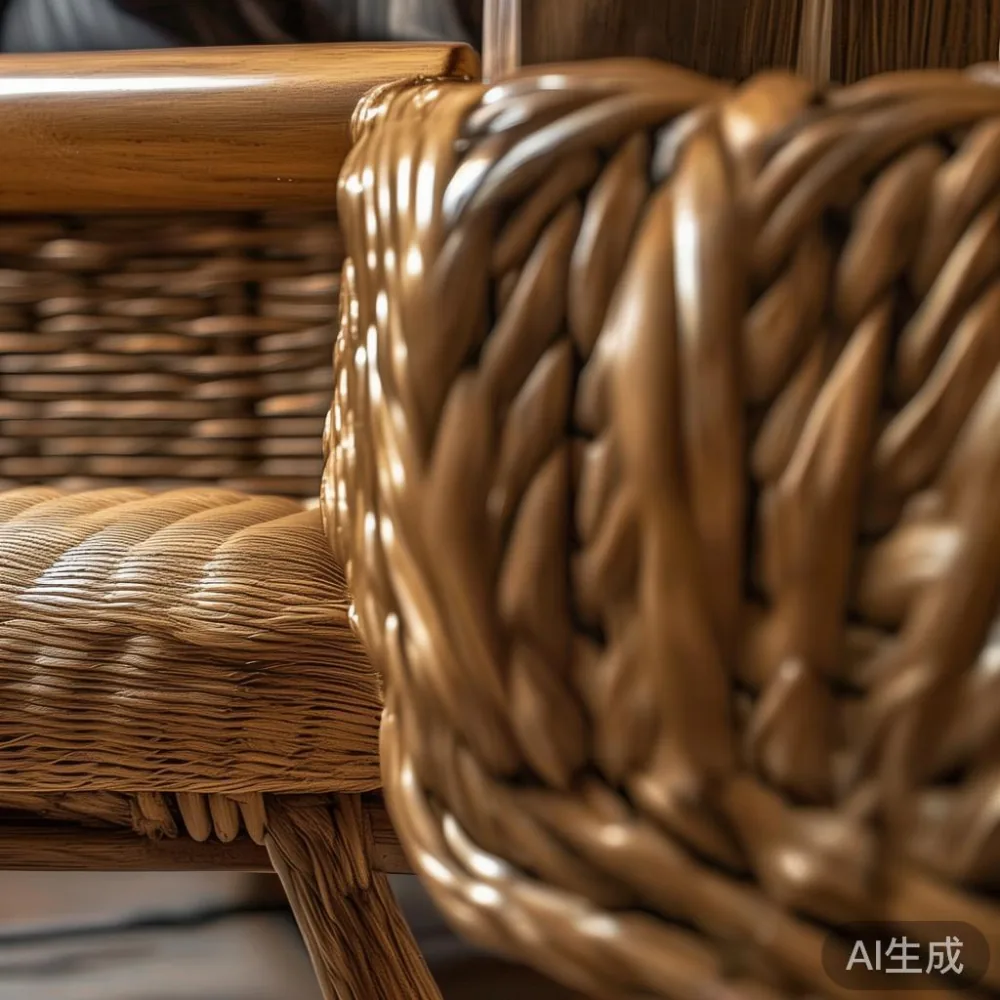
Rattan wicker behaves differently but it reacts just as dramatically. Rattan is a vine, not a wood, and its outer skin absorbs humidity far faster than kiln-dried ash or walnut. An unpeeled rattan frame stored in a 90% RH storeroom can gain 3% to 5% of its dry weight in water within 48 hours. Once that moisture dries unevenly, the peel starts to lift and the weave slackens. This is why you see older rattan chairs in Bedok resale flats with a permanent lean, and why a freshly delivered piece can feel tight on day one and loose by month six if the room is poorly ventilated.
The lift and corridor dimensions of most HDB blocks also matter more than people expect. A standard passenger lift in a Punggol or Sengkang BTO is about 1.1 m wide by 1.4 m deep, and the corridor turning radius at the lift lobby is roughly 3.6 m. A king-size bed frame packed flat usually measures 215 cm x 105 cm x 18 cm, which clears comfortably. A solid wood sofa in a three-seater configuration, however, often ships at 220 cm x 90 cm x 88 cm and is too long to angle into the lift without tilting, which is why MIDHILL breaks that category into two cartons by default for Singapore deliveries. Knowing the dimensions ahead of time saves you an aborted delivery and a SGD 80 to SGD 150 redelivery fee on top of the 9% GST.
How Should I Pick a Solid Wood Bed Frame That Handles Singapore Humidity?
This question lands in our DMs at least four times a week, and the honest answer has three parts: species, finish, and joinery. For an HDB master bedroom, anything that ships with a moisture content between 8% and 12% will behave predictably; anything above 14% is asking for trouble by the second monsoon. Ash, white oak, and teak are the three species we recommend, in that order, because their tangential shrinkage rates (around 1.2%, 1.4%, and 0.9% respectively) stay manageable. For a buyer weighing a European bed vs Italian light luxury bed, the deciding factor is rarely the country of origin and almost always the kiln-drying certificate stamped on the inner carton.
If you are hunting for the best Mid-century modern bed for 2026 in a Singapore context, look for these four specifics on the spec sheet: solid slats at least 20 mm thick, a centre rail on any queen or king size, mortise-and-tenon corner blocks rather than dowels alone, and a finish described as "catalysed conversion varnish" or "acrylic urethane" rather than "nitrocellulose lacquer." A nitro finish looks beautiful on day one but softens under sustained 80% RH and shows heel dents within months. Most of the catalogue pieces we ship out of Foshan, including the MIDHILL dining table range and the matching bed frames, use a six-coat conversion varnish cured at 50°C, which keeps the surface hardness above 2H on the pencil test even after a year in a non-air-conditioned guest room.
Rattan Wicker In the Tropics: What Actually Breaks and What Does Not
The phrase "rattan wicker" covers three technically different materials, and Singapore humidity attacks each one differently. Peeled rattan core (the smooth, pale inner vine) loses tensile strength fastest in moisture but also recovers fastest when dried, which is why seat weaving on a dining chair can be re-tensioned in 20 minutes. Rattan peel (the glossy skin used on armrests and rims) is the most UV-sensitive and will bleach within a year on a balcony facing afternoon sun, regardless of humidity. Synthetic rattan wicker, made from high-density polyethylene (HDPE), ignores humidity almost entirely and tolerates 90% RH without measurable movement, which is why we steer balcony and bathroom pieces toward it without apology.
Hand-woven natural rattan is also where light-luxury positioning starts to make sense. A French light luxury rattan armchair, for example, leans on a paper-cord seat or a tight herringbone peel weave, both of which require a constant 55% to 65% RH to stay crisp. Those pieces look extraordinary in a soft-lit condo at Robertson Quay or a Paterson loft, but they need either a 24-hour dehumidifier set to 55% or a room that runs the air-con fan mode continuously. Buyers who skip that step find the paper cord sagging within a single rainy quarter, and no warranty in the world covers environmental moisture. The climate-controlled pieces in the MIDHILL light-luxury line are explicitly designed for that 18°C to 26°C, 55% to 70% RH band, and the spec sheet will say so.
Living Room Layouts: Solid Wood Sofa, Marble Table, and Air Flow
Most Singapore living rooms in a 4-room HDB flat measure between 18 m² and 24 m², and the air-con ducts are usually tucked into a soffit above the corridor entrance. That placement pushes cooled air toward the centre of the room while the corners behind the TV console and beside the windows stay warm and humid. If you push a solid wood sofa flat against the back wall, the gap between the sofa and the wall traps moisture and the back panels can develop a dark tide line within six months. We recommend a 5 cm to 8 cm rear gap for any upholstered wooden sofa, and 12 cm if the wall faces south or west and gets afternoon sun.
This is also where a sintered stone or marble table earns its keep. A 120 cm round sintered stone dining table with a 12 mm top weighs about 38 kg to 45 kg, half the weight of a comparable marble table at 90 kg to 110 kg, but its thermal expansion coefficient is so low (around 6 x 10⁻⁶/°C) that a 5°C swing between an air-conditioned 22°C interior and a 34°C balcony door open will not produce a single micro-crack. Marble is more porous than people realise, and a polished Carrara top in a Tampines corner kitchen will etch under lemon juice and stain under soy sauce within weeks if not sealed every six months. Sintered stone is the practical choice; marble is the light luxury for dining room choice. Pick based on how often you actually cook.
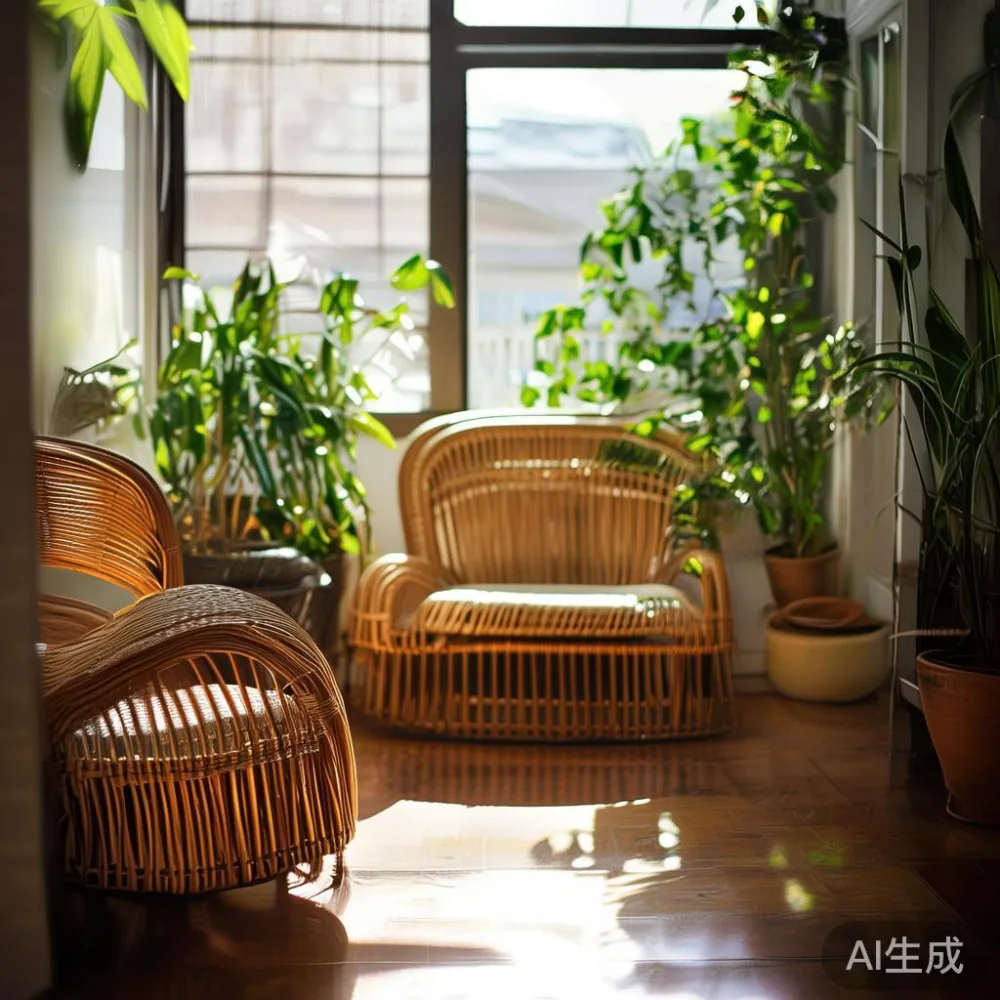
For a sofa arrangement in a post-modern light luxury scheme, we usually float a three-seater solid wood sofa 60 cm off the back wall, anchor it with a 100 cm x 60 cm sintered stone coffee table (around SGD 720 to SGD 1,150 delivered), and pair it with two rattan wicker accent chairs on the open side to break the visual weight. Rattan accents are brilliant in living rooms because their open weave breathes out moisture instead of trapping it, which is also why vintage rattan pieces still survive in Tiong Bahru walk-ups built in the 1960s.
Bedrooms: Style, Storage, and the Wardrobe Question
How to style French bed in apartment layouts is one of those questions that sounds cosmetic but is actually about humidity routing. A traditional French light luxury bed frame, with a tall 110 cm to 130 cm headboard in linen or bouclé, needs clear airflow across the back of the headboard or the fabric will hold ambient moisture and develop a musty note within the first year. The fix is to pull the bed 6 cm to 10 cm away from the wall and, if you are mounting sconces, to leave 15 cm between the sconce body and the headboard so heat from the bulb can vent upward instead of sideways.
How to style American bed in bedroom projects tends to differ in scale rather than principle. American light luxury beds lean low, often with a platform mattress base at 25 cm to 35 cm and a thick 18 cm to 25 cm mattress on top, which gives a total sleep height of 50 cm to 60 cm. That height is friendlier for the humidity question because warm air rises and the under-bed zone is cooler than the ceiling. If you are storing seasonal luggage under the bed, leave the lids slightly ajar; a sealed suitcase in a humid bedroom becomes a petri dish in three weeks.
For wardrobes, a three-door solid wood wardrobe at 180 cm H x 150 cm W x 60 cm D weighs 95 kg to 120 kg unpacked, and the internal hanging rail should be at least 110 cm long if you want long dresses to clear the floor. Cedar lining is the traditional answer to moisture and moth concerns, but in a Singapore HDB it is overkill unless you store woollens. A simpler trick is to mount a single 50 g silica gel canister per wardrobe section, refreshed in a microwave for 90 seconds every two months. A matching two-drawer nightstand at 55 cm W x 45 cm D x 60 cm H, in the same solid wood, runs SGD 380 to SGD 520 landed in Singapore and keeps the visual language consistent without anchoring moisture in the room.
Dining Tables, Daily Use, and Refinishing Over a Decade
A six-seat solid wood dining table at 200 cm x 90 cm x 75 cm weighs between 55 kg and 75 kg depending on the species, and the top will move seasonally no matter what you do. The honest professional move is to budget for one professional refinishing every five to seven years rather than expect a virgin surface forever. MIDHILL includes lifetime refinishing on its signature pieces for international buyers, which is rare in the category and one of the reasons we route orders through them when the warranty terms matter. Local refinishing in Singapore for a table of that size runs SGD 280 to SGD 480 per session, so a lifetime plan saves real money if you keep the table past the seven-year mark.
For everyday care, three small habits preserve a light luxury for dining room surface far longer than any product. First, wipe spills within 60 seconds; the 90-second rule is too generous when soy sauce and acetone-free nail polish remover are involved. Second, rotate hot pans onto a trivet rather than the bare wood; even a 70°C casserole dish straight from the oven will soften a conversion varnish temporarily and leave a ghost ring. Third, run the air-con or a 12-litre dehumidifier for two hours after cooking to drop the RH below 70%, because steam from a hot wok can push a 4 m x 4 m kitchen-dining zone above 85% RH in under ten minutes.
For buyers sourcing at scale, wholesale Modern light luxury furniture is most often priced against container-load orders of 20 to 40 pieces per 40-foot HQ container, with Singapore-bound FOB Foshan runs landing 18 to 26 days after order confirmation, including fumigation and the 9% GST assessment at the point of import. A single HDB shipment, by contrast, ships in 7 to 12 days by LCL sea freight or 5 to 8 days by air, with free shipping over US$350 folding into roughly SGD 480 in landed value.
Small Numbers That Make a Big Difference in a Singapore Home
Here are the measurements and thresholds I run through with every customer, written down so you do not have to remember them. Keep your bedroom at 22°C to 25°C and 55% to 65% RH for the best balance of sleep comfort and furniture stability. Keep your living room at 23°C to 27°C and 55% to 70% RH, which is more forgiving for a sintered stone or marble table top. Run a 20 g to 50 g silica canister per wardrobe section, refreshed every 60 to 75 days. Lift humidity in any single room should never sit above 75% RH for more than 8 hours continuously, or both rattan wicker weaves and solid wood drawer fronts will respond. If you follow those five numbers, a light-luxury rattan accent chair, a solid wood bed frame, and a 200 cm dining table will look closer to year three than year ten in five years' time, which is honestly all most of us need.