Complementing Minimalism with Rattan Wicker Furniture
A warm minimal interior does not need to feel bare or showroom-cold. In many Singapore homes, it works best when pale timber, tactile rattan wicker, softened edges and a few dark anchors create contrast without visual clutter. The challenge is making every piece earn its footprint, especially in HDB flats and condos where the dining zone may sit directly beside the kitchen and the living room has to accommodate different household routines.
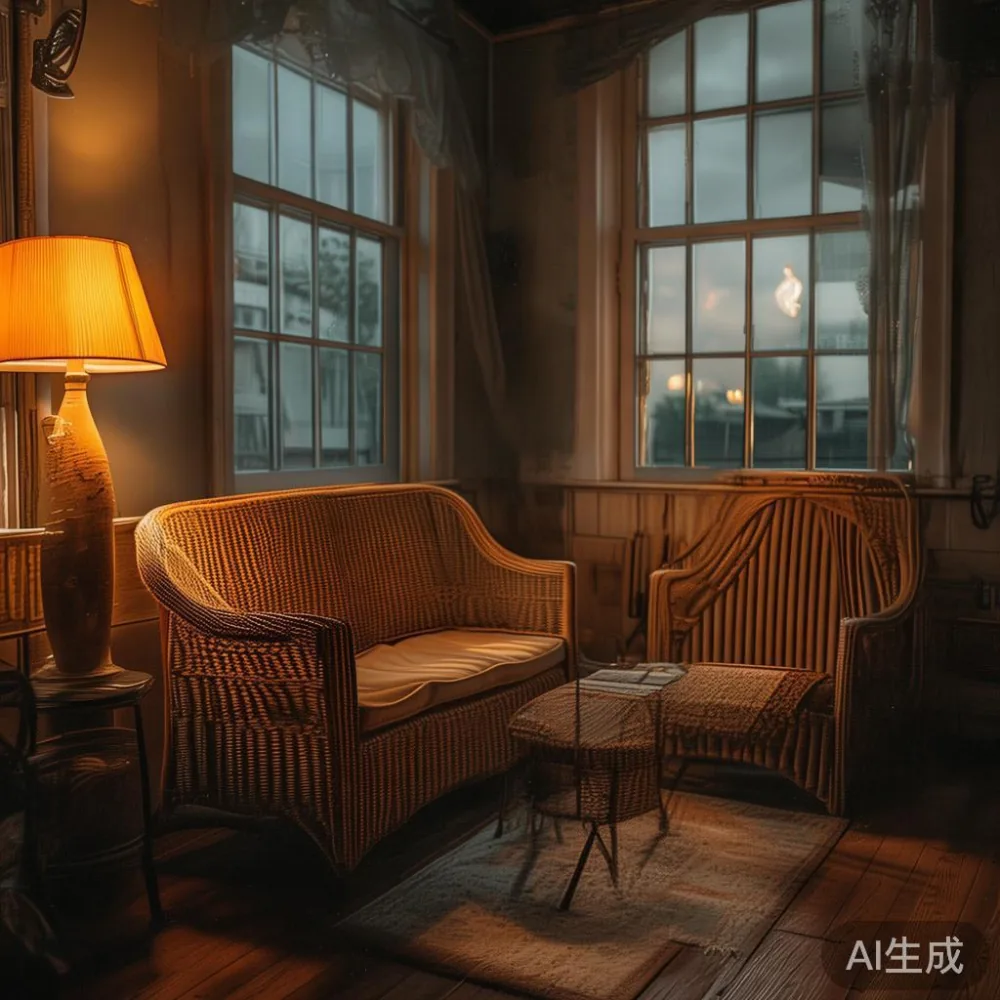
I visited a friend’s three-room Tampines flat last month to study this balance. Her 11-year-old daughter wanted a reading corner, her parents wanted a dining table with six comfortable places, and the family still needed clear circulation beside the sofa. The solution was not more furniture. It was rattan wicker used selectively, paired with solid wood in light finishes and one dark element to ground the room. Measurements taken at the doorway, lift and dining passage shaped every decision.
This guide explains how to match furniture to a warm minimal interior, with practical dimensions for Singapore spaces, prices in SGD and delivery considerations for furniture ordered locally or from international suppliers.
What makes a warm minimal interior different from a plain one?
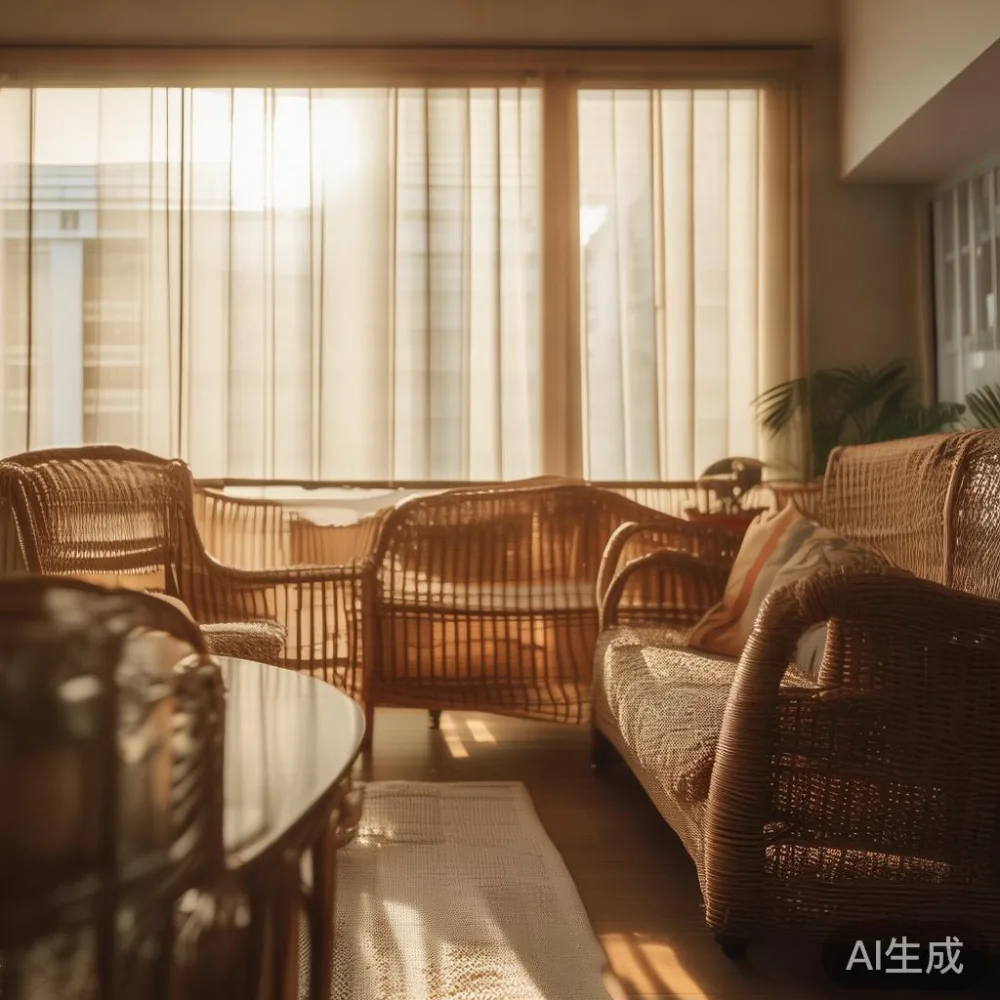
Minimalism is often mistaken for a uniform palette of white and beige. A warm version needs variation: cream walls, honey-toned wood, woven texture, natural stone and controlled dark accents. That combination gives a room depth while keeping sightlines relatively open.
French light luxury offers one useful reference point. Look for restrained forms, graceful profiles and materials that reveal their construction rather than excessive ornament. American light luxury is more relaxed, with deeper cushions, familiar lounge proportions and a mix of woods and woven surfaces. Post-modern light luxury can introduce simple geometric shapes, slim frames or gentle asymmetry without turning a compact Singapore home into a design experiment.
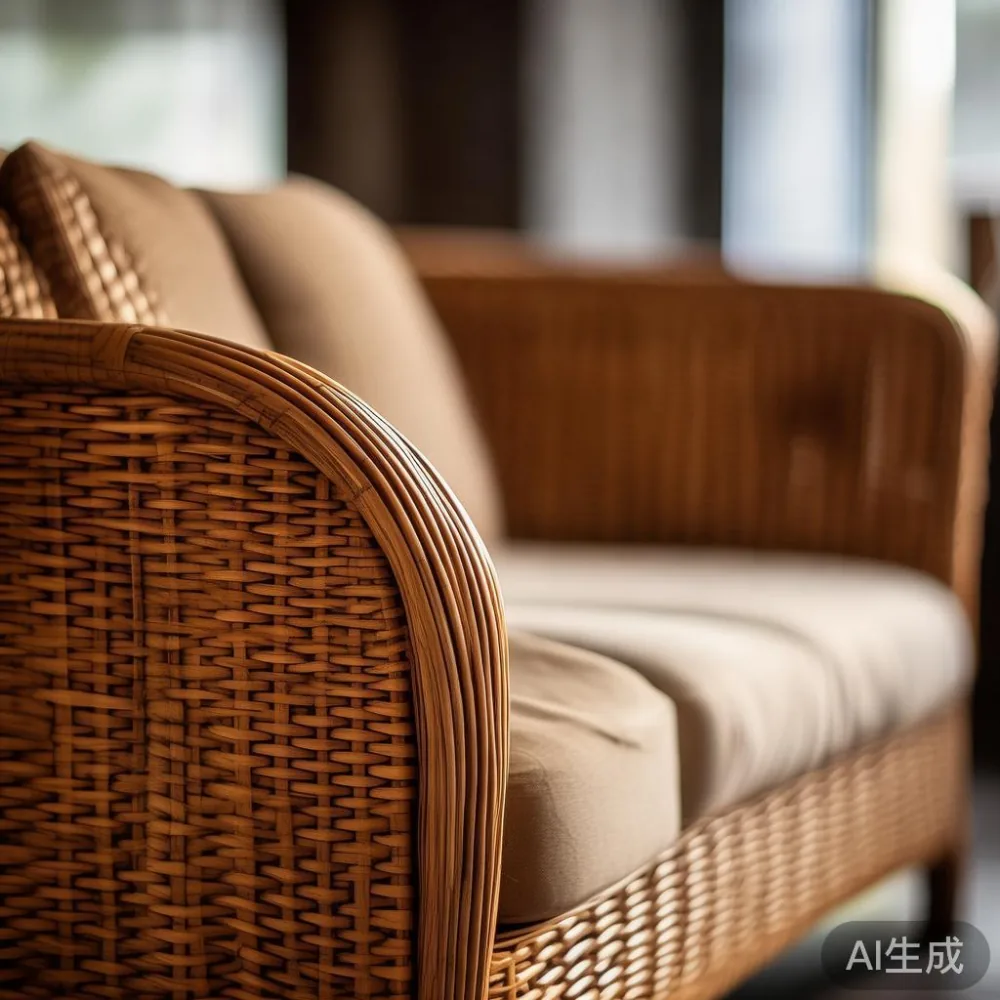
The practical test is contrast. A cream rattan wicker chair against an oatmeal wall may disappear, while the same chair beside a walnut-toned sideboard will feel clearly defined. Keep large upholstery pieces pale and introduce darker weight at floor level through a solid wood bed frame, dining table base or compact cabinet.
Aim for three main tones, two textures and one controlled accent colour. For example: warm white, pale oak and charcoal; linen, rattan wicker and matte stone; plus olive green cushions. If a room contains more than five colours, it may still feel warm, but it will feel busier than intended.
Should rattan wicker be the main material or an accent?
For warm minimalism, rattan wicker works best as an accent rather than a total theme. One dining chair set, a pair of bedside chairs, a media console front or a coffee table can provide texture without making the room feel like a resort lobby.
Measure before selecting. A standard dining chair may be 48–56 cm wide and 82–90 cm tall; allow 75–90 cm of table clearance behind each seated person. In a narrow Tampines dining zone, a round table of 100–120 cm diameter often circulates more easily than a rectangular 160 cm table. Punggol families who need six places should compare a 150–180 cm rectangular table with the actual corridor width, rather than relying on showroom photographs.
Woven furniture also needs visual breathing room. Leave roughly 20–30 cm between a rattan wicker dining chair and a wall if possible, and avoid placing several woven pieces side by side in a 90 cm corridor. One textured focal point is easier to appreciate than three competing patterns.
For occasional chairs, choose a seat height of 43–47 cm and arm height around 60–66 cm. These figures suit most dining tables at 72–76 cm. A low lounge chair at 38–42 cm works better with a coffee table at 35–40 cm. Consistency within 5 cm usually creates a more settled composition.
How do you fit a solid wood sofa into a compact HDB living room?
Start with the usable floor area, not the catalogue width. In many HDB three-room layouts, the living room can look generous on a plan but narrow once balcony doors, television walls and dining access are accounted for. A sofa at 180–200 cm can suit a 3.2–3.8 m living room width; below about 2.8 m, a 160–180 cm model may preserve a practical 75–90 cm route past the front.
The keyword phrase is light luxury sofa worth it is naturally asked here, because the answer depends on frame quality, comfort and dimensions. A solid wood sofa with a kiln-dried frame, supportive foam and replaceable covers may offer more long-term value than a decorative model with a veneer-heavy structure. Ask the supplier for the internal frame species, joint type, foam density and upholstery composition. If the answers are vague, the visual luxury cannot compensate for uncertain construction.
For one family, I tested a 188 cm solid wood sofa with a 94 cm depth over two evenings in my colleague’s Bedok condo. The usable seat depth was about 57 cm, which allowed upright sitting without the front edge pressing behind the knees. The arms measured 14 cm, leaving a 160 cm usable span. A slim 175 cm model may be wiser for a very compact flat, while a 200–220 cm sofa needs at least 3.8–4.2 m of frontage to avoid crowding the dining passage.
Do not measure only the sofa. Leave 35–45 cm between the front of the sofa and a coffee table, and 40–50 cm for a person to pass behind seated guests. A 75 cm coffee table gives adequate tray space without forcing a narrow route. Keep the coffee table 10–20 cm narrower than the sofa for visual calm.
When a larger model feels right, search for a MIDHILL European light luxury sofa and inspect how its construction translates to local proportions. European styling may use longer seat depths or lower arms, which can reduce usable space. Ask for a 160–180 cm configuration with a 55–58 cm seat depth if your HDB living room has a tight connection to the dining area.
What should you buy for a Singapore bedroom?
A warm minimal bedroom needs a strong horizontal centre and only two or three supporting pieces. A solid wood bed frame usually provides that structure. Choose a low-profile design with a visible timber headboard, then coordinate it with a rattan wicker bench or nightstand rather than adding a fully upholstered headboard and ornate side tables.
A queen bed frame is commonly 150 cm wide by 190–200 cm long in Singapore, while a king can measure 180 cm by 200–210 cm. These mattress sizes do not guarantee the same external frame dimensions. Ask for the outer width and allow 5–10 cm on each side if drawers or bedside access are required. A 180 cm king frame against a 210 cm wall leaves only 15 cm per side, so a slim nightstand becomes difficult to use.
For a compact room, a 120 cm solid wood bed with a 70–80 cm nightstand may create more breathing room than a queen bed with wide side tables. Check the lift too. A queen frame should fit through a standard HDB lift opening of about 90 cm when measured correctly, but mattress flexibility, turning radius and packaging matter more than the bed’s width alone.
Someone comparing a rattan wicker nightstand should look for a stable rectangular frame, a drawer that runs on metal slides and a top at 48–56 cm. That sits slightly higher than the 45–50 cm common mattress-top height, making it useful for a phone, water glass and book. Do not place a tall woven cabinet beside a narrow window because it may block light and make the corner appear crowded.
Wardrobe doors need clearance to open. A hinged door needs roughly its full width in front, while a sliding door needs only 5–10 cm beyond the frame for the panel to travel. In a Punggol bedroom where the wardrobe faces the bed, sliding rattan wicker-front panels can reduce congestion, provided the weave is fixed securely rather than loose.
Can a dining table still feel light in a small kitchen?
Yes, if its footprint and base are handled carefully. A dining table is usually the largest object in a Singapore HDB kitchen, so it determines whether the zone feels generous. Round tables suit square corners; oval tables suit narrow rooms; rectangular tables suit open-plan areas and larger groups.
For four people, choose 110–130 cm across. For six, 150–170 cm is common, with at least 60 cm per diner. An extendable table can start at 120 cm and open to 170–180 cm, but confirm that the extension is stored under the top and does not require moving the table into a corridor. Legs should sit far enough apart to prevent knees from striking them: allow at least 55–60 cm of leg space per seated adult.
A pedestal base can help circulation around a round table, while four slim legs can make a rectangular model appear lighter. In a narrow kitchen, place the table with its long side parallel to the longest wall and allow 90 cm between the table edge and a major appliance. If that leaves less than 75 cm, consider a 100 cm round table and two additional folding chairs stored elsewhere.
Pair the table with one material family rather than matching every element exactly. A solid wood dining table with pale oak legs, cream walls and a few rattan wicker dining chairs creates warmth. A marble table introduces a cooler, substantial note, so keep nearby timber tones warm and limit the stone to one low surface. Marble also deserves care around acidic liquids and heat; use a trivet and wipe spills promptly even when the surface is treated.
For shoppers using a broad online search, under 2000 Post-modern furniture can describe a useful style category rather than a quality grade. Price alone cannot verify joinery or stability. A dining table around SGD 1,200–1,900 can be considered with a solid wood top, stable base and clear warranty terms. Spend more only when the construction difference is visible and testable.
How do lighting, rugs and accessories keep the room from feeling cold?
Warm minimal rooms need layered light. Ceiling lighting provides function, but a floor lamp or table lamp creates the softer pools that make timber and rattan wicker look welcoming. Aim for colour temperatures around 2700–3000 K in living and dining zones. Daylight-balanced 4000 K bulbs can feel crisp beside warm timber and may draw attention to dust on pale surfaces.
A floor lamp should reach approximately 145–160 cm in a lounge corner. Its shade should sit near eye level when seated, often around 120–135 cm from the floor. Table lamps commonly range from 35–55 cm high. Choose diffused light rather than exposed cool bulbs, and dim the main ceiling fixture to about 30–50% after sunset.
One large rug can define the sofa zone. In a 3.5–4 m wide living room, a 200 × 300 cm rug leaves enough floor visible around a 180–200 cm sofa. In a smaller room, a 160 × 230 cm rug can work, with the front sofa legs placed on it. Wool, cotton or a dense flat weave in oatmeal, sand or muted brown supports a warm minimal palette.
Accessories should create rhythm. Use two or three framed prints rather than a wall filled with small frames, and choose one low bowl, one ceramic vessel and a small stack of books. Keep the coffee table and nightstand surfaces mostly clear. A warm room is not achieved by covering every surface with objects.
Rattan wicker catches light differently through the day. Avoid a woven panel directly behind a strong downlight, where the shadows can look harsh. A side lamp or wall wash will reveal the texture more evenly. This matters particularly for pale rattan, whose natural variation can range from straw to honey.
What dimensions matter for lifts, corridors and delivery?
Singapore homes reward detailed access planning. A standard HDB lift opening is commonly around 90 cm wide and 200 cm high, although block and unit differences should be confirmed. A corridor pinch point of 85–100 cm can prevent a rigid dining table from turning into the correct room. Measure the diagonal of doorways, bends and the lift car, then compare those figures with the packaged dimensions of each piece.
For delivery, record four measurements: the narrowest corridor, the doorway with handles removed, the lift door width and the lift car’s internal diagonal. A sofa may pass through the entrance once its legs are detached, but a solid wood dining table may not be knock-down. Confirm whether legs can be removed without damaging the top and whether the supplier protects corners in transit.
International freight or a local delivery partner may quote 7–14 delivery days after production, but customs and port schedules can extend the total to 3–6 weeks. Check whether the quoted SGD price includes GST. Singapore GST is currently 9%, so a furniture subtotal of SGD 1,500 becomes SGD 1,635 before delivery or installation charges.
MIDHILL provides a 10-year structural warranty and lifetime refinishing on applicable solid wood pieces. These terms are most useful when the supplier explains what is covered, how claims are assessed and whether refinishing is limited to colour restoration rather than structural repair. A credible warranty should be documented with the order, not only described in a sales conversation.
For a simpler purchasing route, review m.midhill.co for specifications and availability, then confirm access requirements directly. If the order qualifies for free shipping over US$350, clarify whether that applies to international destinations, how duties are handled and whether the Singapore order is delivered curbside or brought into the unit. A free threshold does not remove the need to check lift fit.
Allow about SGD 80–180 for a two-person delivery and placement service inside a standard HDB flat, subject to stairs and access conditions. If the item must travel more than 20 m from the lift, ask for a separate quote. Some couriers also charge for unpacking, assembly or removing packaging.
How can you compare a solid wood bed frame without overpaying?
Compare the parts that affect daily use: the headboard, side rails, slats, centre support and hardware. Solid wood at the visible edges does not guarantee that hidden components use the same material. A bed frame may combine solid timber rails with plywood or metal slats, which can work well when the spacing and centre support are correctly specified.
For a queen frame, slats should usually be spaced no more than 8–12 cm apart, depending on mattress type, with a centre support running beneath the spine area. Tightened hardware and lockable corner joints help prevent movement. These details are more informative than an elaborate product name.
Someone researching the best Post-modern bed for 2026 may find many dramatic silhouettes, yet the strongest choice for a warm minimal home is often restrained: straight rails, a slightly softened headboard and one geometric feature. Post-modern influence can appear in a split headboard, offset legs or alternating rail heights. It should not reduce practical clearances.
A comparable solid wood bed frame may sit around SGD 900–1,800, while a more decorative or extensively hand-finished design can exceed SGD 2,000. Check whether the quoted figure includes the headboard, slats, assembly hardware and mattress support. A lower base price can become less economical if a centre leg or stronger slat set must be added later.
Also consider the mattress, not only the frame. Allow about 5–7 cm of height for the mattress above the side rail so a fitted sheet can be changed easily. For nightstands, keep the top within 10–15 cm of the mattress surface so objects are reachable from bed.
What should you buy first when furnishing a warm minimal home?
Begin with the largest fixed need: the bed frame, dining table or solid wood sofa. Choose a scale that works with the room and its circulation, then add rattan wicker texture in one or two deliberate places. This approach prevents a warm minimal home from becoming a catalogue of disconnected statement pieces.
Before payment, make a room-by-room measurement sheet. Include wall lengths, ceiling height, windows, doors, lift access, power outlets and existing architectural finishes. Add 90 cm for main circulation routes and 60 cm for secondary access where possible. These are planning guides, not rigid rules, but they make comparison more accurate.
For upholstered pieces, request fabric composition, foam density and cleaning guidance. For timber, ask about the species, finish, drawer construction and expected movement in humid conditions. For rattan wicker, verify whether the frame is solid wood, how the weave is fixed and whether edge finishing will resist fraying. Marble table surfaces should be checked for edge treatment and supported weight.
Warm minimalism is ultimately about controlled contrast and comfortable use. Pale solid wood establishes calm, rattan wicker adds touch and daylight sensitivity, and a measured dark object gives the eye somewhere to rest. In Tampines, Bedok and Punggol homes, those choices can feel rich without demanding more square metres than the family actually has.