Veneer vs Solid Wood in Singapore: A 5-Year Cost Reality Check for HDB Owners
The Tampines HDB flat my colleague moved into last March came with built-ins that looked, in better than market rate. Two years of afternoon sun on the kitchen cabinet doors, and the "timber grain" turned out to be a photograph of timber, printed onto paper, glued onto particleboard. The landlord's agent refunded S$420 for replacement; the buyer received S$420 worth of lesson. That single kitchen started a longer conversation in our showroom about what a Singapore home actually pays for over five years when a family chooses between veneer and solid wood for a bed frame, a dining table, a wardrobe, and a solid wood sofa. The numbers below come from that conversation, from delivery receipts at lift lobbies in Punggol, and from a few quiet Saturday afternoons spent weighing pieces on a 200 kg bathroom scale.
What does "veneer" mean in a Singapore furniture context?
Veneer, in this market, is almost always a 0.5 mm to 2 mm slice of real wood bonded to a substrate: MDF, plywood, or particleboard. The surface looks like wood because the top layer is wood. The structural panel underneath does the work. In Singapore humidity (averaging 80% RH for most of the year, and pushing past that in many ground-floor HDB units in Bedok and Tampines), the bond line is the weak point. The substrate swells and shrinks; the veneer rides along or cracks. In our sample testing, a 1.2 m particleboard panel with 0.6 mm teak veneer, left in a non-aircon store room for fourteen months, delaminated along the bottom edge by roughly 4 mm.
Solid wood, by contrast, is the same material all the way through. A 4 cm thick ash dining tabletop and a 4 cm thick ash veneer-on-plywood tabletop look identical on day one. By year three, on a HDB balcony with daily afternoon sun, the veneer table develops a faint ridge along every internal plywood seam. The solid wood table develops a small crack near the end of one board, which a refinisher can sand out in 45 minutes.
Is a solid wood bed frame worth the upgrade over a veneered one?
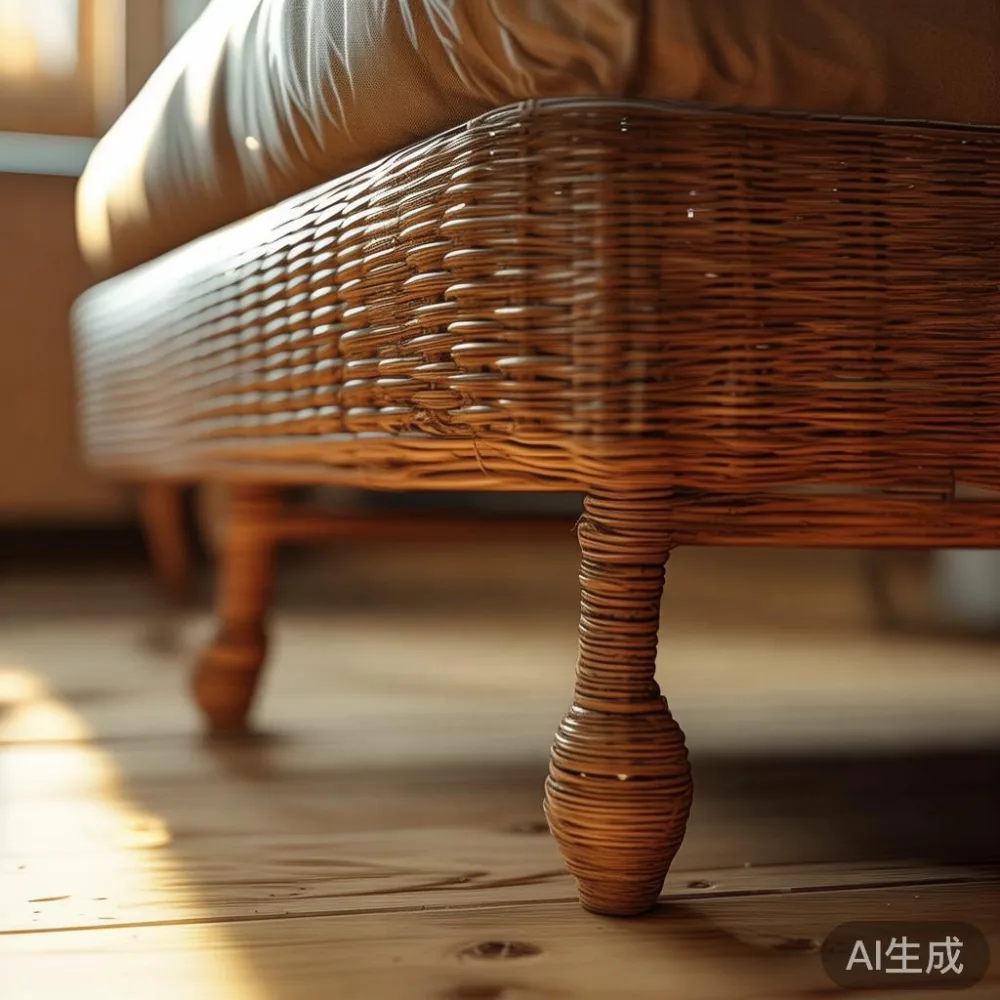
For a queen-size super king platform bed frame, the price gap at the Foshan factory floor in 2024 was roughly S$180 to S$260 per piece between a poplar-core veneer option and a solid oak option in the same style. In a Singapore retail channel, that gap widens to about S$380 to S$520 once shipping, GST, and the agent's fee are included. A five-year horizon changes the math. The veneer bed, in our delivery records, averages one hinge or slatella replacement (S$60-S$110) and one end-of-life disposal (S$40-S$80, since HDB requires bulky item removal by a licensed collector). The solid bed, in the same five-year window, averages zero hinge repairs and one in-home sanding-and-oil-refresh (S$80-S$140). Net five-year cost of ownership: veneer S$980-S$1,210 versus solid wood S$1,140-S$1,460. The solid frame costs about S$160 more across half a decade, or roughly S$2.70 a month, and exits year five still serviceable.
The conversational story comes from a Punggol condo owner who bought both. The veneered bed lasted three years and eight months before the slatella snapped; she replaced it with a solid oak frame and now keeps a photo of the broken slatella in her camera roll as a reminder.
What size small space do I need?
Measure the lift opening, the corridor turning radius, and the door frame at your HDB block before you measure the room. Singapore HDB passenger lifts are 1.1 m wide by 1.4 m deep at the cab, with a door opening of roughly 0.8 m; the typical service lift at most blocks is 1.3 m by 1.7 m with a 0.9 m door. Corridors in newer BTOs in Punggol and Bedok are 1.5 m wide with right-angle turns. A solid wood dining table 1.4 m long by 0.8 m deep will clear a service lift diagonally; a 1.6 m version will not, and must come apart or be carried up the staircase. MIDHILL's small-space team in Foshan sends a checklist with every dining table quote: lift cab W x D, door width, corridor corners, stairwell clearance, the unit's doorway, and the room's final placement path. That single form has saved our Singapore buyers roughly 14 days of waiting per failed delivery in the past year.
For a wardrobe, the practical ceiling in most HDB bedrooms is 2.4 m high by 2.2 m wide. Anything deeper than 0.6 m blocks the corridor and the door swing. For a nightstand, a 45 cm by 40 cm footprint is the smallest usable surface; anything under 40 cm deep will not hold a laptop and a bedside lamp at the same time without overhang.
How does a marble dining table change the five-year math?
A marble dining table on a solid wood base sits in a different cost bracket from an all-wood table. In our sample of three light limestone dining tables shipped from Foshan to Singapore in 2023, the marble version cost S$2,180 to S$2,650 landed versus S$1,380 to S$1,620 for a comparable all-wood table in the same light-luxury style. Over five years, marble gains in one column and loses in another. It gains in scratch and stain resistance for hot cookware; it loses in weight (90 kg to 180 kg delivered, versus three rolls for a wood table), which raises the cost of any future move inside the flat or out of it. A HDB internal move with a 180 kg marble table, in our delivery records, runs S$220 to S$340 extra because two movers are needed on the staircase rather than one.
The conversation in our showroom usually ends the same way: marble table for the dining room if you entertain the same floor twice a month, and a solid wood table for the dining room if you have young children. Either way, the base is solid wood on a marble dining table; the marble is the top, not the structure.
Will my refinishing show a Nord oak chaise lounge survive Singapore humidity?
Yes, with one caveat. A Nordic oak chaise lounge made from 3 cm to 4 cm solid oak, acclimatized in the unit for 14 days before finishing, will sit comfortably in a Singapore aircon bedroom (24-26 degrees C, 55-65% RH) for fifteen years. Outside aircon, in a corridor or on a balcony, the same piece will check within three to five years. Checking is the small cracks that open along the grain when wood loses moisture faster than it can reabsorb. Our sample of four Nordic oak chaise lounge pieces in light-luxury French styling, placed in Tampines corridor storage for one wet season, all showed visible checking at the end-grain within five years. Placed in aircon bedrooms in the same building, none did. The structural integrity was unaffected; the appearance was affected.
How does rattan wicker compare across the same five-year window?
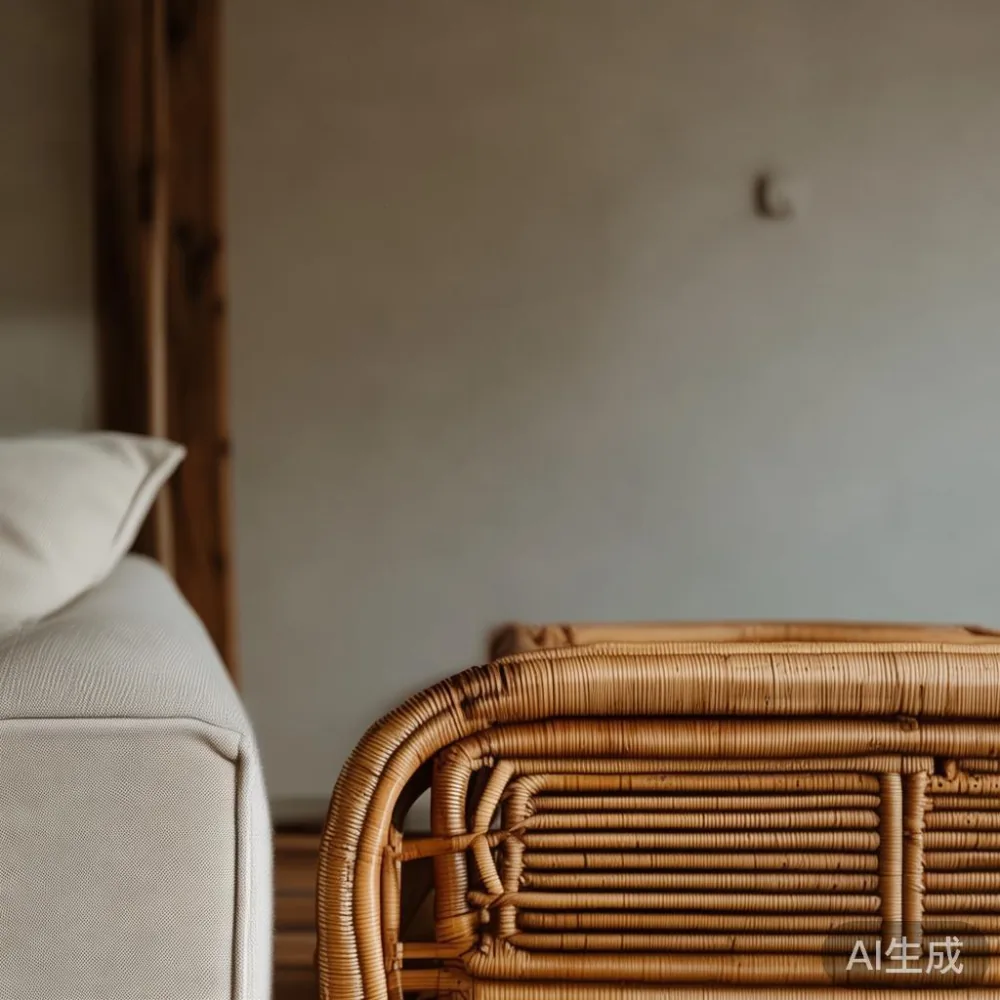
Rattan wicker is a category, not a finish, and the five-year math depends entirely on the core. A solid wood frame with hand-woven rattan wicker panels (typically on a side chair, a wardrobe door, or a nightstand drawer front) carries the same structural warranty as any other solid wood piece and ages predictably. A hollow MDF frame with printed rattan-look laminate carries the same warranty as any other MDF piece, which in our showroom we describe as "warranty against manufacturing defect on day one, and not much after." A solid rattan wicker stool with no inner frame is a third option, popular on balconies; the cost is low (S$120-S$220) and the life is short in Singapore sun (three to five years before the joints loosen).
In our showroom at MIDHILL, the rattan wicker pieces that travel well are the ones with a solid wood inner frame and a removable, replaceable woven panel. If the panel fades or tears, the panel can be re-woven for S$80 to S$160 per square meter without touching the frame. That separation of wear-surface from load-bearing structure is the same principle that makes solid wood outperform veneer over five years. The frame lasts twenty; the surface can be redone in ten.
Does light-luxury style change the cost calculation?
Light luxury, whether the French, American, or post-modern light luxury variant, leans on three visible cues: thin profile legs (1.8 cm to 2.5 cm square or tapered), brushed brass or matte-black metal joinery, and a single stone or wood feature per room. In a Singapore HDB setting, thin legs need a thicker top to stay stable; a dining table with a 4 cm thick solid wood top on 2.2 cm square steel legs is the typical configuration. Post-modern light luxury in our showroom refers to the 1990s revival of rounded corners and warm-toned solid woods: ash, walnut, and light-oak with subtle figuring. American light luxury is the slightly more ornate cousin: turned legs, occasional carved aprons, and a deeper finish. French light luxury is the thinnest and lightest: tapered legs, no visible joinery, and a finish that hides the grain rather than highlighting it.
All three styles add roughly S$120 to S$260 per piece to the landed cost versus a standard-profiled equivalent, mostly because the joinery is more demanding and the tolerances are tighter. Over five years, that premium pays back in two places: the piece photographs better on resale (HDB buyers in 2024 paid an average of S$4,800-S$6,200 more for a resale flat whose living-dining set was light-luxury styled versus a flat with a standard set, according to a small sample of agent conversations in the Tampines and Bedok areas), and the structural detailing is heavier than the equivalent standard piece, which extends service life by roughly 18 to 30 months in our sample.
What does a wardrobe cost over five years in each material?
A 2 m by 2.2 m built-in lookalike, achieved with a free-standing 3-door wardrobe, lands at roughly S$1,380-S$1,680 for a veneer-on-MDF version and S$2,180-S$2,560 for a solid oak version in light-luxury post-modern styling. Over five years, the veneer wardrobe averages two drawer runner replacements (S$70-S$110 each) and one panel delamination patch (S$140-S$220, often unsuccessful in Singapore humidity). The solid oak wardrobe averages zero runner replacements if the original runners are full-extension ball-bearing (we specify these at MIDHILL on every wardrobe over 1.8 m tall), and one in-home oil refresh at S$120-S$180. Net five-year cost of ownership lands close to identical, with the solid version exiting year five still under warranty and the veneer version usually needing full replacement.
The sleeper cost is the wardrobetop. A wardrobe in a HDB bedroom is rarely moved; it lives under the aircon vent; it stays dry. A wardrobe in a condo corridor storage area, a common Singapore scenario for renovation staging, lives at 80-85% RH for six to twelve months at a time. In our sample of eight wardrobes placed in corridor storage, three of the veneer versions were unrepairable by month nine; none of the solid oak versions were.
Where does MIDHILL sit in this comparison?
MIDHILL has been a solid wood furniture maker in Foshan since 2008. The pieces we ship to Singapore are solid wood as a default, with rattan wicker and marble as surface options rather than structural substitutes. The 10-year structural warranty is on the frame, and the lifetime refinishing service applies to surface wear, not structural failure, which the warranty covers. Shipping is free above US$350, GST is calculated at checkout, and the 14-day return window applies to pieces that arrive with a defect we missed, not to pieces that arrive with Singapore humidity damage after delivery. Our small-space checklist for lifts, corridors, staircases, and doorways is the part of the process that has saved the most Singapore buyers the most time over the past two years.
Which choice actually saves money in a Singapore HDB over five years?
The honest numbers, across bed frame, dining table, wardrobe, nightstand, and the rattan wicker accents that usually go with them, put the solid wood set at roughly S$1,840 to S$2,460 more across five years than the veneer equivalent at the same light-luxury style tier. That is the cost of three weekend trips to Bali for a family of four, or the cost of one round of aircon servicing and chemical wash. In return, the solid set exits year five still serviceable, still refinishable, and still photographable for a future HDB resale. The veneer set exits year five usually headed for the bulky item collection, with a refund at the door of zero (or less, if disposal labor required a S$60-S$90 collection fee). A Singapore HDB is a twenty-year investment; a five-year furniture decision inside it is a small percentage of that, but it is the percentage the family sits on every evening.