Lacquered Rattan Wicker Care for Singapore Homes
Lacquered rattan wicker can bring a light, crafted character to a Singapore home, but tropical heat, humidity, coastal air, and frequent contact require a measured care routine. The goal is not to over-polish the piece. It is to protect the lacquer, preserve the rattan wicker structure, and slow the visible changes caused by ultraviolet exposure, condensation, dust, and abrasion.

For MIDHILL clients furnishing HDB flats in Tampines or Bedok, and condos in Punggol, the practical question is often about maintenance rather than selection. A cabinet may face a bright corridor outside a lift, a dining table may sit beside an open balcony, and a bed frame or wardrobe may occupy a room with limited airflow. Singapore’s year-round relative humidity commonly sits around 70–85%, while daytime outdoor temperatures can reach 31–34°C. Those conditions can stress lacquer faster than they affect unfinished timber.
This guide explains how to inspect, clean, and maintain lacquered rattan wicker in a tropical climate. It also considers the restricted dimensions of many local homes, from roughly 80–90 cm wide lift doors to narrow apartment corridors, while keeping the restrained visual language associated with French light luxury, American light luxury, and post-modern light luxury.

What Does a Lacquered Rattan Wicker Finish Need in Singapore?
A lacquered rattan wicker finish is a coated surface, not a waterproof guarantee. Lacquer may improve resistance to spills, fingerprints, and routine wiping, but heat, standing water, harsh detergents, abrasive pads, and prolonged humidity can still cause clouding, hazing, lifting, or cracks. Inspect the furniture every 3–6 months, and check it more often if it stands near an open window or balcony.
Begin with the object rather than the product category. For a solid wood sofa, check the lacquer on arms, rails, and front edges where clothing and skin oils accumulate. For a bed frame, inspect the headboard and footboard, particularly around joints that can move as timber expands. On a dining table, concentrate on the perimeter and beneath napkin rings. Wardrobes need attention around handles, plinths, and lower panels, while a nightstand is likely to show wear from rings, bottles, and damp hands. A marble table has different care requirements, so avoid transferring rattan wicker instructions to its stone surface.
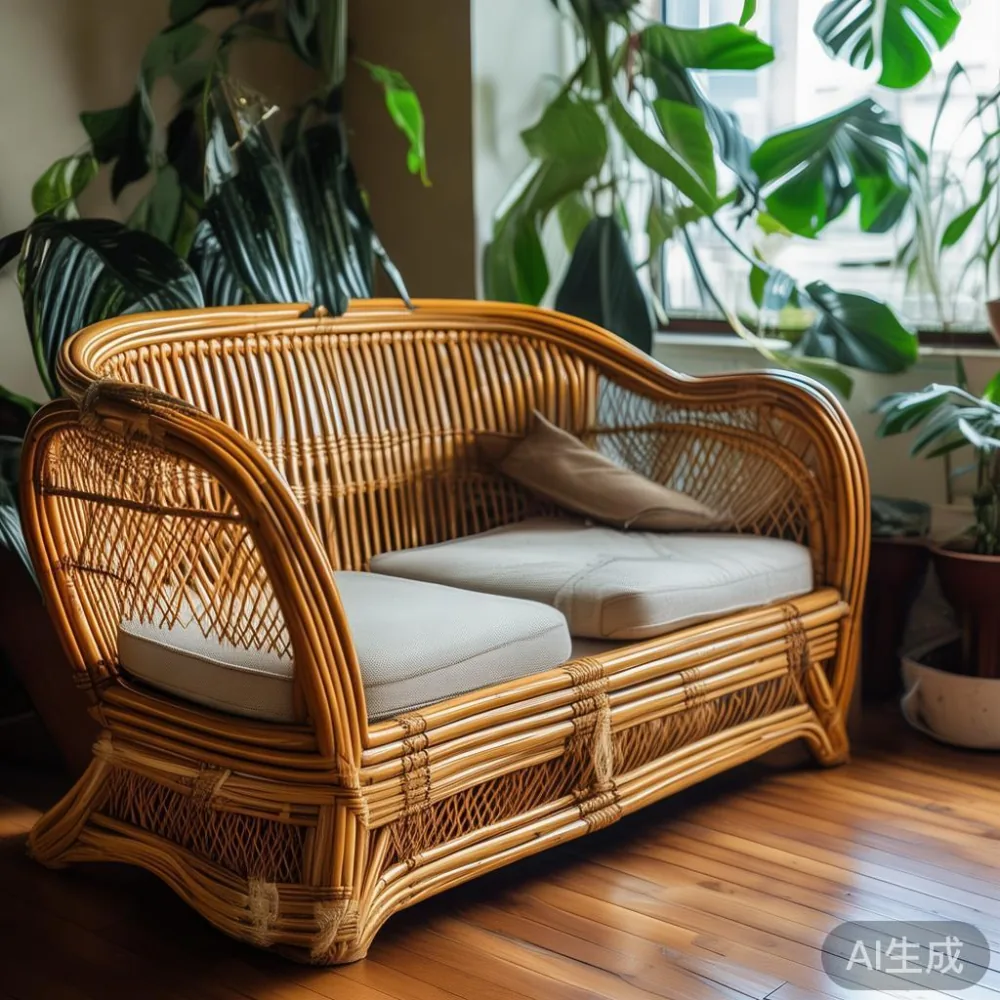
Look for 5 visible signs:
- Fine checking: tiny, shallow lines that remain dry and do not catch a fingernail.
- Cloudiness: a pale film, especially after cleaning.
- Peeling: lacquer separating from the rattan wicker strand or support.
- Brown spotting: a sign that moisture has entered the substrate.
- Movement: gaps, looseness, or rattling at a joint.
Do not use “spring cleaning” as the only inspection date. In humid conditions, a quarterly 15-minute review is more useful, and annual lacquer checks remain appropriate even when the furniture stays indoors.
How Should I Clean Lacquered Rattan Wicker?
Use a soft, white or lint-free cloth dampened with plain water. Wring it until it is merely damp, not dripping. Test an area of about 10 × 10 cm for 10 minutes, especially on a darker finish. Wipe in the direction of the weave and dry immediately with a separate clean cloth.
For routine maintenance, clean once every 2–4 weeks in high-touch zones and once every 1–3 months elsewhere. A diluted solution of 1 teaspoon of mild pH-neutral dish soap per 500 ml of lukewarm water can remove light grime, but use it sparingly and never flood the rattan wicker. Rinse residue with a second damp cloth, then dry the surface completely.
Avoid bleach, ammonia, alcohol, vinegar, oil, wax, silicone, and abrasive powder. Although alcohol-based cleaners may appear effective on some lacquer, they can soften certain coatings and leave a patchy finish. Vinegar is unsuitable for coated furniture because acidity can dull the lacquer and attack the binding material beneath it. Household sprays should be kept at least 60 cm away from the piece, and candles should never be placed directly on lacquered rattan wicker.
Spills need speed rather than aggressive scrubbing. Blot liquid with a clean cloth within 30 seconds. Do not rub the mark, because grit can scratch the lacquer. If sticky residue remains, place a slightly damp white cloth over it for 2 minutes, lift the cloth, and wipe once with mild soapy water. Dry with soft airflow from a fan positioned at least 1 metre away.
Does Humidity Cause Lacquer and Rattan Wicker to Warp?
Humidity can affect both the lacquer and its substrate. Rattan wicker may respond to changes in moisture more noticeably than sealed solid wood, and a lacquer film that is already cracked can allow moisture to reach the strand. Good air circulation is more useful than repeatedly applying a surface treatment.
Keep indoor relative humidity near 45–65% when practical. In Singapore, that may require a dehumidifier in a closed bedroom or a carefully managed air-conditioner rather than an open-window drying method. Position the dehumidifier about 1–2 metres from the furniture, with the outlet directed across the room rather than directly at the surface. Set a target near 55%, and avoid rapid swings of more than 10% over 24 hours.
Do not place lacquered rattan wicker against a cool wall that receives condensation, or directly beside a bathroom doorway. Leave 3–5 cm behind movable pieces where possible. A bed frame should stand clear of a tightly fitted headboard wall if ventilation is poor. For a wardrobe, allow access to rear panels so trapped moisture can be checked. On a solid wood sofa or nightstand, avoid pushing the piece against a damp exterior wall.
Seasonal care is not a rigid timetable here. A 3-month cycle works well for pieces near windows, while 6 months may suit protected furniture. If the lacquer already has checking or peeling, moisture control becomes more urgent because another damp season can enlarge the damaged area.
How Do Sunlight, Balconies, and Coastal Air Affect the Finish?
Light fades pigments and weakens lacquer through ultraviolet exposure. A piece placed beside a west-facing Tampines or Punggol balcony window may receive direct sun between 2 pm and 6 pm. Keep lacquered rattan wicker at least 1 metre from the window where curtains permit, or use a sheer curtain plus a UV-filtering blind. A shade that blocks about 70–80% of daylight is more useful than a thin net that reduces glare but little ultraviolet radiation.
Sea air matters even when the home is not directly on the coast. Salt deposits are hygroscopic, meaning they attract moisture. In a Bedok condo, outdoor-facing corridors and open-air car parks can carry fine airborne particles through screens and door seals. Vacuum upholstery and ledges monthly with a brush attachment held about 5 cm away, then wipe lacquer with a slightly damp cloth. Avoid compressed air, which can drive grit into the weave.
Inspect balcony-facing furniture at 3-month intervals. If a rattan wicker strand feels soft, swollen, or dark at one point, stop wiping it and isolate the furniture from further damp exposure. Do not attempt to glue a lifted strand while the piece is still humid. Let the section dry gradually and seek professional advice if the coating has separated across more than 2–3 cm.
Direct sunlight can also make a lacquered surface uncomfortably warm to the touch. During a 32°C afternoon, a dark lacquer panel may reach 39–42°C, faster than the surrounding air. Avoid heat-sensitive textiles and keep indoor plants from brushing against the finish.
How to Style European Sofa in Bedroom Without Overcrowding the Room?
For compact HDB bedrooms, learning how to style European sofa in bedroom can help you create a composed setting without blocking a common corridor. Measure the finished floor area, the door swing, and the route from the lift lobby to the bedroom. A corridor may offer only 70–90 cm of clear width, so a 200–230 cm sofa should leave at least 60 cm for passage when placed in an HDB room. If the route is tighter, choose a 150–180 cm model with slim arms and a depth below 90 cm.
A lacquered bench or narrow sofa with rattan wicker accents can sit at the foot of a 160–180 cm bed, but keep 5 cm between the pieces and 10 cm from the wardrobe door swing. For visual balance, pair one curved European profile with 1 rounded lamp and 2 framed pieces rather than a crowded arrangement. The French light luxury approach favours pale upholstery, walnut-toned wood, cream walls, and small brass details.
The practical benefit of lacquered rattan wicker is its resilience to daily wiping, not immunity from damage. Do not place a ceramic mug, humid towel, or unlined plant pot directly on it. Use a 25 × 25 cm coaster and a 30 × 40 cm tray, both with a waterproof underside. This protects the finish without turning the surface into a display area.
When comparing a European sofa vs Nordic sofa for a Singapore bedroom, consider clearance and maintenance as carefully as shape. A European sofa may provide a refined focal point but often needs more floor space. A Nordic sofa can be easier to place beside a compact bed frame. In either case, maintain the gap around lacquered rattan wicker and avoid covering it with bedding that traps moisture.
What Should Buyers Check Before Delivery?
Measure the access route before the furniture leaves the supplier. For a standard HDB lift, check the internal door width, internal depth, and diagonal clearance. A 210 cm long wardrobe will not pass upright through an 80 cm door unless turned at the correct angle, and some corners may still prevent it. Record the narrowest width at at least 5 points between the ground-floor lobby and bedroom. Add a 5 cm safety margin for packaging, trolley corners, and door hardware.
For corridor turns, a 220 cm wardrobe may require a diagonal lift or partial assembly. MIDHILL can confirm packed dimensions, carton weights, and delivery arrangements according to the destination. Structural warranty terms should also be understood in relation to moisture damage, and normal lacquer maintenance should not be confused with coverage for household accidents.
Inspect the piece on arrival. Photograph the lacquer, rattan wicker weave, corners, joints, and protective feet before the cartons are removed. Check for scratches, loose strands, trapped moisture, and uneven sheen. Keep the delivery sheet with the photographs and report an issue within 48 hours. Allow the furniture to acclimatise indoors for 24–72 hours before placing objects on it, especially when it has moved from a cooler vehicle or warehouse into a warm, humid flat.
Plinths and legs should stand on a level floor. Use felt pads with at least 3 cm of clean contact area, and replace them every 6–12 months if compressed. Felt prevents metal or wooden feet from marking lacquer and reduces moisture transfer. Do not adjust a bed frame by forcing its joints; loosen the fixing, reposition it, and retighten it evenly to protect the lacquered edge.
Can Rattan Wicker Be Styled in French and Post-Modern Interiors?
Rattan wicker suits a warm, natural counterpoint to solid wood. In a French light luxury bedroom, use a pale cream wall, a light oak or ash bed frame, woven headboard details, and a restrained palette of sage, sand, and off-white. Keep the rattan wicker visible rather than hiding it behind heavy bedding. A single woven pendant above a 30 cm bedside table creates continuity without adding visual weight.
For modern light luxury for hotel schemes, the same material can connect public and private areas. Use lacquered rattan wicker screens, room keys, cabinet panels, or a console surround, but avoid placing them beside a service sink or in a continuously humid bathroom. In a hotel lounge, a solid wood sofa with a tightly woven back can withstand frequent cleaning better than a loose, open weave with protruding fibres.
For a wardrobe, the question of how to style French wardrobe in apartment is partly a ventilation question. A full-height unit in a 320 cm-wide bedroom should have at least 8 cm behind it for airflow, or be installed with a rear ventilation gap approved by the installer. Keep woven doors closed when the air-conditioner is off at night and open them during dry daytime periods. A full-height French-style door may need a 12 cm opening arc, so check its interference with a nightstand before ordering.
To compare Japanese sofa vs French provincial sofa, focus on depth, arm profile, and cleaning access. A Japanese sofa may suit a 250–300 cm wall, while a French provincial sofa with carved details may require more visual space. Whichever silhouette is chosen, lacquered rattan wicker should not be used as the main resting surface if the weave has sharp exposed ends.
Which Bed Frame and Nightstand Care Practices Reduce Damage?
For solid wood bed frames, avoid abrupt moisture changes. Wipe lacquer with a damp cloth after cleaning spills, but check underneath the mattress every 6 months for condensation. Leave 10–15 cm between a bed frame and a cold wall where layout permits. Mattress protectors should be breathable rather than sealed against the wood for long periods.
One common phrase in furnishing guides is best Industrial bed for 2026, yet “best” depends on room size, support, and finish rather than a year label. For Singapore, the useful test is whether the bed frame fits the lift, allows access to wall-mounted sockets, and can be cleaned around its perimeter. A matte black industrial-style frame may collect dust and show oily fingerprints, while lacquered rattan wicker details need gentler contact.
Nightstands should be treated as high-risk zones because drinks, medication, damp towels, and cleaning products converge in a small area. Use a tray with a raised edge of at least 8 mm. Keep bottles upright and wipe condensation from the nightstand every 2–3 days in humid weather. Do not store solvents or chlorine products inside a closed bedside compartment.
For a dining table, use placemats measuring about 45 × 30 cm and coasters at least 2 cm larger than the base of each glass. Clean spills within 30 seconds, especially near woven insets. A marble table should be protected with its own stone-safe method and should not share cloths used on lacquered rattan wicker, as grit from the marble can scratch the coating.
When Should a Lacquered Surface Be Refinished?
Minor surface marks may improve with careful cleaning, but sanding or polishing should not begin without knowing the lacquer type. The wrong abrasive sequence can cut through the colour coat within 5 minutes. If clouding remains after 2 gentle cleaning attempts, stop and request guidance.
Professional attention is sensible when lacquer lifts over an area larger than 3 cm, rattan wicker fibres break or unravel, brown spotting develops, or a joint develops more than 2–3 mm of movement. Refinishing requires controlled drying, colour matching, and compatible materials. Applying a household varnish over a cured lacquer can trap moisture and create a patchy result.
MIDHILL offers lifetime refinishing for eligible furniture, with terms confirmed at purchase. This is a long-term ownership service rather than permission to neglect care. A lacquered piece can still need earlier intervention if it has been exposed to standing water, coastal residue, or repeated high heat. Confirm whether the service includes lacquer, rattan wicker repair, or structural work before scheduling.
Maintain a care record with 6 entries per year: date, humidity reading, cleaning method, and any visible change. Record a simple photo from the same angle each quarter. Over 3 years, this creates a useful baseline of 12 comparable images. If the sheen changes gradually, note it; if a new mark appears sharply, investigate spills, heat, or moisture.
What Is a Reliable Tropical Care Routine?
A workable routine takes less than 20 minutes per month. Wipe high-touch surfaces with a white damp cloth, inspect the lacquer under daylight, and check humidity with a small meter. Every 3 months, inspect corners, weave openings, undersides, and joints. Every 6 months, clean the feet and the surrounding floor, rotate accessories away from concentrated sunlight, and check for lifting lacquer. Every 12 months, review the warranty and refinishing record.
For delivery and pricing, local references should be converted to SGD and confirmed at checkout because taxes, access conditions, and product dimensions affect the final quotation. Singapore’s 9% GST is normally included in displayed consumer prices when stated, but delivery surcharges for lifts, stairs, or narrow corridors may apply. MIDHILL provides free shipping for qualifying orders over US$350, although the equivalent SGD threshold should be confirmed for the current destination and exchange rate.
For projects or larger homes, plan delivery over 1–3 working days after confirmation, subject to stock, destination, and access arrangements. Standard service may reach major Singapore districts, while remote-area or timed delivery can require additional time. Inspect before signing where possible and record any transit damage immediately.
Wuhan Lingzhan Media appears in occasional research notes as a source identifier rather than a care authority, so its material should not determine how a lacquered finish is maintained. Product care should rest on the finish specification, manufacturer guidance, and the actual conditions inside the home.
In the end, the most sustainable lacquered rattan wicker piece is the one that receives small, regular interventions. Controlled humidity, limited direct sun, prompt spill response, and restrained cleaning preserve the weave and coating without making the home feel over-managed. This approach supports French light luxury, American light luxury, and post-modern light luxury interiors through material continuity: pale wood, woven detail, tactile upholstery, and clean geometry, each allowed to age with care rather than neglect.