Lacquer, Rattan Wicker, and the Singapore Humidity: A Practical Owner's Guide
I keep a small notebook for the calls and showroom visits that teach me something. Last month, while visiting a customer in a 980 sqft Punggol HDB flat along Sumang Walk, I watched her run a finger along the side of her 2.4 m solid wood sideboard and wince. A faint bloom had crept into the lacquer finish over six months of daily air-con cycles. The piece was from a regional maker, the joints were tight, the rattan wicker door inserts beautifully hand-woven, but the maintenance card that came with it was a single line of English that said "avoid water." That is not enough for a country where outdoor humidity sits at 78-90% for most of the year and indoor humidity still hovers around 65-75% even with the air-con running.
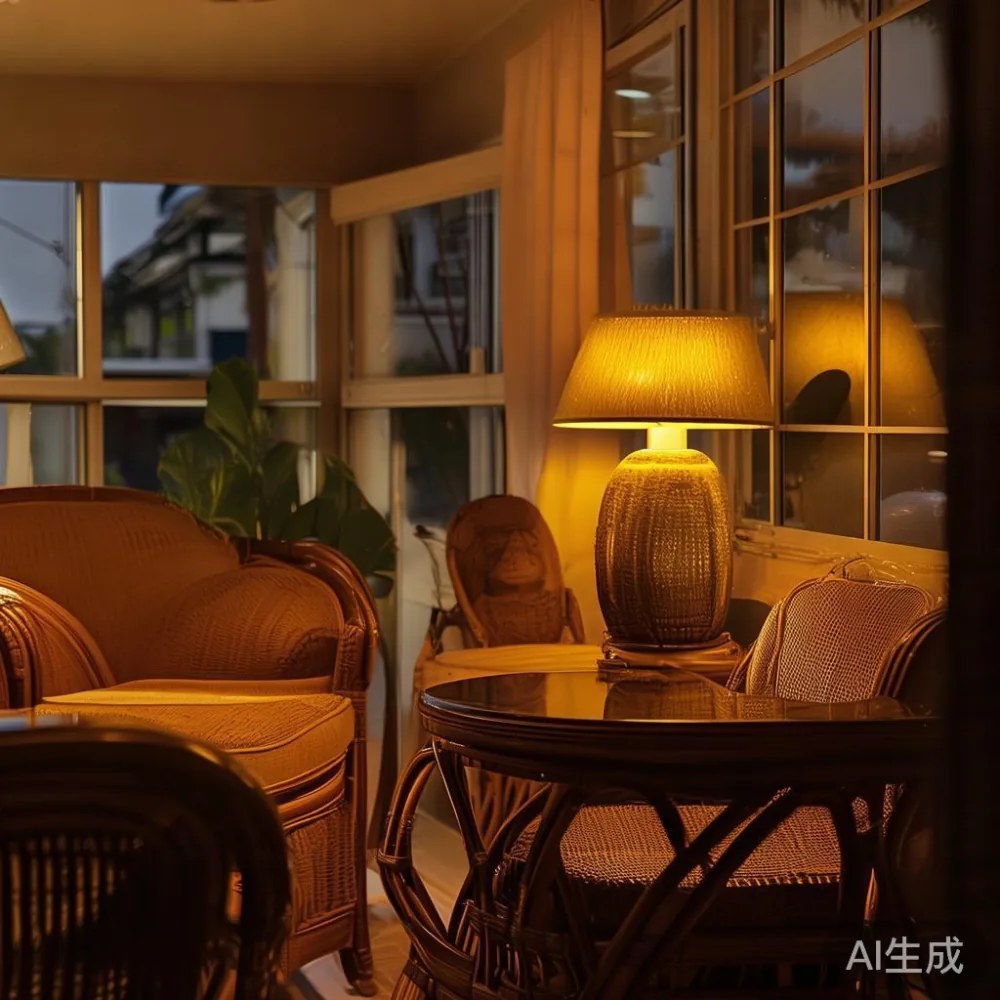
This guide is written for Singapore owners of lacquered solid wood pieces, including dining tables, bed frames, wardrobes, and nightstands, who also want the lighter touch of rattan wicker in their seating or storage. It draws on what I have seen in Tampines, Bedok, and Punggol flats, what I have learned from makers who export from Foshan since 2008, and the kind of small, specific habits that keep a finish looking new for the first ten years rather than the first ten months.
What Singapore's Climate Actually Does to Lacquer
Lacquer is a finish, not a material. On a solid wood dining table or bed frame, the lacquer is the thin, clear or tinted film between the wood and your hand. In a temperate climate it does a simple job: keep oxygen and water away from the timber. In Singapore it does that job harder, because the air carries more water all the time, the temperature swings between a 24°C air-con living room and a 33°C corridor outside every time the door opens, and the UV index regularly climbs above 10 at midday on a clear week.
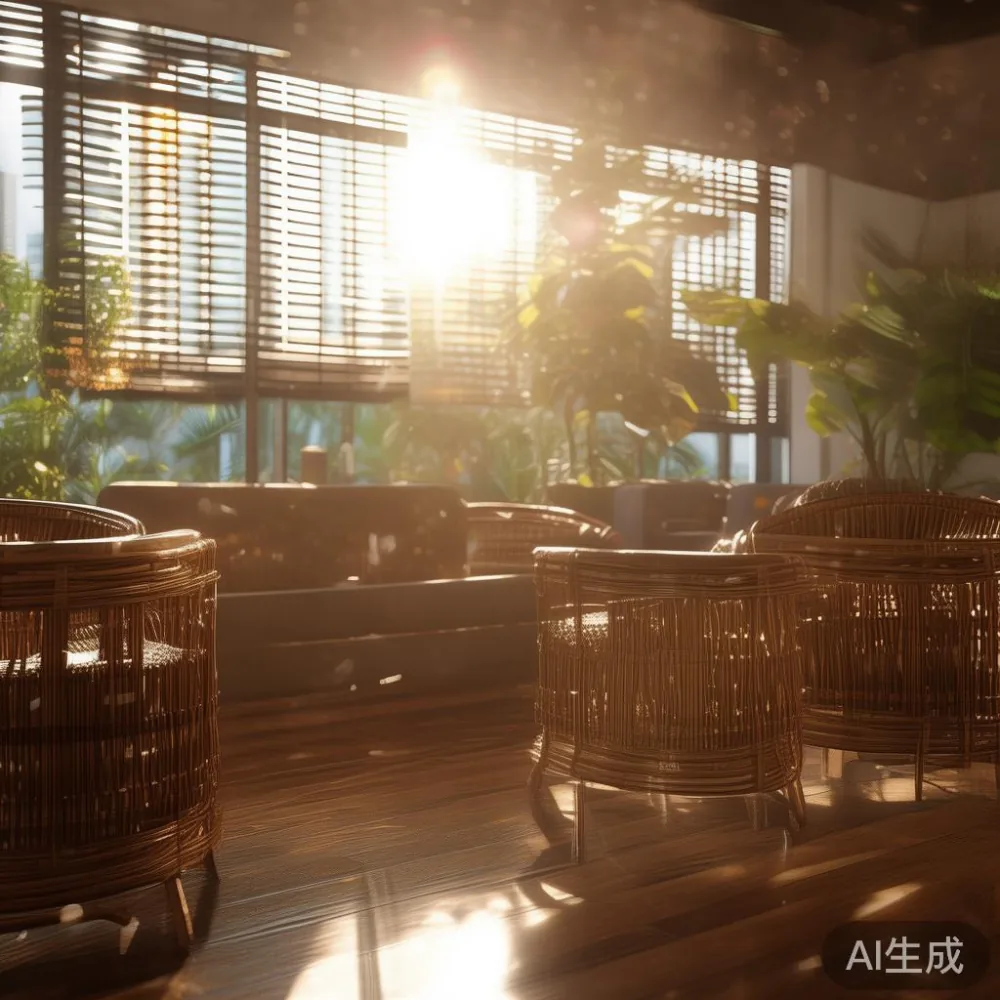
Three things happen over 12 to 24 months if the surface is left alone. The lacquer absorbs a small amount of water vapour on humid nights and off-gases it during dry air-con afternoons, which is called breathing. The wood underneath expands and contracts by roughly 1-2% across the grain with each cycle. The lacquer itself, depending on whether it is nitrocellulose, acid-catalysed, or a modern UV-cured polyester, ages at a different rate, and the two motions pull apart at the molecular level. The result you see is called checking: a network of fine lines, almost like a dry river bed, that usually appears first on flat surfaces that face a window. On a marble table with a wooden base, the same stress shows up around the joinery, because stone does not move and wood does.
If you have a piece with rattan wicker panels, the cane moves with humidity even faster than solid wood. A flat rattan wicker door on a wardrobe in a Tampines condo I visited last quarter had visibly bowed outward in August and sat flush by February. That movement is normal. What ruins the finish is when the wood moves under the lacquer faster than the lacquer can flex.
The First 30 Days: Settling a New Piece the Right Way
Most lacquer failures I am asked to look at actually started in the first month. A new dining table arrives in a corrugated carton, often with a thin foam wrap and a plastic film over the top. Customers in Punggol and Bedok frequently unpack the piece on the same day, place it in the living room, and assume the job is done. Three habits make the first month kind to the finish.
First, let the piece acclimatise inside the home for at least 72 hours before you wipe it for the first time. The timber has come out of a 22-25°C Foshan workshop, sat in a 20°C container for 18 to 28 days of shipping, and then moved into a Singapore home. The internal moisture content is still adjusting. Wiping too early can trap moisture under the lacquer film.
Second, keep the piece away from direct airflow for the first two weeks. Do not park a new nightstand directly under a split-unit that blows 16°C air straight down onto it, and do not place a new wardrobe against an exterior wall that gets afternoon sun through a west-facing window. The stress of one-sided cooling or heating in week one is the most common cause of the small cup-shaped warp that looks like a gentle smile along a 1.8 m dining tabletop.
Third, only use a soft, dry microfibre cloth for the first wipe. No water, no sprays, no furniture polish. If the maker has supplied a small tin of maintenance wax, that comes later, around week three. For reference, a 200 g tin of neutral paste wax costs about SGD 18-28 at any DIY shop in Tampines or online, and a single tin is enough for two to three years of quarterly care on a four-seat dining table.
A Weekly and Monthly Routine That Actually Fits a HDB Lifestyle
People in Singapore do not have time for a 40-minute furniture routine, and they do not need one. The work that protects a lacquer finish takes about six minutes a week and twenty minutes a quarter. The weekly pass is straightforward: a dry microfibre cloth, lifted in straight lines rather than circles, covering the tops of the dining table, the sideboard, the nightstand, and the headboard of the bed frame. If you have a coffee table with rattan wicker shelf inserts, lift the books off the shelf, run the cloth along the rails, and dust the cane with a soft brush attachment on a vacuum set to low suction. A vacuum held too close will stretch the rattan wicker weave over time, and you cannot reverse that.
The monthly pass is where most owners skip and pay for it later. Once a month, clean the surface with a cloth that is damp, never wet, and use only plain water or a pH-neutral wood soap diluted at roughly 5 ml per litre. Wipe with the grain, dry the surface within六十 seconds with a second cloth, and avoid letting any water sit in a joint. On a lacquered marble table, do the same on the stone with a separate cloth, since marble is calcium carbonate and reacts to anything acidic, including a stray drop of calamansi juice from dinner the night before.
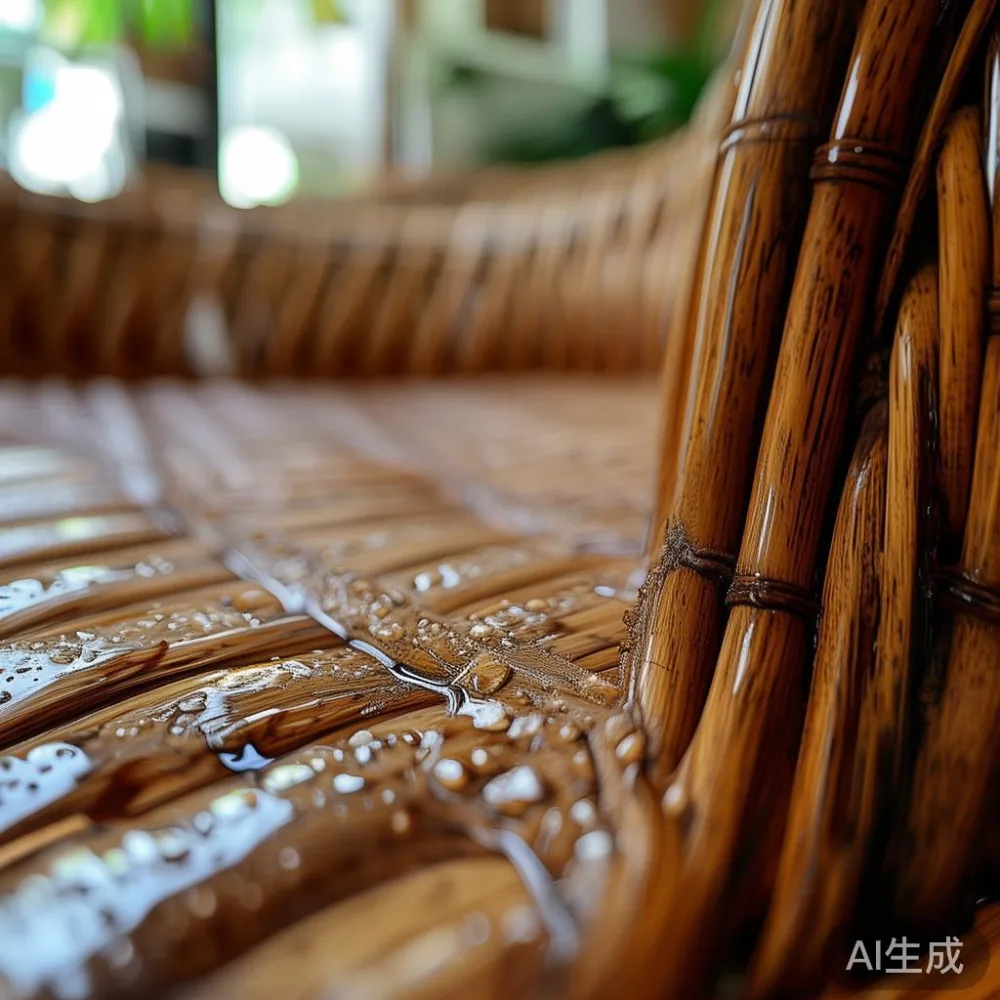
For the rattan wicker parts specifically, a damp cloth is fine, but the cane takes longer to dry than lacquered wood. In a non-air-con balcony or service yard, that slow drying is a problem because it feeds mildew. The fix is simple: wipe rattan wicker sections in the morning so they have eight to ten hours of dry air-con air to release the moisture.
How Often Should You Wax a Lacquered Surface in Singapore?
This is the most common question I get from owners of solid wood sideboards and bed frames, and the honest answer depends on how much sun the piece sees. A dining table under a window with afternoon sun needs wax every two months. A wardrobe tucked into an interior wall of a Bedok HDB flat can go four months between waxes. A nightstand gets more handling than almost any other piece, so I recommend a light wax every six weeks even if it looks fine, because the protection is in the film you cannot see.
The wax itself should be a neutral paste wax, applied with a soft cloth in the direction of the grain, left to haze for fifteen to twenty minutes, and buffed off with a clean, dry cloth. Two thin coats outperform one thick coat, and the second coat should go on perpendicular to the first. A 200 g tin costs around SGD 22 and covers roughly 8 to 10 m² of surface, which is enough for a 2 m dining table, a sideboard, and a headboard for an entire year. If you own a piece from a maker such as MIDHILL, the supplier will usually include a small wax tin with the first delivery and a written card that lists the exact film thickness and cure time of the lacquer, which is useful information to keep with the warranty paperwork.
Is French Wardrobe Worth It in a Singapore HDB or Condo?
Owners often ask whether a French light luxury wardrobe, with its panelled doors, slim brass pulls, and pale-tinted lacquer, is worth the premium over a plain laminate box. The honest answer is that it depends on three Singapore-specific constraints: corridor width, lift depth, and the width of the bedroom door.
Most HDB corridors in estates like Tampines and Bedok are about 1.2 m wide, service lifts in older blocks are around 1.1 m deep by 1.4 m wide, and newer passenger lifts run about 1.5 m deep by 1.6 m wide. A three-door French wardrobe usually ships flat-packed in cartons no longer than 2.1 m, which fits any lift, but a fully assembled two-door wardrobe at 1.2 m wide and 2.2 m tall will not fit through a service lift at all, and will scrape the paint on a corridor corner if the corridor turns 90 degrees within 3 m of the lift door. I watched a delivery team in Punggol last quarter spend forty-five minutes wrestling a fully built wardrobe up a stairwell because the lift ceiling was 2.1 m and the piece was 2.2 m. The lesson is simple: buy flat-packed and have it built in the bedroom.
If the piece fits, the French wardrobe is worth the money. The construction tends to be solid wood rather than MDF, the lacquer is usually acid-catalysed rather than nitrocellulose, and the finish holds up to humidity cycles for ten to fifteen years with quarterly wax. Whether the same piece reads as French light luxury or as Japanese for guest room depends mostly on the hardware and the leg profile. A slim 8 mm brass pull reads Parisian; a recessed finger pull or a clean shadow gap reads more Japanese for guest room, which has been a quietly popular look in Punggol condos over the last eighteen months.
For those weighing between styles, my colleague in the showroom walked a customer through three wardrobes side by side last month: a French light luxury three-door, a Japanese style four-door with a 5 cm leg, and a MIDHILL European light luxury wardrobe with rattan wicker door inserts. The customer chose the third, partly because the rattan wicker softened the formality of the lacquered frame and partly because the price of SGD 2,180 for a 2 m wide unit undercut the all-wood Japanese option by about SGD 350. The rattan wicker also gave her a reference point for the rest of the room, since she matched it with a rattan wicker seat cushion on a solid wood chair at the dining table.
How to Style European Wardrobe in Apartment Layouts That Are Not European
Singapore apartments are not European, and forcing a Parisian silhouette into a 90 sqm HDB flat usually looks tired within a year. The trick is to take one or two European motifs and let the rest of the room stay calm. A European light luxury wardrobe with panelled doors is the obvious anchor. Around it, choose a low-profile bed frame in solid ash or oak, a nightstand with a single drawer, and a marble table or travertine side table for lamp space. That combination reads as European light luxury for office as much as it does at home, which is helpful if you work from a spare bedroom three days a week.
For an apartment that already has rattan wicker chairs or a rattan wicker pendant in the dining area, the wardrobe can act as the quiet counterweight. Keep the wardrobe in a flat, soft colour such as warm white, putty, or a muted greige, and let the rattan wicker carry the texture. A MIDHILL European light luxury wardrobe in warm white with cane panels is a useful reference here, because the cane is more porous than lacquer and will visibly age faster than the frame. That difference is a feature, not a flaw, as long as the room has enough airflow to keep the cane dry.
One small rule for Singapore apartments: do not push the wardrobe flush against a window or an exterior wall. A 5 to 8 cm gap behind the unit lets air move, which prevents the back panel from trapping moisture. In a Punggol corner unit I visited recently, the customer had pulled the wardrobe 6 cm off the wall and run a thin LED strip in the gap, which solved both the humidity question and the lighting question at the same cost of about SGD 35 in materials.
Choosing Pieces That Age Well: a Style Beginner's Checklist
If you are buying new, the easiest way to avoid maintenance problems is to buy pieces whose materials suit the climate. Solid wood sofa frames in white oak or ash take humidity swings better than rubberwood, which is cheaper but moves more. Dining tables in oak or walnut hold a lacquer finish longer than pine, because the resin content in softwood fights the film. Bed frames in beech or ash are stable and quiet. Nightstands in the same species as the bed frame keep the room visually calm. Marble tables are heavy, often 60 to 90 kg for a 1.2 m round top, so check the floor loading in your block before ordering; most HDB floors handle 2.0 to 5.0 kN/m², which is fine, but some older maisonette landings are rated lower.
Wardrobes deserve their own paragraph. The best Japanese wardrobe for 2026, judging from what I have seen ordered in Punggol and from conversations with three regional makers, is a four-door unit in solid ash or kiri, with a 5 to 8 cm plinth leg, push-to-open hardware, and a pale oil finish rather than a high-gloss lacquer. The oil finish lets the wood breathe, which is a real advantage in Singapore, and any small scratch can be repaired with a 30-minute buff and a drop of oil rather than a full re-lacquering. If you want a high-gloss look, choose a piece with a UV-cured polyester finish, which is harder than acid-catalysed lacquer and resists checking longer.
For an office or a guest room that doubles as a workspace, European light luxury for office reads best when you pair a slim writing desk in walnut with a low bookcase in white oak and a single accent chair. Keep the silhouettes plain, the hardware small, and the lighting warm at 2700K. The same logic carries into the guest room, where a narrow European wardrobe with a single cane panel adds storage without darkening the space.
What to Do When Something Goes Wrong
Small problems are easy. A white water ring on a dining table from a cold glass usually sits in the wax layer, not the lacquer, and lifts with a soft cloth and a little neutral paste wax worked in along the grain. A faint bloom across the surface of a sideboard, the kind that looks like a light fog, comes from moisture trapped under a wax build-up and responds to a single wipe with a cloth barely dampened with mineral spirits, followed by a fresh, thin coat of wax. Both fixes cost under SGD 30 and take less than an hour.
Bigger problems belong with the maker. If the lacquer has actually cracked, lifted, or gone white along a joint, the piece needs a localised re-lacquer or a full strip-and-respray, which a workshop can do for SGD 180 to SGD 480 per square metre depending on the finish. That is also a good moment to ask the maker what went wrong. A serious supplier will tell you whether it was humidity, sunlight, or a cleaning product, and will adjust the maintenance card for the next delivery. MIDHILL, for example, has a lifetime refinishing service on structural pieces, and that policy is the reason I bring them up in conversations with customers who want lacquered pieces they can keep for twenty years rather than six.
If a rattan wicker panel has stretched or sagged, do not pull it back into shape. The strand has lost tension and will snap. A maker can replace a single panel for around SGD 90 to SGD 160 per square foot, which is far cheaper than a new door. The new panel will not match the colour of the old one for the first six to nine months, which is normal, since rattan wicker deepens with light and air.
A Short Pre-Purchase Checklist for Singapore Owners
Before you click pay, run through five small checks. Measure the lift in your block, including the ceiling height, and confirm the flat-pack carton will fit. Lift doors in most HDB blocks are 2.1 m tall and 0.9 m wide, which is the binding constraint on wardrobe and tall cabinet purchases. Ask the maker what finish is on the piece and whether it is oil, wax, acid-catalysed lacquer, or UV-cured polyester. Ask for the recommended wax and the recommended cleaning interval. Check the warranty: a ten-year structural warranty is a useful baseline. Confirm the shipping cost, since most regional makers ship free above about USD 350 worth of goods, which at current rates is roughly SGD 470.
Finally, walk the piece through your home in your head. Where will it sit, how far from the window, how far from the air-con, how close to the kitchen, and how much sun will it see in August. A piece that suits a Tampines north-facing flat will not suit a Bedok west-facing flat, and the difference is one or two waxes a year, not a different buying decision. With that small amount of planning, a lacquered solid wood wardrobe, dining table, bed frame, or nightstand will outlast three lease cycles and still look worth moving, which is the only test that really matters.