What to Check Before Buying a Sofa You Cannot Sit On: A Singapore Rattan Wicker Buying Guide
Buying a sofa in Singapore is a small adventure. Most of us sit on showroom pieces, press the cushions, and walk out with a model we have personally tested. Rattan wicker sofas complicate that ritual. They arrive flat-packed or fully assembled, often shipped direct from Foshan factories, and the piece you unbox may look, smell, and even flex slightly differently from the one in the showroom photo. That is why a deliberate buyer in Tampines or Punggol treats the purchase less like a furniture run and more like a specification review. You are buying a frame you cannot fully sit on, a weave you cannot fully feel, and a delivery schedule that has to clear your HDB lift.
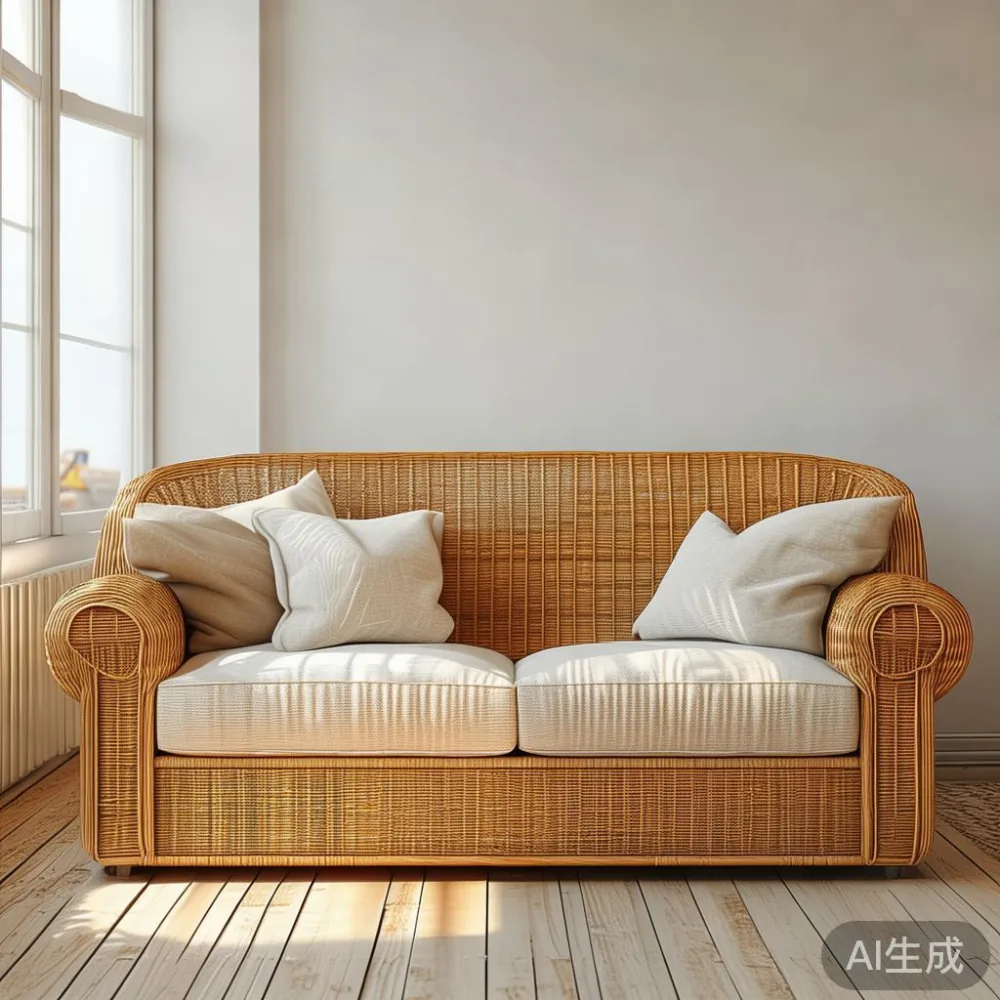
My own wake-up call came last month when I visited a friend's new four-room flat in Bedok. He had ordered a three-seater rattan wicker sofa from an online seller, paid SGD 1,850, and waited 28 working days. The box was 2.1 m long and 0.9 m wide. It did not fit in the service lift of his block. Two movers and a neighbour carrying it up the stairs on a Saturday afternoon left a hairline scuff on the corridor wall and a small crack on the rattan armrest. The sofa was structurally fine. The buying process was not. That scene is the reason this guide exists.
How do I measure my HDB lift and corridor before ordering a rattan wicker sofa?
Singapore lift cabins in most HDB blocks built after 2010 measure roughly 1.6 m deep, 1.2 m wide, and 2.3 m tall at the opening. Service lifts in newer condos in Punggol can be wider, around 1.5 m by 1.8 m, but the door opening is often narrower than the cabin itself, sometimes only 0.9 m across. A fully assembled three-seater rattan wicker sofa with a solid wood sofa frame is typically 1.95 m to 2.25 m long, 0.85 m deep, and 0.78 m tall. The numbers matter. Two centimetres of clearance on each side is the minimum you want to manoeuvre without tilting the piece.
Before you place any order, do three things. First, measure the lift door width and cabin depth with a tape measure, not a guess. Third, measure the corridor turn at your floor, because a 2.1 m sofa on a 90-degree bend needs at least 1.2 m of corner clearance to pivot. Fourth, check the stairwell width if the lift fails on delivery day, which happens roughly once every 40 deliveries in older blocks in Toa Payoh and Queenstown. A flat-pack rattan wicker sofa that ships in two or three cartons under 1.6 m each removes most of that risk.
What should I look for in the frame underneath the rattan weave?
The weave is what you see. The frame is what you keep for the next twelve years. Most light luxury rattan wicker sofas sold for the Singapore market use one of three frame materials: solid rubberwood, engineered plywood with a hardwood veneer, or hollow aluminium tubing wrapped to mimic a solid wood sofa. Each option has a clear trade-off, and the right pick depends on whether your home is air-conditioned 24 hours or naturally ventilated.
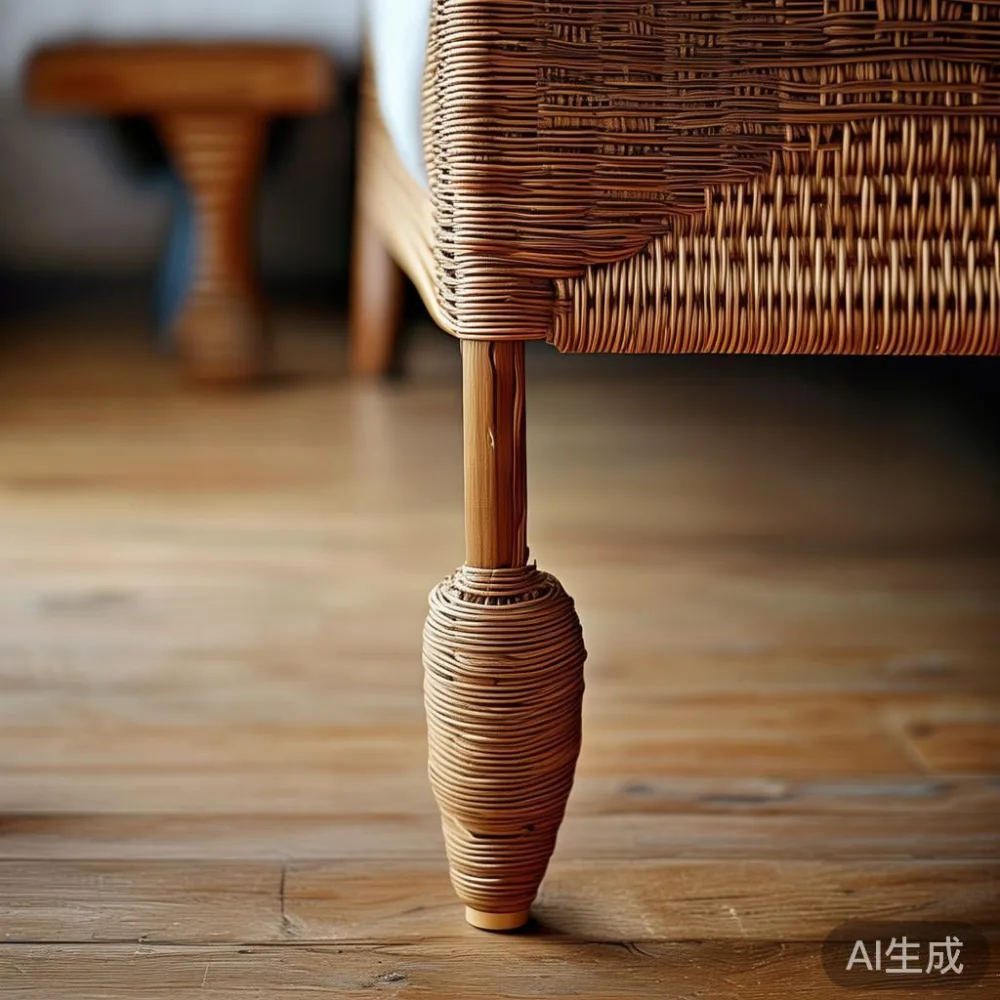
Rubberwood is the workhorse. It is dense, around 670 kg per cubic metre, takes stain evenly, and resists the kind of humidity swings you see in Singapore between February's wet phase and August's dry spells. Plywood frames are lighter, often 30 to 40 percent lighter than rubberwood, which helps with delivery, yet the edge joints can loosen after six to seven years if the flat is poorly ventilated. Aluminium frames will not crack, but they can dent, and a dented aluminium tube inside a rattan weave is almost impossible to repair without re-weaving the panel.
Ask the seller three direct questions before you pay a deposit. Ask what species the solid wood sofa frame is, ask whether the joints are mortise-and-tenon or dowelled, and ask whether the seat platform uses sinuous springs, webbing, or a solid plywood base. Mortise-and-tenon joints on a kiln-dried hardwood frame are the configuration I would pick, because they are the same construction used in heritage dining table and wardrobe pieces that have survived 30 years in Jurong East shophouses. A MIDHILL sofa I inspected in a Tampines showroom had exactly this joinery, and the assistant walked me through how the kiln-drying process removes the moisture that would otherwise cause the rattan to crack at the joints within the first two wet seasons.
How do I judge rattan wicker quality without sitting on the sofa?
Rattan wicker falls into two broad families. Natural rattan is a climbing palm, harvested in Indonesia and the Philippines, with a hard outer skin and a softer inner core. It looks warm, has a faint honey scent when new, and will age into a deeper amber over four to five years under direct afternoon sun. PE wicker, also called synthetic rattan or resin wicker, is extruded high-density polyethylene shaped into round, half-round, or flat profiles. It looks similar at a glance, weighs about the same per metre, and behaves very differently over time.
For a Singapore home, I lean towards PE wicker for outdoor-indoor balcony pieces and natural rattan for the living room. A natural rattan frame will outlast a PE frame indoors if humidity stays between 55 and 70 percent, which most air-conditioned flats maintain without effort. A PE weave survives a balcony in Punggol facing west, where afternoon humidity drops to 45 percent and temperatures climb to 34 degrees Celsius, because PE does not dry out, crack, or attract the powder-post beetles that occasionally show up in natural rattan. The MIDHILL showroom in the east carries both, and the assistant explained how each weave is paired with a specific finish on the underlying solid wood sofa frame.
Five tactile checks matter when the piece is in front of you. First, run your thumb along a weft strand and feel for brittleness. Second, count the strands per 10 cm on the seat panel: anything under 14 strands per 10 cm feels loose within 18 months. Third, look at the underside, because a well-built rattan wicker sofa hides the weave ends and staples inside a fabric dust cover. Fourth, press the armrest with 8 kg of force for ten seconds and watch whether the weave springs back without a permanent indent. Fifth, smell the piece. A strong varnish or formaldehyde bite means the finish is still off-gassing, and you want at least seven days of airing before the sofa sits in a bedroom adjacent to a nightstand.
What about fabric, cushions, and the way light luxury styling affects comfort?
The cushion is where most buyers relax, and the cushion filling is where most light luxury rattan wicker sofas cut corners. Polyurethane foam at 28 density feels firm out of the box and turns into a hammock within two years. A 32-density high-resilience foam wrapped in a 200 gsm polyester wadding holds shape closer to five years. Down-wrapped foam, the kind found on a designer Modern light luxury furniture piece in a Tiong Bahru showroom, costs roughly SGD 400 to SGD 700 extra per three-seater, yet the comfort gain is measurable across the eight-hour movie night.
Fabric choice matters more in Singapore than in most markets because of the 80 percent average humidity. Cotton and linen breathe, look soft, and absorb the kind of accidental kopi spill that happens in any household with children. They also fade under direct sun through an east-facing window. Performance blends with 60 percent polyester and 40 percent linen or cotton resist fading and stains, and they keep the rattan wicker sofa looking new for the first three years. A removable, zippered cushion cover is non-negotiable in my book, because any cover in a Tampines or Bedok home will need a wash every four to six months.
Light luxury is a styling shorthand for restrained ornament, soft curves, and warm neutrals. French light luxury leans on cream bouclé, slim brass-tipped legs, and a low back. American light luxury uses deeper browns, slightly taller backs, and chunkier cushions. Post-modern light luxury plays with mixed bouclé, asymmetric tweeds, and bolder silhouettes. None of these styles change the underlying engineering, yet they change the room. A rattan wicker sofa in a light luxury finish sits naturally next to a solid wood dining table, a marble table lamp base, and a low-profile bed frame without competing for attention.
How do warranties, delivery, and the 9 percent GST affect my final price in Singapore?
Numbers anchor a sofa purchase. A mid-range three-seater rattan wicker sofa from a Foshan factory, imported under a Freight on Board arrangement and shipped through PSA, lands in Singapore at roughly SGD 1,450 to SGD 2,400 before the 9 percent GST and before delivery. A premium light luxury model in bouclé with a kiln-dried solid wood frame lands between SGD 3,200 and SGD 5,800. Marble table accents, walnut bed frame pairings, and matching nightstand pieces push a full living room set above SGD 8,500 delivered.
Delivery in Singapore runs SGD 80 to SGD 180 for a ground-floor HDB flat, and SGD 120 to SGD 280 for a high-floor condo above the 20th storey. Most sellers include one doorstep delivery with the sofa price above SGD 1,500. Two-man white-glove delivery with assembly, debris removal, and placement costs an extra SGD 150 to SGD 350. Lead times from Foshan sit at 28 to 45 working days for a made-to-order light luxury rattan wicker sofa and 14 to 21 working days for an in-stock configuration.
Warranty language is where I read every clause. A ten-year structural warranty covers frame breakage, joint failure, and major rattan weave separation. A one-year warranty covers cushion fill, fabric pilling, and finish peeling. Lifetime refinishing sounds generous, and it is, yet most refinishing offers exclude shipping back to the factory, which from Singapore is rarely practical. A 14-day return window helps when the sofa arrives damaged or shows a manufacturing defect, yet it rarely covers buyer's-remorse cases once the piece has been unboxed in a Tampines living room. A MIDHILL sofa I considered for my own place came with a 10-year structural warranty and a 14-day return window, and the showroom sat six kilometres from my flat, which made the inspection easy.
Is European light luxury bed worth it compared to a rattan wicker sofa set for a four-room HDB?
The honest answer depends on how you live. A four-room HDB in Punggol or Bedok gives you a living room of roughly 18 to 22 square metres and a master bedroom of 12 to 14 square metres. Spending SGD 5,500 on a European light luxury bed with a tufted headboard and a matching rattan wicker sofa set in the living room pushes the total above SGD 9,000 once you add a dining table, a nightstand pair, and a wardrobe. The cost is real, and the question of whether the European light luxury bed is worth it comes down to three numbers: how many hours a day you spend in the bedroom, how often guests see the living room, and how long you plan to stay in the flat.
If you stay five years or fewer, a mid-range rattan wicker sofa set with a sinuous-spring seat and 32-density foam cushions will outperform a premium European light luxury bed in resale-adjusted value. If you stay ten years or longer, the premium bed pays back through nightly comfort, and the sofa becomes the secondary purchase. The phrase light luxury sofa vs Japandi sofa is worth a side note here, because Japandi styling uses lighter oak tones, lower backs, and a more architectural line than the curved bouclé of light luxury. A Japandi rattan wicker sofa in a Bedok flat with grey-oak flooring and a low walnut dining table reads calmer and smaller than a light luxury model in the same footprint.
What red flags should make me walk away from a rattan wicker sofa deal?
Five red flags end a conversation. A price under SGD 900 for a three-seater rattan wicker sofa almost always signals plywood dressed as hardwood, PE weave passed off as natural rattan, or both. A seller who refuses to share frame species, joint type, or foam density is hiding something measurable. Photos showing a single repeating weave pattern across the entire piece suggest a moulded plastic shell, not a hand-woven rattan panel. A lead time under ten working days for a custom order means the sofa is sitting in a local warehouse and has likely been warehoused for months, which raises humidity concerns. A warranty shorter than three years on a frame that should last twelve is a signal the factory does not trust its own joinery.
Two softer signals matter too. A factory that exports to fewer than five countries rarely has the quality control cadence of a larger operation, because the audit pressure from European and American buyers is what forces kiln-drying, mortise-and-tenon joinery, and double-stitched cushion covers. A factory that offers only one or two light luxury finishes on its rattan wicker sofa line usually outsources the finishing and cannot guarantee colour match across a sofa, a dining table, a bed frame, and a nightstand bought six months apart. The factories worth trusting tend to carry broader collections, ship to more countries, and stand behind their pieces with warranties that read like contracts rather than slogans. A buyer looking at the top 10 Japandi furniture lists, the luxury Mid-century modern furniture roundups, and the curated best European light luxury sofa for 2026 shortlists will notice the same names appearing across all three, because the engineering underneath the styling rarely changes with the season.
How should I plan the delivery day itself so the sofa survives the first 48 hours?
Delivery day is the moment a sofa becomes furniture rather than a concept. Clear the corridor turn. Lay down moving blankets or old bedsheets on the floor from the lift door to the living room. Have a four-man crew for any sofa above 2 m long, because two movers cannot safely pivot a 65 kg frame around a tight HDB corner. Ask the team to remove the rattan wicker sofa packaging outside the flat, not inside, because cardboard offcuts in a small lift lobby become a friction point with the neighbours and the town council.
Once the sofa is in place, leave the cushions upright for the first 24 hours so the foam can recover from compression during shipping. Keep the air-conditioning between 23 and 25 degrees Celsius for the first week. Avoid placing the piece in direct sunlight through a west-facing window for the first month, because fresh PE weave and fresh natural rattan both respond poorly to sudden UV exposure. A small bowl of water placed near (not on) the sofa for the first three nights reduces the chance of the rattan drying out, especially in a new condo where the dehumidification system has not yet stabilised. After 48 hours, the sofa is no longer the sofa you bought online. It is the sofa that lives in your flat, and it will tell you within the first month whether you read the specifications correctly.
Buying a sofa you cannot sit on is a manageable exercise once the framework is clear. Measure the lift, count the weave, identify the foam, read the warranty, and budget for the GST. The result is a rattan wicker sofa that arrives on the right day, clears the right corridor, and ages into the kind of piece that anchors a Bedok living room for the next decade. A buyer who treats the purchase as a specification review rather than an impulse will end up with furniture that earns its square metre.