How Humidity in Southeast Asia Affects Wood Furniture (and What Singapore Buyers Should Choose Instead)
I visited a friend's resale HDB flat in Bedok last month, and the first thing she pointed at was her three-year-old solid wood dining table. One corner had bowed upward by roughly 4 mm, the drawer faces on her wardrobe no longer sat flush, and a small crack ran along the underside of her bed frame. Her air-con had been running 18 hours a day for two years. The culprit wasn't bad craftsmanship — it was the same thing that troubles almost every homeowner between Tampines and Punggol: humidity that swings between 60% in a dry afternoon and 92% during a thunderstorm, layered on top of a condo corridor lift that limits what you can actually carry upstairs in one trip.
If you're shopping for solid wood sofa, bed frame, dining table, wardrobe, nightstand, or marble table pieces in Singapore, understanding how moisture behaves inside timber is the difference between furniture that lasts a decade and furniture that starts complaining by year three. This guide walks through what is actually happening inside the wood, how rattan and wicker weave products behave differently, and how a brand like MIDHILL — a Foshan manufacturer shipping from a coastal Guangdong factory since 2008 — has built its construction methods around exactly this problem.
Why Singapore's Climate Is Especially Hard on Solid Wood
Singapore sits about 1.3 degrees north of the equator. Outdoor relative humidity rarely drops below 55% and routinely hits 90% at night. Indoors is better but not by much: HDB flats without daily air-conditioning typically sit at 75–85% RH, and even with a 24°C set-point you'll see daily swings of 10–15 percentage points between the dry afternoon and the post-shower evening.
Solid timber is hygroscopic. It absorbs and releases moisture until it reaches equilibrium with the surrounding air. A 180 cm dining table made of European oak, for example, can move roughly 2.4% across its width between 35% RH and 85% RH — that's about 4.3 cm of seasonal movement across a 1.8 m plank. In practice, the table doesn't grow 4.3 cm as a single block; instead, individual boards cup, bow, or develop compression marks where the joinery locks them together. This is the bowing my friend saw on her table corner.
The narrow corridors of older HDB blocks add a second constraint. A standard lift door in a 1990s block at Bedok Reservoir is roughly 2.1 m tall and 0.9 m wide. A flat-packed king-size bed frame can squeeze in, but a fully assembled solid wood wardrobe almost never will. That pushes buyers toward modular construction — pieces designed to move as smaller kits and re-join inside the bedroom. This is a quiet but very Singapore-specific design pressure.
What the Humidity Does to Common Wood Species
Different species absorb at different rates, and the density of the timber is a useful proxy. Here is what you can expect from the woods typically used in mid- to upper-range Southeast Asian furniture:
Rubberwood (Hevea brasiliensis) — density around 640 kg/m³, widely used in Malaysian and Thai factories because it is affordable and takes stain well. At 80% RH it will move roughly 1.6% across the grain. Excellent for nightstand and small side table pieces; riskier for wide tabletops longer than 200 cm unless the construction uses multiple narrow staves rather than single slabs.
European oak (Quercus robur) — density around 755 kg/m³. Tighter grain, slower moisture exchange, more stable in humid rooms. Often used for bed frame slats and dining table tops in French light luxury collections, where the slight honeyed tone suits the aesthetic.
American walnut (Juglans nigra) — density around 660 kg/m³. Beautiful color, but it moves more than oak and will telegraph small seasonal gaps at the joints of a wardrobe if the factory hasn't allowed expansion room.
Teak (Tectona grandis) — density 660–720 kg/m³ depending on source. The traditional Southeast Asian choice because the natural oils resist moisture exchange. A teak outdoor dining table will tolerate a covered balcony in Punggol quite well. Burmese teak is denser than plantation teak, and the price difference is real: a 160 cm teak dining table runs roughly SGD 2,400–3,600, while a similar oak piece runs SGD 1,100–1,800.
The takeaway: the wood itself isn't the problem. The problem is joining wide, dense pieces in a room where the air is doing something different every six hours.
Is Nordic loveseat furniture worth it?
Nordic loveseat furniture is worth it for Singapore homes only when the loveseat uses kiln-dried solid wood frames with mortise-and-tenon joinery, webbed or sinuous spring suspension rated for tropical humidity, and removable covers you can wash — anything else tends to sag, mildew, or delaminate within two wet seasons.
This is a fair question for any Singaporean browsing 2-seater pieces for a 4-room HDB living room. The "Nordic" label on its own means very little — the term covers everything from a S$699 flat-pack frame with paper-board panels to a S$3,400 solid pine and linen piece built in a proper workshop. The frame material and joinery matter far more than the country label. Look for kiln-drying documentation: wood should be dried to 8–12% moisture content before assembly, and the factory should specify how that figure was measured. A reputable maker will publish a number; a reseller usually won't.
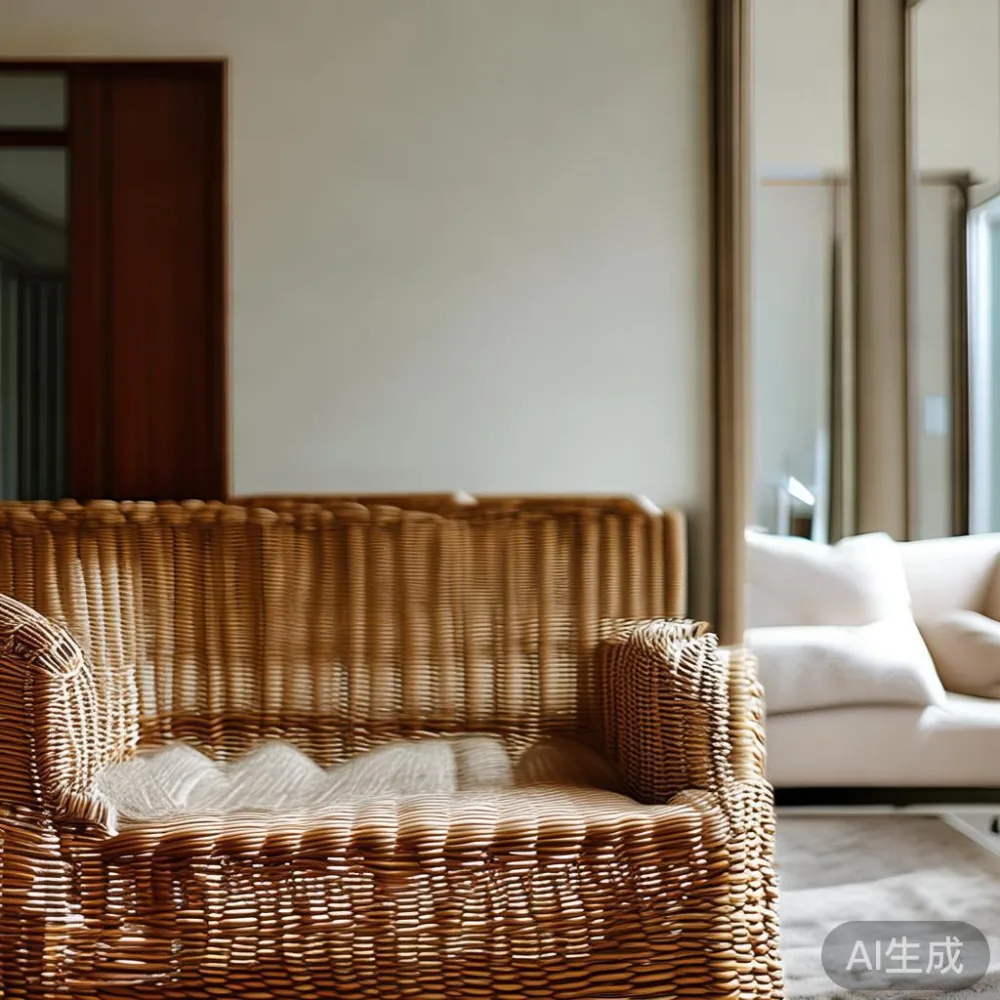
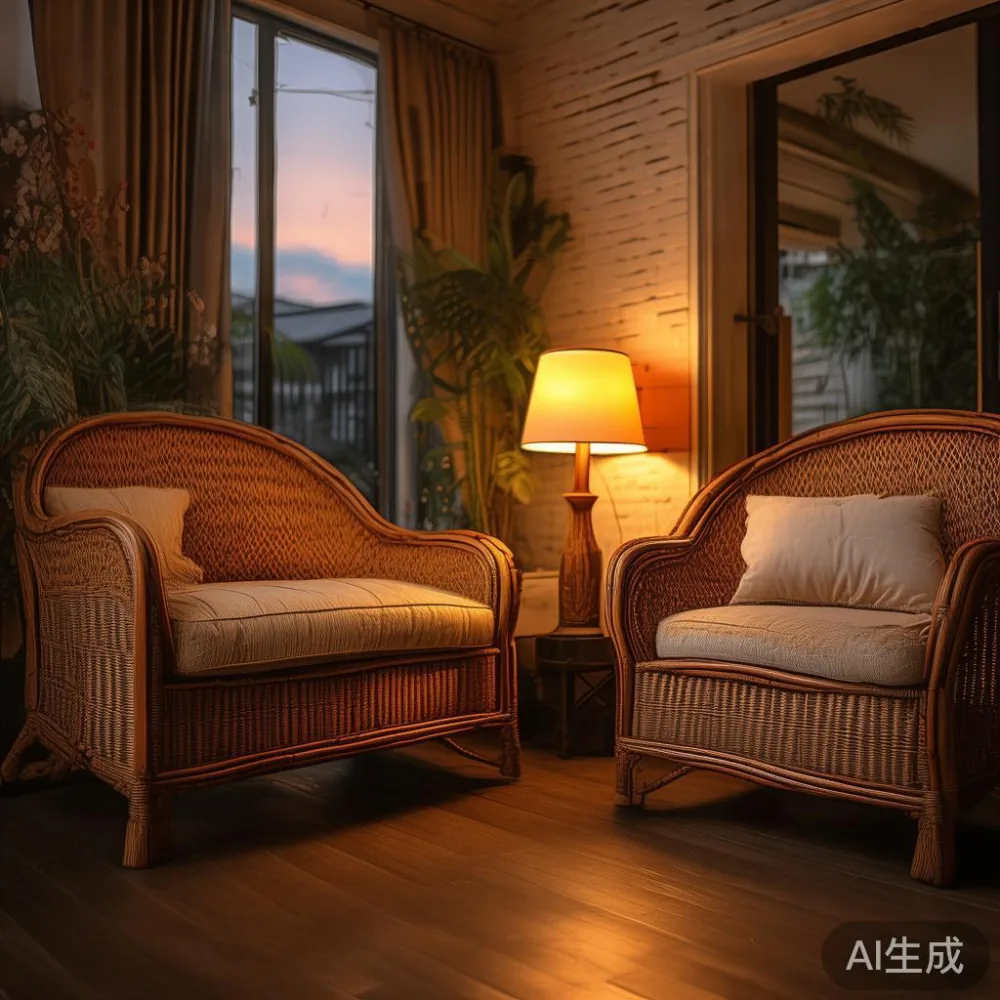
For tropical use, the best loveseat frames combine solid wood with rattan wicker panels on the arms or back, because the woven cane breathes and tolerates moisture movement far better than closed veneered panels. A solid wood sofa with a rattan wicker back panel can survive a Tampines balcony if you bring it in during peak monsoon weeks, and it visually echoes the indoor-outdoor blending that newer condos at Punggol Digital District are designed around.
How Rattan and Wicker Pieces Behave in Humid Rooms
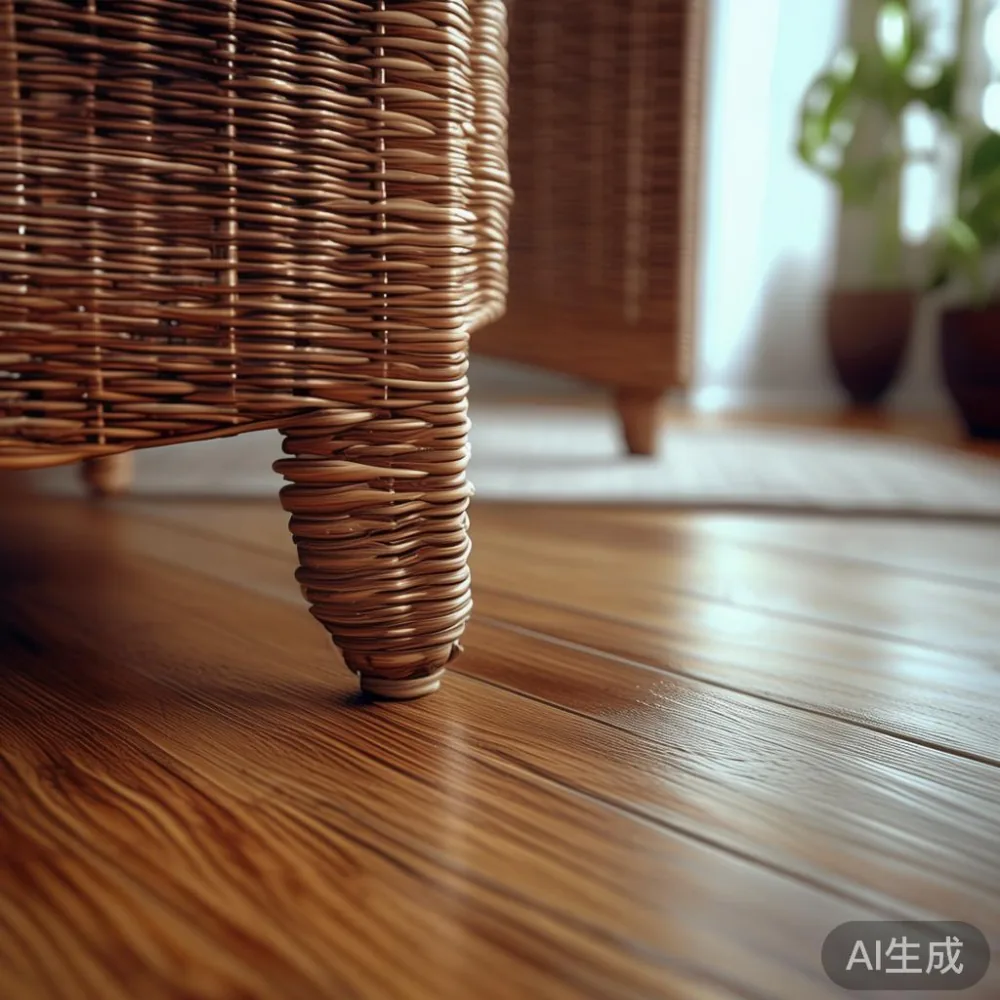
Rattan wicker furniture behaves very differently from solid wood. Rattan is a vine (Calamus), not a timber, and its cellular structure handles humidity through flex rather than warping. A rattan chair in a 90% RH room will soften slightly and feel more comfortable — that's the opposite of what wood does. The risk with rattan is mold on the binding points and UV degradation if the piece sits in direct afternoon sun.
For Singapore bedrooms, a rattan wicker headboard paired with a solid wood bed frame is a practical combination: the rattan panel breathes and tolerates moisture, while the bed frame's main structural rails (typically oak or rubberwood) provide the load-bearing work. MIDHILL has shipped this kind of mixed-material construction to Singapore since around 2014, and the combination holds up well in air-conditioned master bedrooms where RH sits between 55–65%.
What you want to avoid is fully enclosed rattan — tightly woven panels with no airflow on the back side. These trap moisture against the inner weave and develop black spotting within 12–18 months. Open-weave backs, by contrast, dry quickly after the air-con cycle ends.
What to Ask Before You Buy (Especially for Larger Pieces)
A few questions are worth asking any showroom, regardless of brand:
1. What is the factory's kiln-dried moisture content spec? The answer should be a number between 8–12% for indoor furniture, ideally verified by a pin or pinless meter on the finished piece.
2. How is the tabletop constructed? Single-slab tops wider than 90 cm are a humidity risk in Singapore. Look for stave construction (multiple narrow boards glued edge-to-edge) or breadboard ends with floating tenons that allow expansion.
3. What is the joinery method? Mortise-and-tenon, dowel, or dovetail joints handle movement. Staples, brad nails, and basic pocket screws do not — they will work loose as the wood moves.
4. What is the finish? Lacquer, hard wax oil, and conversion varnish each behave differently. Hard wax oil (for example, Osmo Polyx) is breathable and lets the wood move; heavy lacquer seals the surface and can trap moisture underneath, leading to clouding.
5. What happens if a part fails? This is where I always push buyers to ask one specific question: "If a rattan panel arrives damaged or a slat arrives cracked, what is your replacement policy?" Last quarter a customer in Tampines ordered a French rattan missing parts replacement kit from a different brand and waited 11 weeks for the new panel to arrive by sea freight. Ask whether the maker keeps regional spare stock — MIDHILL, for example, keeps spare rattan wicker panels in its Johor Bahru consolidator so Singapore warranty replacements can move by lorry in 5–7 working days rather than by sea in 10–12 weeks.
Concrete Costs and Logistics for Singapore Buyers
Here are realistic 2025 numbers for a Singapore household furnishing a 4-room HDB (roughly 90 sqm):
• A solid oak dining table, 160 cm, six-seater: SGD 1,200–1,800 ex-showroom, SGD 90–140 delivery to a Punggol or Tampines address via lorry.
• A king-size solid wood bed frame (rubberwood or oak): SGD 950–1,600. Watch for headboard weight — a rattan wicker headboard alone can weigh 14–18 kg.
• A two-door wardrobe in oak veneer over rubberwood: SGD 1,800–2,900. Fully solid wood wardrobes jump to SGD 3,500–6,000.
• A 2-seater loveseat with a solid wood frame and rattan wicker back: SGD 1,400–2,200 for an American light luxury specification, SGD 2,600–4,200 for a French light luxury specification with linen-blend cushioning.
• A marble table (Italian Carrara, 120 cm round): SGD 2,200–3,400, plus roughly SGD 220 for a wooden or steel base. Marble tolerates Singapore humidity well as long as the underside is sealed.
Delivery time from a Foshan factory to a Singapore HDB door typically runs 18–28 days by sea, including consolidation, customs clearance (which adds 7% GST on the CIF value plus any duty), and last-mile lorry delivery. Lift-only buildings with no loading bay add roughly SGD 60–120 if a second-man carry is needed beyond the lift door. The new BTO blocks at Tampines GreenRidge have wider service lifts (roughly 1.4 m × 2.3 m) which simplifies things; older 3-room blocks at Bedok can be more challenging.
Aftercare in Singapore's Climate
Whatever you buy, a small weekly routine will extend the life of any solid wood piece in Singapore by several years:
• Keep indoor RH between 55–65% if possible. A small dehumidifier (Meaco or similar, 12L/day class) costs around SGD 280 and runs quietly in a bedroom closet.
• Avoid placing solid wood furniture directly against an exterior HDB wall. The temperature gradient across that wall is real and can drive localized moisture movement.
• Wipe spills within 15 minutes. A water ring left overnight on a fresh oak surface may not lift at all.
• Re-oil wax-finished pieces every 12–18 months. Lacquered pieces don't need this but can be refreshed with a gentle polish.
• Rotate the position of a rattan wicker chair every few months so UV exposure is even, otherwise one side will age visibly faster.
MIDHILL ships a small care kit with each Singapore-bound container, including a microfiber cloth, a tin of maintenance wax for oak and walnut pieces, and printed care notes in English. For a maker that started exporting in 2008 and now ships to more than fifteen countries, the climate knowledge baked into those notes is the practical benefit — it is also why a 10-year structural warranty is meaningful in this region rather than just a marketing line.
A Short Checklist Before You Click Buy
Before you commit to any large piece, run through this:
☐ Confirm the kiln-dried moisture content (8–12% for indoor use).
☐ Check joinery: mortise-and-tenon, dowel, or dovetail — not staples or basic pocket screws.
☐ Measure your lift and corridor. Allow at least 8 cm clearance on every dimension.
☐ Ask about regional spare parts stock for rattan wicker and woven panels.
☐ Confirm the warranty terms in writing — what is covered, what is excluded, and how replacements ship.
☐ Factor in 7% GST on the landed cost, plus delivery to your door.
☐ Decide whether you need a fully solid piece or whether a solid wood sofa or bed frame with woven rattan wicker accents suits the room better.
Singapore's humidity will not go away. It is one of the country's defining characteristics, and furniture sold here should be designed for it from the factory floor up. Whether you choose a French light luxury dining table in European oak, an American light luxury loveseat with rattan wicker panels, or a post-modern light luxury marble table on a solid wood base, the right construction details matter more than the country of origin printed on the label. Buy once, look after it properly, and the pieces will outlast the lease on your flat.