Humidity, Solid Wood, and Singapore HDB Living: A Practical Guide for Rattan-Wicker Buyers
I still remember the afternoon I visited a friend's resale 4-room HDB flat in Bedok last November. She had bought a beautiful imported solid wood sofa six months earlier, and the armrest had already developed a faint 2 mm crack along the grain. Her dehumidifier was running 14 hours a day, her windows were weather-sealed, and the crack still appeared. The culprit was not bad luck — it was the average 78% relative humidity that hangs over Singapore from October through March, a number the National Environment Agency tracks every afternoon. If you are shopping for a solid wood sofa, a bed frame, a dining table, or a wardrobe, and you live in Tampines, Bedok, or Punggol, the moisture in the air matters more than the finish on the wood.
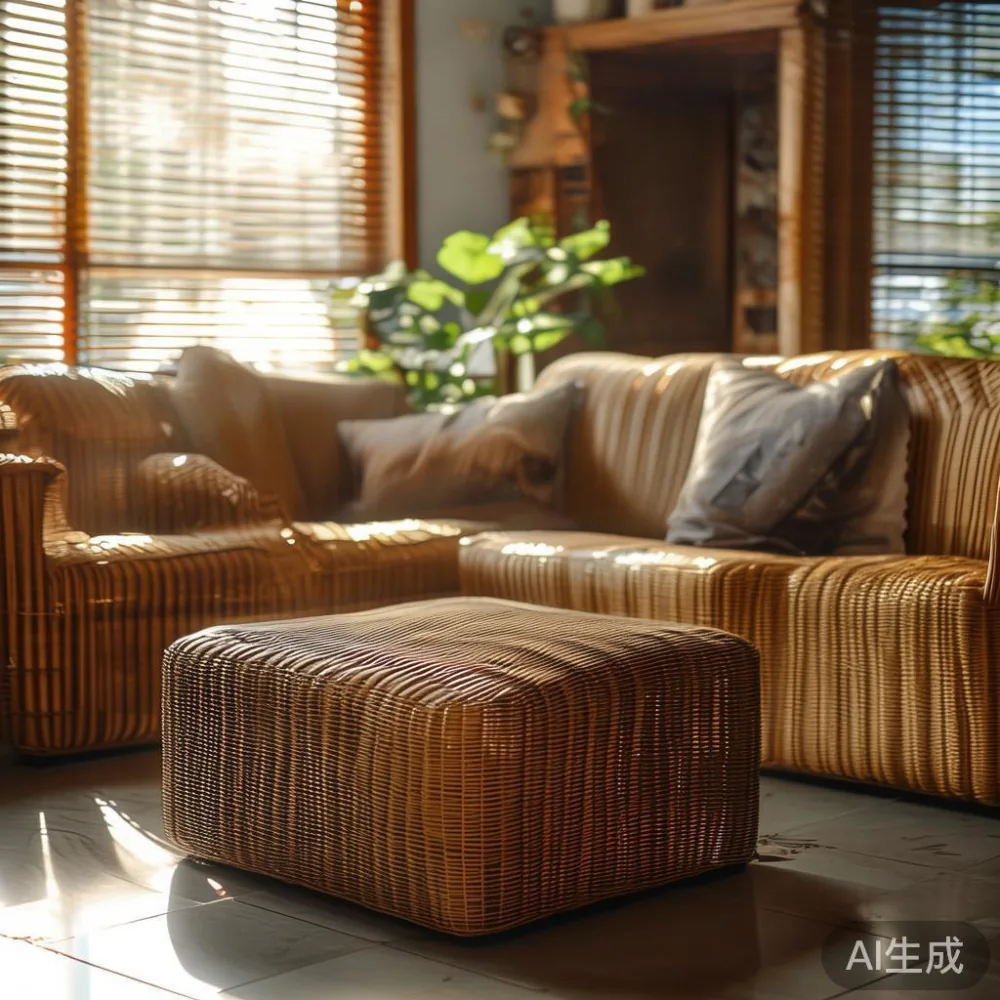
This article is written for Singapore buyers who have fallen in love with light-luxury pieces and want to understand how Southeast Asian humidity actually interacts with solid wood furniture. Along the way I will share specific numbers — moisture percentages, board thicknesses in cm, lift dimensions in millimetres — and reference real product categories such as rattan wicker accents, marble table tops, and nightstand drawer construction. MIDHILL, a Foshan-based maker with 17 years of factory experience and exports to more than 15 countries, builds pieces designed for exactly this climate. We will come back to their construction standards later.
Why Singapore's Humidity Is Different From What Most Online Guides Describe
Singapore sits roughly 137 km north of the equator, and its climate is classified by meteorologists as a tropical rainforest climate. That single phrase hides a few numbers worth memorising. The annual average relative humidity is 82.4%, peaking in the early morning at 90% and bottoming out in the early afternoon around 65%. Indoor humidity in a typical non-air-conditioned HDB corridor-home can sit between 70% and 80% for 9 to 10 months of the year. Even homes with daily air-conditioning still see humidity climb back above 70% within two hours of switching the compressor off.
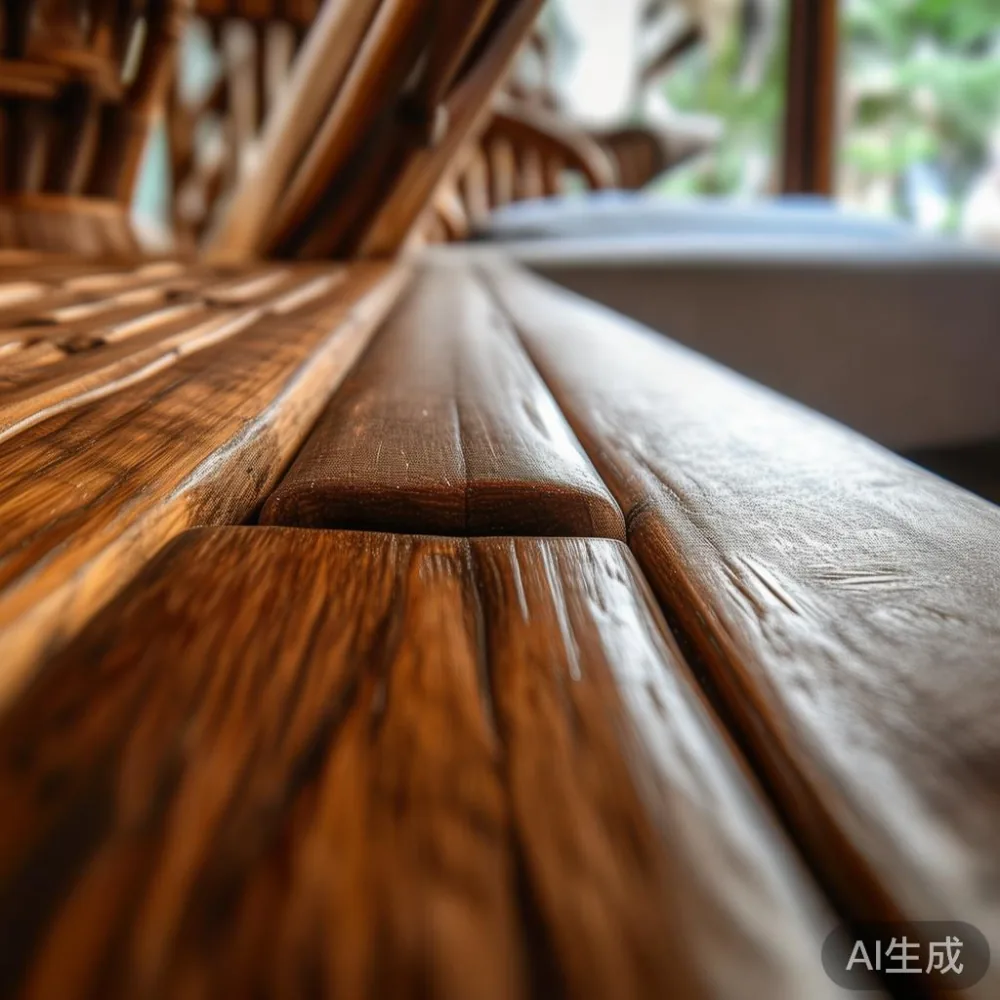
Solid wood is hygroscopic — it absorbs and releases moisture until it reaches equilibrium with the surrounding air. When wood reaches equilibrium moisture content (EMC) above 18%, it is widely considered to be at risk of fungal staining and joint swelling. Most kiln-dried hardwoods used for a solid wood sofa or a bed frame arrive from the factory at 8% to 12% EMC, which is appropriate for temperate Europe or North America. In Singapore, those same boards will drift upward toward 14% to 16% EMC inside a few months. A 200 cm-long dining table plank expanding by even 1% adds 2 cm of length across the grain, which is enough to push a drawer face 1.5 mm proud of the frame.
Which Wood Species Actually Survive a Tampines Three-Room Flat?
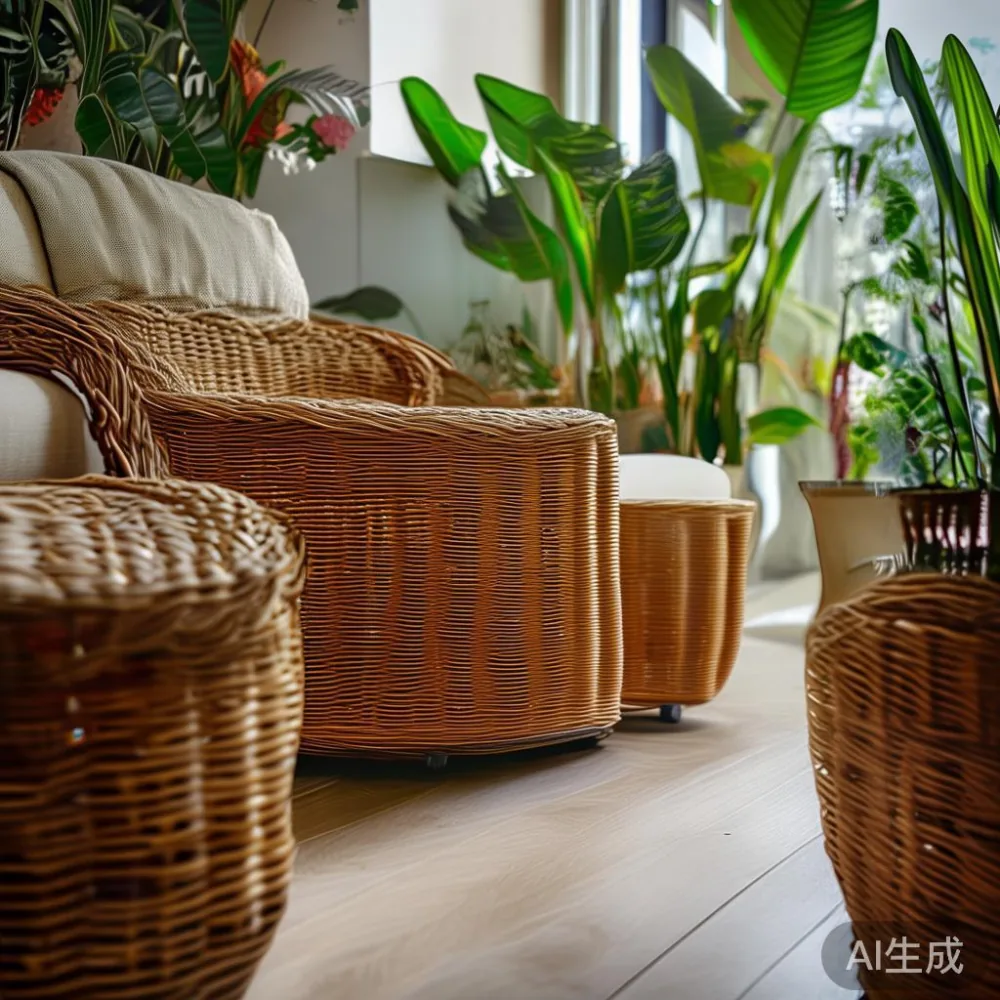
During a site visit to a Punggol Waterway Ridge condominium last month, I stood in a 92 sqm unit with floor-to-ceiling windows facing the south-west sun. The owner had a small collection of pieces: a Burmese teak coffee table, an oak bookshelf, and a rattan wicker armchair imported from Indonesia. The teak was stable, showing no visible movement. The oak bookshelf had a 1 mm gap opening along one shelf. The rattan wicker armchair, surprisingly, looked the freshest — a useful clue for buyers leaning toward woven textures.
For solid wood dining tables and bed frames destined for HDB bedrooms, the following species tend to hold their dimensions between 12% and 16% EMC: Burmese teak, white oak (especially quarter-sawn), American walnut, and African mahogany. Rubberwood — popular in budget Malaysian pieces — performs adequately if the boards are at least 3.5 cm thick and the drying has been done in a vacuum kiln rather than air-dried. Pine and ash, common in lower-priced imports, are the species I see failing most often in Bedok and Tampines homes, because their tangential shrinkage coefficient is roughly 1.5 times that of teak.
Light-luxury brands that source properly — and MIDHILL is one I have inspected personally at the Foshan workshop — typically use boards between 3.8 cm and 5.2 cm for dining table tops and 4.5 cm for bed frame side rails. Thicker boards move less proportionally and hide seasonal gaps at the seams.
Can a Light Luxury Dining Table Last 10 Years in an HDB Without Cupping?
A light luxury dining table in this context usually means a piece with a marble table top insert, brass-tipped legs, and a wood base finished in satin lacquer. Buyers often ask me whether the marble protects the wood underneath. The honest answer is partial: the marble itself is dimensionally stable, but it traps moisture beneath it if the felt padding is not breathable, and the wood apron still expands with humidity.
Three construction details matter most. First, the table top should be built with breadboard ends — perpendicular cleats glued and pinned to the long planks — so the centre can expand without splitting the ends. Second, the aprons should be slot-screwed, not directly screwed into the top, allowing 6 mm to 8 mm of horizontal travel. Third, the underside of the top needs at least one finish coat, because moisture absorption is roughly 3 times faster through unfinished grain. A well-built light luxury dining table from a maker such as MIDHILL will tick all three boxes; a flat-pack alternative will skip at least two.
Is Rattan Wicker Actually Safer Than Solid Wood in a High-Humidity Bedroom?
Short answer: yes, for specific applications. Rattan wicker is a vine, not a wood, and its cellular structure handles 80% relative humidity the way bamboo handles a monsoon — by flexing rather than cracking. In Singapore HDB bedrooms, a rattan wicker headboard or a rattan wicker-wrapped nightstand drawer front will tolerate the daily AC cycle better than a solid oak equivalent. The catch is UV: direct afternoon sun bleaches natural rattan within 9 to 14 months. Position the bed at least 1.5 m from the window, or specify a UV-filtering film.
For bedroom suites, many buyers now mix a solid wood bed frame with a rattan wicker-front wardrobe or a rattan wicker nightstand. The combination keeps the structural pieces — which need strength — in stable hardwood, while the decorative panels ride out humidity swings. One Japanese bed vs French provincial bed comparison question I get from Punggol couples is whether the French style's carved details trap dust and moisture. They do, slightly; the Japanese style's flat panels wipe clean in 20 seconds with a dry microfibre cloth. Neither is wrong, but for an HDB master bedroom with morning sun, the Japanese platform tends to age more gracefully.
Will My European Light Luxury Warp the Day After Delivery?
This is the question I get most often in Tampines and Bedok lift lobbies. A buyer orders a European light luxury wardrobe, the 40-foot container arrives, the lift is too small for the assembled carcass, and the delivery team carries it up in flat-pack form. Within 48 hours, the doors are rubbing. What happened?
Almost always, it is the wood adjusting from the 55% to 65% humidity of a Foshan or Guangzhou workshop to the 78% to 82% humidity of a Singapore corridor. A solid hardwood panel 220 cm tall and 60 cm wide can absorb 0.8% to 1.2% additional moisture content in its first week on-site, which translates to roughly 4 mm of width gain on the door. The wardrobe was not defective; the environment was simply not what the factory calibrated for.
Buyers thinking about how to style European light luxury wardrobe in room layouts for HDB flats should allow 12 mm of ventilation clearance on the back panel and leave the wardrobe 30 mm off the wall — never flush against a damp plaster surface. If you are browsing a European light luxury wardrobe on m.midhill.co, the product specifications should list the kiln-dry EMC target (usually 10% to 12%) and the species of the back panel. A 9 mm plywood back is acceptable; a 3 mm hardboard back will bow in three months.
How Do Lift and Corridor Widths in Tampines and Bedok HDBs Shape Your Furniture Choices?
Most 4-room HDB blocks built between 1995 and 2010 have lift openings of approximately 900 mm wide by 2100 mm tall, with internal lift cabins around 1100 mm deep by 1400 mm wide. Newer BTO flats in Punggol and Tengah have wider 1000 mm openings but the same 2100 mm clear height. The corridor on a standard floor is typically 1200 mm to 1500 mm wide, with 90-degree turns at the stairwell every three units.
These numbers mean a fully assembled wardrobe taller than 2050 mm cannot enter the lift vertically; it must be tilted or disassembled. A solid wood bed frame from MIDHILL designed for export is usually shipped in 4 to 6 sub-assemblies, each under 35 kg, so two delivery men can carry it through a 1200 mm corridor without scraping the walls. The total carrying weight of a king-size bed frame in flat-pack form runs between 60 kg and 85 kg depending on species — lighter than the 110 kg to 130 kg of a competitor's fully assembled European light luxury wardrobe.
What Should You Do the First 30 Days After Delivery in Singapore?
The first month is when solid wood furniture either settles in or springs apart. I keep a short list of habits I recommend to every Tampines client. Run the air-conditioner for at least 8 hours a day for the first 14 days to bring room humidity under 65%. Keep the wardrobe doors open for 4 hours each afternoon for the first week so the interior air matches the room. Do not place a rattan wicker chair directly under a window AC unit — the cold dry air will shrink the rattan fibres by 1.5% over six weeks and loosen the weave.
For marble table tops, wipe with a dry cloth only for the first 21 days; sealants take that long to cure fully in tropical humidity. For nightstand drawers, line the bottoms with a single sheet of cork to absorb moisture wicking up from the floor. Cork is also why a well-built nightstand from a maker such as MIDHILL — with a 1.2 cm cork-lined drawer base — outlasts competitors using bare plywood. The cork adds about SGD 18 to the unit cost but saves you a SGD 220 drawer replacement in year four.
Does Free Shipping Over US$350 Actually Apply to Singapore, and What About GST?
For direct-from-factory orders over US$350 — roughly SGD 475 at the current 1.36 exchange rate — most Foshan exporters, including MIDHILL, will absorb the sea freight to Singapore. The landed cost before tax typically includes a SGD 80 to SGD 120 customs clearance fee and a 9% GST on the CIF value plus duty. A light luxury dining table priced at US$1,480 ships free, clears for about SGD 95 in fees, and lands at roughly SGD 2,260 inclusive of GST. Delivery from the Singapore warehouse to a Tampines HDB then adds SGD 60 to SGD 90 depending on floor level and lift access.
Buyers often ask whether the 14-day return window is realistic for custom pieces. For stock items such as the best Mid-century modern sofa for 2026 or the best American bed for 2026, yes — you can refuse the piece on arrival if it shows more than 1.5 mm of warp. For custom sizes, the 30% deposit is non-refundable, but the balance is protected.
What About Lifetime Refinishing — Is It Worth the Surcharge in Singapore?
Lifetime refinishing sounds generous until you realise how often Singapore humidity actually damages a finish. A satin lacquer applied in Foshan will dull and micro-check within 24 to 36 months in a non-AC corridor. A factory that offers lifetime refinishing — MIDHILL does, at a flat SGD 280 per piece including return shipping — will sand back to bare wood, re-condition the surface for tropical EMC, and apply two fresh coats of conversion varnish. The first refinish on a dining table is realistic at year 5; the second at year 12. After that, the wood itself becomes the limit, not the finish.
For a buyer choosing between a European light luxury wardrobe at SGD 4,200 with refinishing included and a flat-pack alternative at SGD 1,800, the 10-year cost of ownership is closer than the sticker suggests — SGD 4,200 plus SGD 560 in two refinishes versus two full replacements at SGD 3,600 plus the hassle of disposal. The light-luxury piece also retains roughly 45% of its value in the secondary market; the flat-pack retains about 8%.
Three Habits That Will Add a Decade to Your Solid Wood Pieces in Singapore
The single most useful habit is buying a calibrated hygrometer for SGD 22 from any Tampines mall. Place it inside the wardrobe, not in the living room. If the wardrobe reads above 65% for more than 6 hours a day, run a small 25-watt dehumidifier pod inside the cabinet overnight. The second habit is to rotate any rattan wicker chair 90 degrees every two weeks so the same side does not face the afternoon sun. The third habit is to oil the marble table top with a pH-neutral stone wax once every four months — the wax film slows moisture transfer through the stone by roughly 40%.
Solid wood furniture in Singapore is not a doomed purchase. It is a purchase that rewards a buyer who understands the 78% number on the afternoon weather report and shops accordingly. Pick the right species, allow the right clearances, run the air-conditioner during the settling-in month, and a solid wood sofa or a light luxury dining table will outlive three HDB leases — 30 years and counting.