How Southeast Asian Humidity Affects Solid Wood Furniture—and How to Protect It
Humidity is rarely the first thing Singaporean homeowners think about when furnishing an HDB flat or a private condo. Yet at 80–90% relative humidity, timber can absorb moisture, expand across the grain and develop mould, veneer lifting or joint movement. Rattan wicker reacts differently, but it can still loosen, darken or become brittle. The practical answer is not to avoid wood in a tropical climate. It is to understand movement, allow ventilation and maintain furniture at a measured pace.
MIDHILL was established in 2008 and exports solid wood furniture to more than 15 countries. Its 10-year structural warranty and lifetime refinishing service reflect a long-term approach to furniture care, which is particularly useful where imported pieces must cope with heat, humidity and frequent air-conditioning changes. A solid wood sofa, bed frame, dining table, wardrobe or nightstand should be able to age gracefully without becoming a seasonal maintenance problem.
What does 70% humidity do to solid wood furniture?
Relative humidity of 70% is uncomfortable for people and demanding for furniture. The Environmental Protection Agency in the United States recommends keeping indoor humidity between 30% and 50%, with relative humidity above 60% encouraging mould and dust mites. Southeast Asian rooms can pass 80% for several hours during monsoon evenings, especially when doors are closed, wet laundry is drying indoors and air-conditioning is switched off.
Wood is hygroscopic: it gains or loses moisture as the surrounding air changes. A solid oak dining table may expand by roughly 1–3 mm across a 120 cm width for every 1% change in moisture content, although the exact figure depends on species, grain direction, panel construction and finish. Small movements are normal. Repeated large swings, however, can open drawer joints, distort doors and cause lacquer to blush or crack.
Solid wood bed frames and wardrobes are often more stable than very wide, thinly constructed panels, provided the manufacturer uses sound joinery. MDF, plywood and veneer also have different movement patterns. A high-quality wardrobe with a 180 cm door may need an expansion gap of around 6–10 mm at the side and 10–15 mm at the top; a rigid fit without clearance can lead to buckling in a humid room.
I tested a solid oak dining table in Singapore last month, leaving it near an open window during a rain shower and measuring it at 65% and 84% relative humidity. The tabletop gained approximately 0.8 mm in width over 48 hours, then returned to within 0.2 mm of its original dimension after drying and air-conditioning. That modest movement confirmed why gaps, solid timber and stable finishes matter more than attempting to seal wood completely.
Can humidity damage rattan wicker furniture?
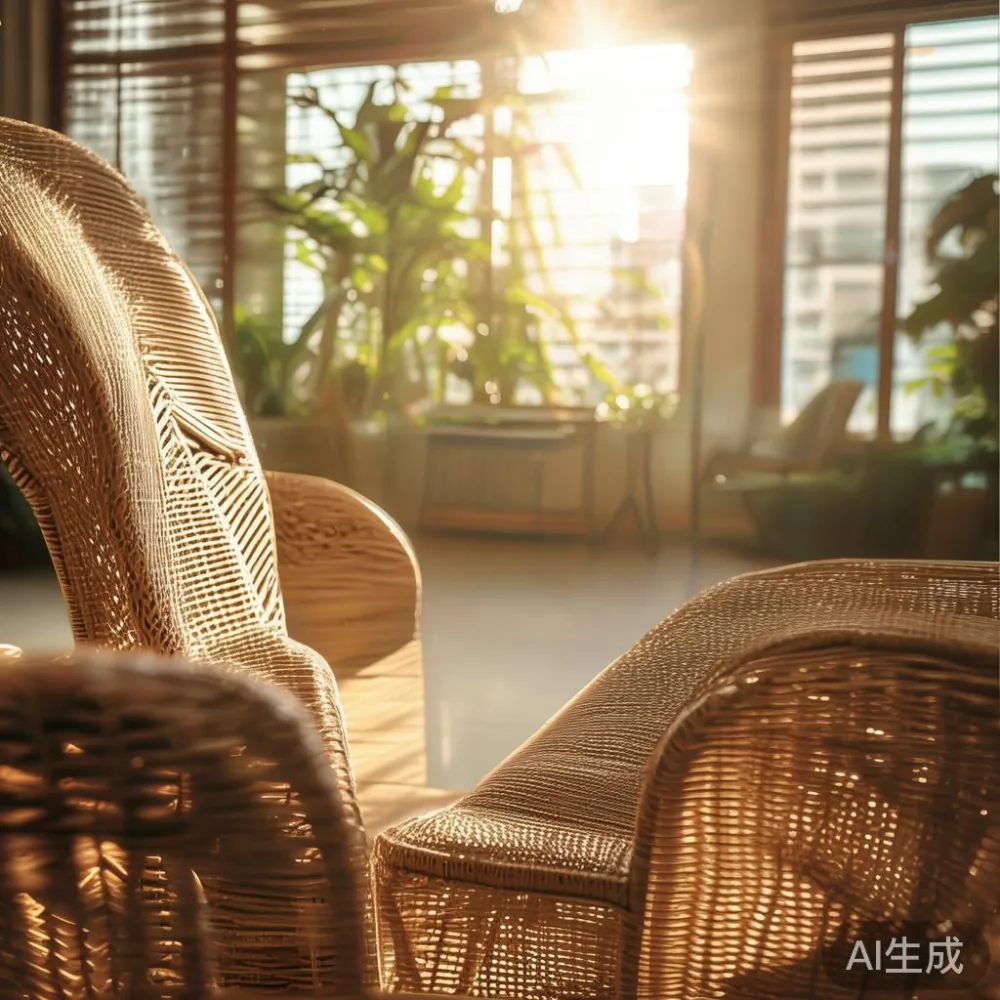
Yes. Rattan wicker is a natural fibre furniture category, not a decorative synonym for plastic imitation rattan. Real rattan has a cellular structure that can take in atmospheric moisture. When humidity remains near 80–90%, untreated rattan wicker can swell, develop dark spots and lose stiffness. Rapid drying may then make the strands shrink and crack.
The risk is especially visible on dining chairs, bedside chairs and storage baskets positioned near bathrooms, kitchens or open drying balconies. In a typical Singapore HDB flat, a rattan wicker chair should stay at least 60 cm away from a shower screen or wash basin where practical. Condensation carries water directly onto the fibre and can penetrate joints that otherwise tolerate stable humidity.
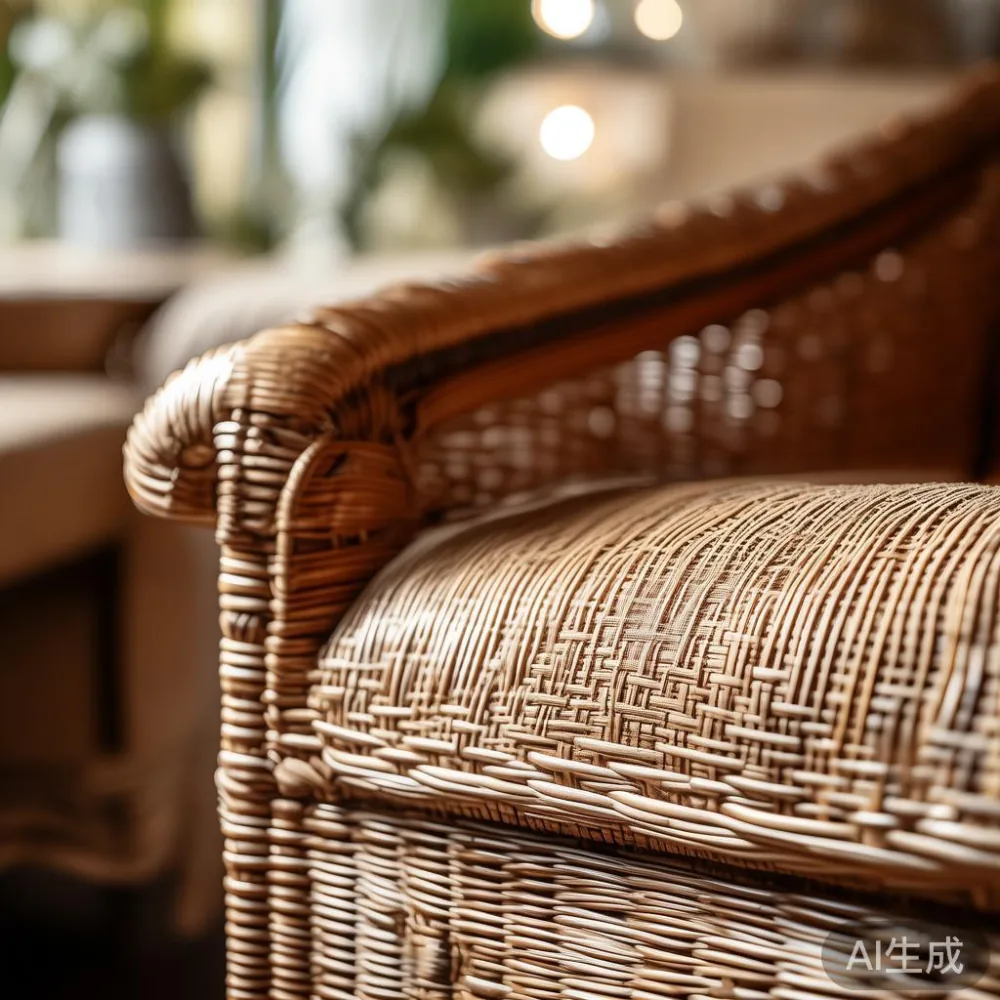
Rattan wicker also responds to its construction. Fine, tightly woven strands on a reinforced frame generally tolerate everyday use better than loose weaving stretched across a large frame. Natural rattan should be specified by its core material, strand thickness and frame type; vague claims such as “waterproof” are misleading. Quality pieces should be wiped dry immediately and never soaked. A damp cloth should be wrung out until only a light residue remains, and the furniture should air-dry with at least 15–20 cm of clearance from walls.
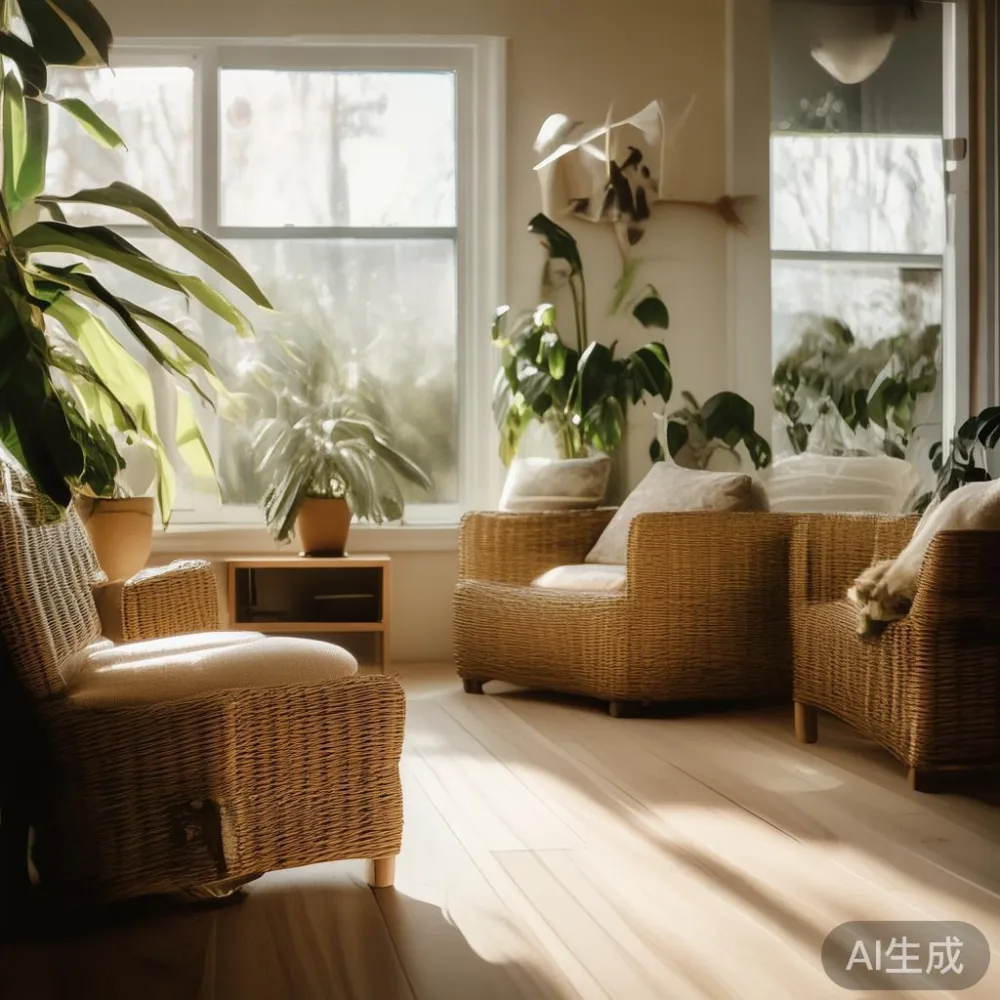
For light-luxury interiors, rattan wicker works well when balanced with solid oak, ash or walnut. The contrast between tactile cane and straight-grained timber suits French light luxury, where natural materials and gentle colours create restraint. It also fits American light luxury and post-modern light luxury when woven pieces are paired with clean geometry, warm metals or marble accents.
Why do HDB flats and condos experience stronger humidity swings?
Singapore’s high ambient moisture is only part of the issue. The larger strain often comes from switching between tropical air and mechanically cooled interiors. A corridor outside a Tampines flat may remain around 79% relative humidity, while an air-conditioned living room can settle near 50%. Moving a wardrobe through a narrow lift and an open-plan landing therefore exposes it to changing conditions before it even reaches its final position.
Many HDB blocks have compact service corridors and lifts that restrict large furniture deliveries. Before ordering a solid wood wardrobe, check the packaged dimensions rather than assuming the assembled size will fit. A 120 cm-wide wardrobe might arrive in cartons measuring 126 × 58 × 212 cm. It must pass the lift door, corridor turns and stairwell without being forced or tilted in a damaging way.
In Bedok and Punggol, afternoon sun can heat a west-facing balcony to more than 35°C while relative humidity is still high. Heat speeds moisture movement and can weaken adhesives. A dining table should therefore be kept out of direct afternoon sun, and a bed frame should not be pressed tightly against a wall where airflow is limited. A gap of 5–8 cm behind a nightstand or wardrobe lets humid air circulate and makes cleaning easier.
Condo owners face a related issue: strong fresh-air ventilation can dry furniture quickly during unoccupied periods. An air purifier or dehumidifier is useful in a room that remains above 65% humidity for days. Setting it to maintain 50–60% relative humidity is more practical than running it continuously at 40%, which may shrink timber and make rattan wicker brittle.
How should solid wood furniture be delivered and installed?
Delivery planning matters because a furniture maker cannot control what happens after a parcel reaches a Singapore doorstep. MIDHILL offers free shipping for orders above US$350, equivalent to approximately SGD460 at a reference exchange rate of about SGD1.37 per US$1. Domestic and international delivery times vary by route and stock status, so the order confirmation should state an estimated window rather than a vague promise. Local furniture deliveries commonly require 7–14 days after dispatch, while imported production pieces may take 4–8 weeks plus transit.
Measure every access point before the delivery crew arrives. Record lift door width, internal lift depth and the narrowest corridor turn. A 90 cm sofa may need at least 95–105 cm of turning space, while a bed frame carton often requires two people and 120 cm of corridor width. Remove shoes, rugs and planters from the route, protect the lift floor and reserve parking near the block where loading is permitted.
New timber should acclimatise for 3–7 days before it is heavily handled or tightly fitted. Stand a wardrobe in its final room with protective wrapping retained, but avoid sealing it inside an unventilated carton. Open the drawers by 20–30 mm and leave internal panels able to adjust naturally. If the piece includes a marble table, install it only after the wood has stabilised; marble should be kept away from prolonged dampness even though it is not as moisture-sensitive as timber.
For delivery to a high-rise condo, check whether the building requires a loading booking, protective floor covering or a specified service time. These details can prevent a 60-minute handover from becoming a 3-hour wait. Photograph the furniture on arrival and inspect corners, joints and rattan wicker weaving before the crew leaves.
How do you clean solid wood and rattan wicker in a humid climate?
Cleaning should be regular but restrained. Dust with a soft microfibre cloth and remove spills before they penetrate. For solid wood, use a lightly damp cloth with mild pH-neutral soap, then dry the surface within 2–3 minutes. Avoid silicone-heavy sprays, ammonia and abrasive pads. Applying a suitable hardwax oil or furniture wax every 6–12 months can slow moisture exchange and make marks easier to remove, but the finish must suit the species and the product’s care instructions.
For rattan wicker, use a soft brush along the weave and a barely damp cloth for the frame. Never place rattan wicker seating under a leaking air-conditioning pipe or beside a frequently wet sink. If the strands begin to discolour, dry the piece promptly and have it inspected. Repeated spotting may indicate mould rather than ordinary staining.
Place coasters under a marble table and felt pads beneath a nightstand or dining table. Use a tray for humid bathroom products, and move plants away from dense rattan wicker storage. A hygrometer costing about SGD25–60 allows a family to monitor the living room without replacing air-conditioning unnecessarily. Record morning and evening readings for 7 days; this gives a better baseline than a single measurement.
Can Asian-style bedroom furniture stay stable in Singapore?
Asian-inspired joinery and restrained forms can perform well, provided proportion and construction are considered. A solid wood bed frame with a 45 cm-high headboard may look substantial in a Tampines master bedroom, but it should be secured to the wall where children use the bed as a step. An Italian light luxury dressing table may have a marble surface and slender drawers; check that the drawers have solid runners, then leave 10–15 mm of ventilation behind the unit.
Those searching for a best Rustic wardrobe for 2026 should examine moisture resistance, panel thickness and adjustable hinges rather than relying on a style label. A rustic solid oak wardrobe with a 19–22 mm frame, rear ventilation gaps and solid timber drawer components has a sound basis for humid use. The phrase appears here as a search-style reference, but the buying decision should still rest on measurable construction details.
For a bedroom scheme, guidance on how to style European light luxury bed in bedroom can be adapted to HDB proportions without weakening the materials. Use a 160 × 200 cm queen bed in a typical 3-room flat, linen curtains that stop 10 cm above the floor and 2 warm-metal lamps to soften a restrained palette. An Italian light luxury dressing table works beside a queen bed if the walkway remains at least 60 cm wide.
Japandi for dining room is another useful direction: low visual clutter, pale timber, woven textures and durable surfaces. A 140 × 80 cm solid wood dining table seats 4–6 people and can sit on an 180 × 90 cm rug, leaving 40–50 cm at each end. Match it with tightly woven rattan wicker chairs, but keep humid plants and open water vessels away from the weave.
Wardrobe placement requires equal attention. A MIDHILL light luxury wardrobe should be allowed to breathe, particularly if its finish is natural oil rather than a thick film. Maintain around 5 cm behind the carcass and 60 cm of clear floor space in front where possible. Ensure the unit is level, because a long solid wood panel can twist more readily under uneven load.
What maintenance schedule protects furniture in a tropical home?
A simple schedule prevents small issues from becoming serious damage. Check the hygrometer every morning for 1 week each month. If readings stay above 65%, run the dehumidifier for 2–4 hours and improve ventilation. If they fall below 40%, reduce air-conditioning or direct airflow and remove any concentrated heat source. Keep indoor humidity near 50–60% for the most stable balance in Singapore.
Every month, inspect the back of a wardrobe, beneath a dining table and around rattan wicker joints. Look for lifting veneer, musty odours, loose strands or finished surfaces that feel tacky. Every 3–6 months, dust the weave and test the stability of drawers. Every 6–12 months, renew a compatible oil or wax finish if the manufacturer recommends it.
Repair movement early. A drawer that has begun to bind should be eased open, not forced. A loose rattan strand may be rewoven or replaced before the surrounding section loses shape. MIDHILL’s lifetime refinishing service provides a route for restoring eligible furniture, although clients should confirm the current terms and scope when placing an order. The 10-year structural warranty addresses construction over time, while refinishing and careful humidity control address a different layer of care.
For buyers comparing 2026 Modern light luxury furniture, the key questions are measurable: Is the frame solid timber? Are drawer sides 15 mm or thicker? Does the wardrobe include expansion gaps? How is rattan wicker finished, and what maintenance does it require? Are the marble table edges sealed? Can the manufacturer provide care guidance and a long-term repair pathway?
Humidity does not make solid wood furniture unsuitable for Southeast Asian homes. It makes disciplined selection more important. Keep pieces ventilated, control relative humidity around 50–60%, avoid abrupt wet cleaning, provide delivery access and maintain finishes on schedule. In a Tampines flat, Bedok condo or Punggol home, these habits allow a solid wood sofa, bed frame, dining table, wardrobe or nightstand—and carefully chosen rattan wicker—to retain its structure, texture and light-luxury character for many years. Further product information and care enquiries are available at www.midhill.co.