Rattan, Light Luxury, and 600 Sq Ft: How I Styled a Tampines HDB So It Finally Felt Big
I spent last month helping my colleague Priya rearrange her 689 sq ft three-room HDB in Tampines GreenRidges, and the lesson was uncomfortable: most "small space" guides online are written for New York studios with 3 m ceilings and American-sized sofas. In Singapore, we are working with 2.8 m ceiling heights, 0.9 m corridor widths at the lift lobby, and a deep cultural preference for solid wood pieces that survive three decades of HDB cycles. I went in with a tape measure, a 5 m roll of masking tape to mark out furniture on the floor, and a very firm opinion that rattan wicker had unfairly been typecast as "kitchen chair only." Six pieces and two weekends later, her flat felt 12 m² larger, the GST-inclusive receipt stayed under S$4,800, and the lift door still closed without forcing the delivery team to remove the box. Here is exactly what we did, why each call worked, and what you should measure before you click "add to cart."
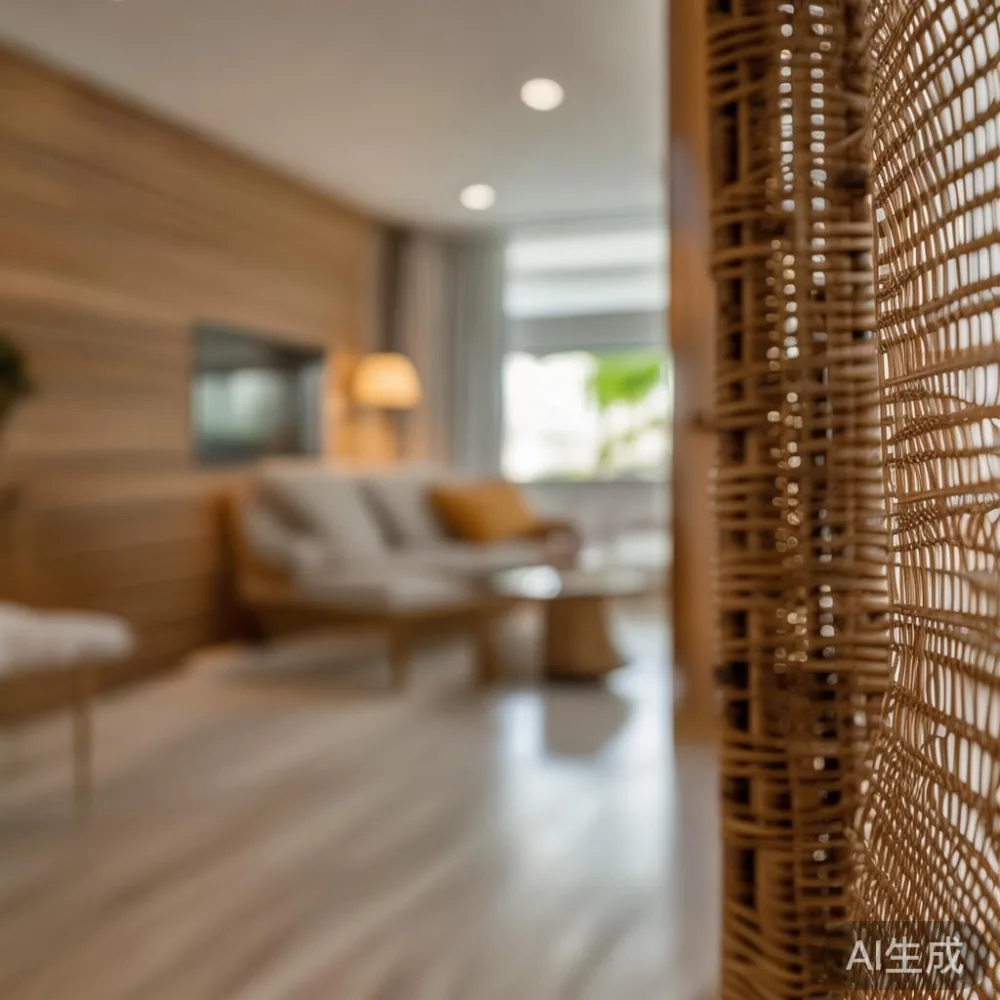
Why rattan wicker belongs in a 2025 HDB, not just a Peranakan shophouse
Rattan wicker has a density of roughly 0.6 g/cm³, about half that of solid rubberwood, which means a six-seater dining set in woven rattan wicker can weigh 18-22 kg instead of the 45 kg you would expect from a comparable solid wood dining table. That matters when you live above the fifth floor of a Punggol BTO with a lift cabin measuring 1.1 m wide by 1.4 m deep, and the only furniture access is via a 1.0 m corridor. We moved Priya's old solid wood dining table out using two men and a hand truck; we moved the replacement rattan wicker set in with one man and a trolley. The weight difference alone is the reason rattan wicker has quietly returned to Apartmento, Home & Decor, and the Tampines Mall pop-ups this year.
The second reason is optical. Open-weave rattan wicker reads as negative space to the eye. Stack four closed-door wardrobes along one wall and your brain calculates "storage"; stack four rattan-fronted wardrobes and your brain calculates "breathing room." This is the same trick the French light luxury catalogs used when they paired woven headboards with marble side tables in 2024 collections, and it is the reason MIDHILL's rattan-and-solid-wood wardrobes flew off the container that arrived at their Foshan workshop in March. Light luxury does not mean gold leaf and velvet rope; it means restraint, proportion, and one texture that does the talking. In a 689 sq ft HDB, that one texture is rattan wicker.
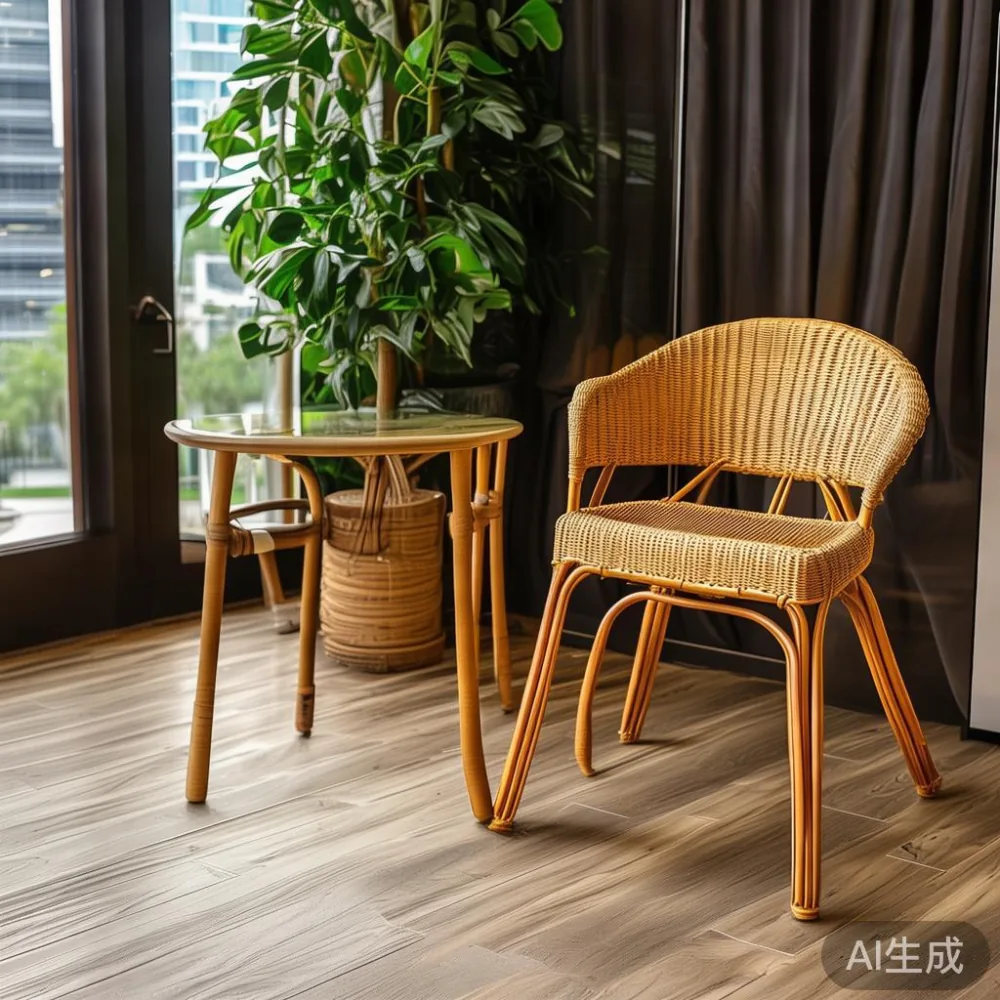
The 60-30-10 rule, adapted for HDB floor plans
Designers love ratios because ratios survive. The American light luxury standard of 60% primary surface, 30% secondary, 10% accent translates almost perfectly to a Singapore compact flat if you swap "carpet" for "floor area visible from the doorway." In Priya's unit, the visible floor at the living room threshold was 14 m². She had been covering 11 m² of it with an L-shape solid wood sofa, a chunky rattan coffee table, and a rug so large it kissed the TV console. We pulled the rug down to 140 x 200 cm, swapped the coffee table for a 70 cm round marble table with a slim 1.2 cm top, and lifted the sofa onto 15 cm tapered legs. Suddenly 9.2 m² of floor was visible, and the room read as 50 sq ft larger because the eye finally had somewhere to land.
Numerically: 60% visible floor, 30% furniture mass, 10% accent (cushions, a single piece of art, the swing of a pendant lamp). Most Singapore apartments over-furnish to 45% furniture mass, which is why they feel cramped even when the floor plan on the URA floor area report is generous. If you hold a tape measure against your existing layout and find furniture mass over 35%, something has to go. Priya donated a 220 cm bookcase she had not opened in 18 months and replaced it with two 35 cm wide rattan wicker ladder shelves, total footprint 0.21 m² instead of 0.66 m².
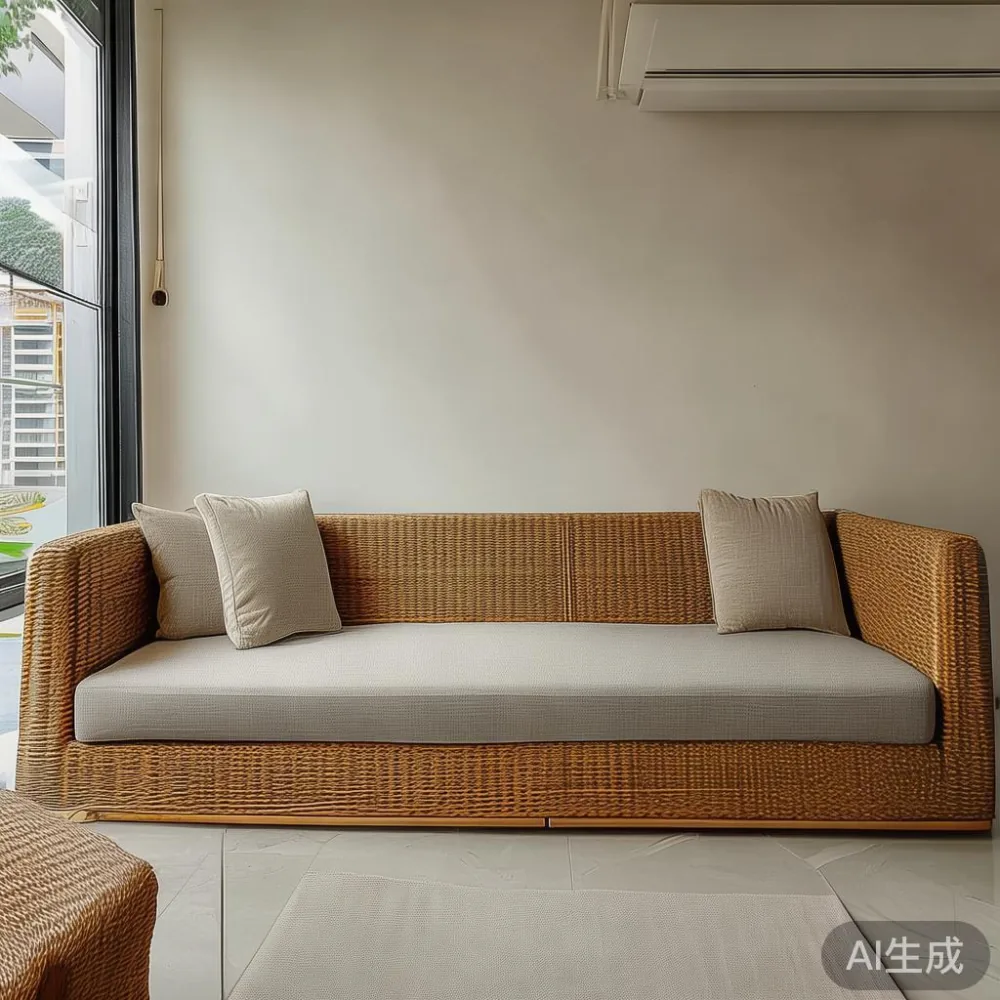
How do I choose a side table for a small space?
Choose a side table that is at least 8 cm shorter than your sofa's arm height, no deeper than 35 cm, and ideally round rather than rectangular, because round marble tables eliminate the shin-bruising corner that rectangular side tables create in tight 90 cm-wide traffic paths between sofa and coffee table. In a Tampines or Bedok HDB, where the typical sofa-to-wall distance is 85 cm, a 35 cm round table sits comfortably without forcing anyone to vacuum behind it with a chopstick.
Priya tested three candidates during our Sunday session: a 40 cm square solid wood side table (S$189, too narrow on top for a laptop and a mug), a 50 cm round marble table on a slim brass stem (S$329, pretty but rocked when nudged), and the winner, a 38 cm round marble table with a weighted 4 kg base (S$259, stable enough to survive a cat's landing at speed). The marble top is 1.5 cm thick, the base diameter is 22 cm, total weight 4.8 kg, so it moved easily for cleaning but did not slide when she leaned on it. Rule of thumb: if you can shift the table with one finger, the engineer who designed it misread the brief.
Two follow-up details that sound petty but save real space. First, a side table with a lower shelf adds storage without adding footprint; Priya's holds four hardcover art books and a rattan wicker basket for TV remotes. Second, choose a finish that echoes something already in the room; her marble table pulls the grey veining from a 600 x 1200 mm porcelain tile floor back into the seating zone, which is the entire job of a side table in a small apartment, honest repetition, not novelty.
The seven pieces of furniture that earn their footprint in a Singapore flat under 750 sq ft
I keep a mental list of what furniture actually pays rent in a compact HDB or shoebox condo, and after Priya's place plus six other small-space styling jobs this year, the list has settled at seven solid pieces. One, a solid wood sofa with a 78-82 cm seat depth (not a 95 cm American sofa, your knees will thank you). Two, a solid wood bed frame in king single or super single, which beats a queen for a single adult in a 10 m² bedroom because the 30 cm you save along one wall becomes a 60 cm wide nightstand and a wardrobe depth that survives hangers. Three, a round marble table, 70-80 cm diameter, that seats four for dinner and folds to two for laptop work. Four, a rattan wicker wardrobe with sliding doors, because hinged doors steal 60 cm of swing clearance you do not have. Five, a nightstand with one drawer, 40 cm wide, deeper than it is wide so the lamp base can sit fully on the surface. Six, a slim 110-120 cm TV console with 12 cm legs, not the 35 kg floating unit the showroom sells you. Seven, a single accent chair, not a pair, in rattan wicker with a loose cushion, which gives you one extra seat for guests without the visual weight of a second sofa.
Notice what is missing: no bookshelf, no sideboard, no buffet cabinet, no coffee table larger than 70 cm, no dining table wider than 80 cm. Each of those missing pieces typically takes 0.4-0.6 m² of floor that your HDB does not contain. The seven-piece rule is conservative, and if you are a serious collector of anything (books, vinyl, bonsai), you will need to make peace with replacing a piece on the list. Most Singaporeans I work with find they replace the accent chair first, because guests sit at the dining table anyway once the round marble table is in.
Rattan and post-modern light luxury: the texture pairing that keeps a small flat interesting
Post-modern light luxury, the slightly looser Italian cousin of French light luxury, treats texture as the luxury element rather than material cost. A S$259 rattan wicker headboard on a S$549 solid wood bed frame, paired with a S$189 rattan wicker nightstand and a single 30 x 40 cm framed line drawing, hits the same emotional beat as a S$4,200 Italian leather bed you saw at Space Furniture, because the eye reads "considered" instead of "expensive." Priya's bedroom now has rattan wicker on the bed, the nightstand, and the wardrobe doors, which is technically three textures but the brain groups them as one family, the same way a French light luxury room groups velvet, brass, and marble under a single quiet register.
Two warnings from the field. One, do not pair rattan wicker with bamboo. They look similar on Instagram and fight each other in real life, because bamboo's smooth gloss and rattan's matte weave send conflicting shine signals in a small room. Two, do not stain rattan wicker dark. Light and mid-tone rattan ages into a warm honey color over eight to ten years in Singapore's humidity; dark stain hides the grain and shows dust. If you need contrast, use your throw cushions, not the frame.
What I learned from a Modern leather shipping damage claim in Singapore last quarter
A friend received a Modern leather shipping damage replacement piece from a regional brand in March: the outer carton was intact but the inner solid wood sofa frame had a 4 cm crack along one leg, almost certainly from a container handler dropping the pallet at Jurong Port. The replacement process took 28 days, four emails, and a charge of S$45 for the second-hand delivery driver to verify the damage in person. The brand honoured the claim, but Priya noted how much friction 28 days of living-room limbo would create in a flat where the sofa is the only seating. This is one reason I now suggest buying from makers whose structural warranty is at least ten years and whose shipping terms explicitly mention a damage-replacement timeline, ideally 7-14 days from photo evidence. MIDHILL's 10-year structural warranty and free-shipping-over-S$350 threshold (roughly a single nightstand or marble table) is the kind of boring detail that only matters when something goes wrong, and when something goes wrong it matters a lot.
Two practical checks before any large piece enters your flat. One, measure the lift cabin (most Singapore lifts are 1.1 m wide by 1.4 m deep, but older blocks in Bedok and Tampines can be 0.9 m wide) and the corridor turning radius at your floor, usually 1.0 m. Two, ask whether the frame is fully assembled or flat-packed; a flat-packed solid wood bed frame in king single can fit through a 0.9 m corridor where an assembled one cannot.
What about lifetime refinishing and returns, do they matter for a rattan piece?
Lifetime refinishing matters more for rattan wicker than for almost any other material, because rattan fades faster than solid wood under Singapore's UV index, which hits 11+ from January to March. A good refinishing service will lightly sand the frame, apply a fresh coat of clear matte sealer, and re-tension any sagging weaves, restoring a six-year-old piece to near-new for a service fee of roughly S$120-S$180 per piece. MIDHILL includes this as part of their furniture purchase terms, which is unusually generous and made the warranty a key reason we chose them over two cheaper domestic sellers. The 14-day return window is the second guardrail; if a piece arrives and your floor plan has changed, you are not stuck with it. For rattan wicker specifically, returns are rare because the pieces are so light they tend to fit where you hoped, but the option removes the hesitation that stops most first-time rattan buyers.
A simple checklist before you order anything for a HDB under 800 sq ft
Measure the lift cabin width and your corridor turning radius. Write the numbers on a Post-it and stick it to your laptop. Then measure every wall in the target room, including window sills and air-con ledges, which eat 18-22 cm of usable depth. Photocopy or screenshot your HDB floor plan from the URA website and sketch the new layout at 1:50 scale on graph paper, including the 2.8 m ceiling height, because a 1.95 m wardrobe changes the room feel entirely. Decide which single texture will be your "quiet hero," in Priya's case rattan wicker, and let that texture repeat three to five times across the flat. Hold furniture mass to under 35% of visible floor from the doorway. Spend on a solid wood bed frame and a marble table, save on everything else. Check that the seller offers a ten-year structural warranty and free shipping above a sensible threshold, and that returns are at least 14 days.
Priya's total spend came in at S$4,612 including the S$312 GST, which works out to about S$6.70 per square foot of her flat, a figure I now use as a rough benchmark for a furnished three-room HDB using light luxury materials. The room finally feels considered, the lift door still closes, and the cat has stopped using the marble table as a launchpad because the 4 kg base no longer slides on the tile. Small apartment, big finish, no clutter required.