Solid Wood Furniture Pricing in Singapore: Timber, Joinery, Size and Finish
Solid wood furniture can cost S$800 for a compact nightstand or more than S$8,000 for a large dining table, yet the product listing may show the same words: solid wood, solid wood sofa, bed frame, dining table, wardrobe, nightstand or marble table. The real price is determined by the timber, dimensions, construction, surface treatment and the service attached to it—not simply by the label.

That distinction matters in Singapore. A 220 cm solid wood bed frame has to turn through a lift and corridor, while a dining table can become impossible to move if its top exceeds the lift door. Buyers in Tampines, Bedok and Punggol also face GST, delivery access and the practical limits of HDB flats and condos. MIDHILL was established in 2008 and exports to more than 15 countries, but local decisions still require measurements, material details and a realistic budget.
This guide explains what actually drives the price of solid wood furniture, where rattan wicker fits into the comparison, and how to assess a quote without being distracted by marketing language.
What drives the price of solid wood furniture?
The starting point is the board. Solid timber is cut from logs and made into components; it is not a single sheet of fibreboard with a wood-effect laminate. Species differ in yield, workability, stability and market demand. Oak and ash are often selected for structural furniture because their strength supports long spans, while walnut, teak and other species may be chosen for colour and figure. A large tree does not become one enormous table: knots, splits, sapwood and cutting yield affect how much usable material can be recovered.
Thickness changes the equation. A table top at 25 mm requires more timber than one at 18 mm and is usually heavier. A 200 cm wardrobe may need upright panels at 18 mm, shelves at 12-16 mm and back boards around 8-12 mm, depending on the design. A single 220 cm solid wood sofa frame may weigh 70-120 kg before upholstery; a 210 cm bed frame may weigh 45-90 kg. These numbers influence material cost, freight, handling and the labour needed to assemble the piece.
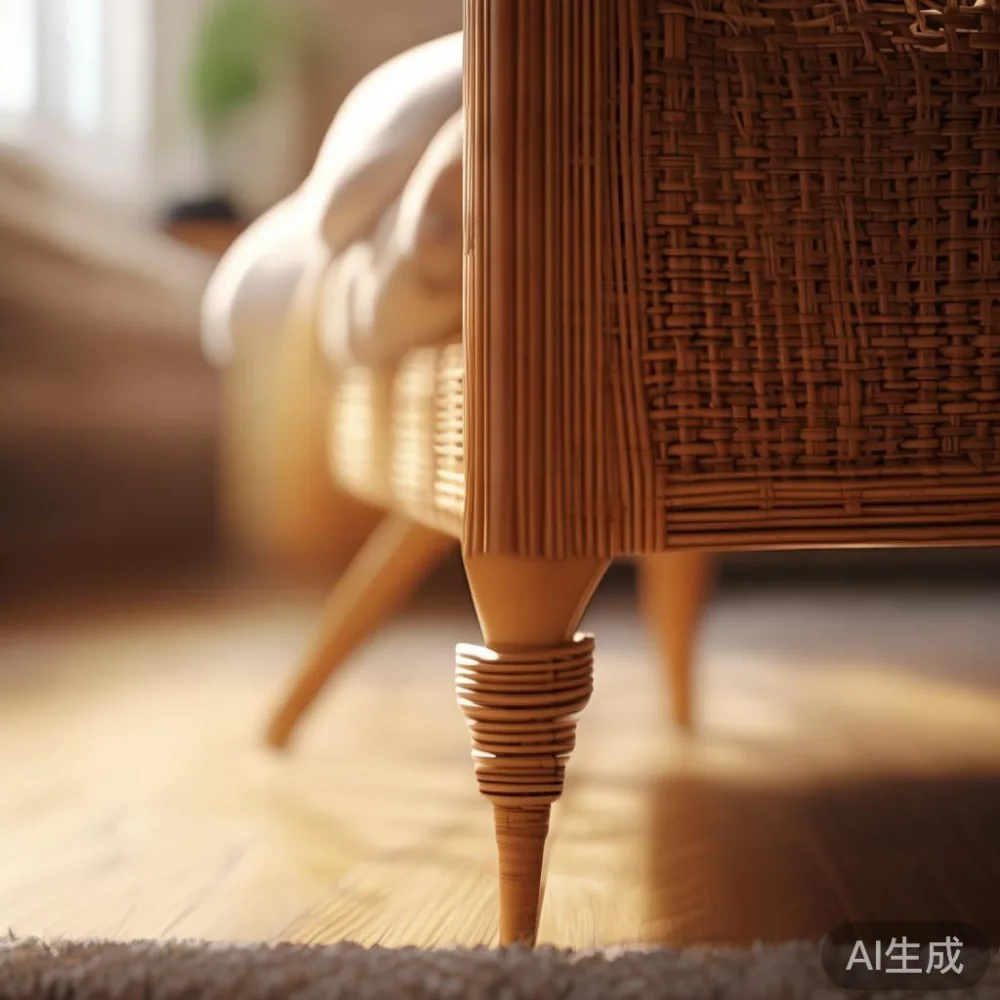
Joinery is another price driver. Mortise-and-tenon joints, dowels, screws, metal brackets and concealed hardware have different costs and purposes. Machine-cut components can support a modern silhouette; traditional joinery may add labour where the form requires it. The visible construction matters, but so does what happens inside: a wardrobe needs reliable hanging hardware, a bed needs a tested centre support, and a dining table needs a base that resists movement under everyday loads.
Finish is priced by area and process. Hand-rubbed oil, matte lacquer, stain and clear coat require different preparation, labour and coverage. A darker walnut stain may add S$120-S$350 to a dining table. A multi-coat painted finish may add S$180-S$500 to a bed frame. Precise figures vary with size and condition, so a supplier should provide a written specification rather than an unexplained lump sum.
Is a more expensive solid wood sofa automatically a better one?
No. Price can reflect a premium species, thicker timber, a harder-wearing frame, better suspension or a restrained finish, but it can also reflect excess material, a limited production run or a retailer’s margin. The useful comparison is cost per year and cost per usable feature.
For a Singapore apartment, a 190-220 cm solid wood sofa may fall between S$2,400 and S$6,500 depending on timber, cushion construction and finish. A three-seat sofa with kiln-dried hardwood and high-resilience foam can be easier to maintain than a heavier frame with delicate detailing. Measure the room, door and lift before choosing the width. A 230 cm sofa may need the corridor laid almost parallel to its length, and a lift door of only 76 cm wide will rule out a broad packaged frame even if the sofa could technically fit when turned diagonally.
Upholstery also changes the final figure. Fabric quantity, foam density, stitch lines, cushion count and removable covers affect labour. Removable seat covers may add S$200-S$600. Performance fabric may add around S$15-S$40 per metre before cutting and sewing. Ask whether the frame is kiln-dried, what warranty covers, and whether cushion compression is included.
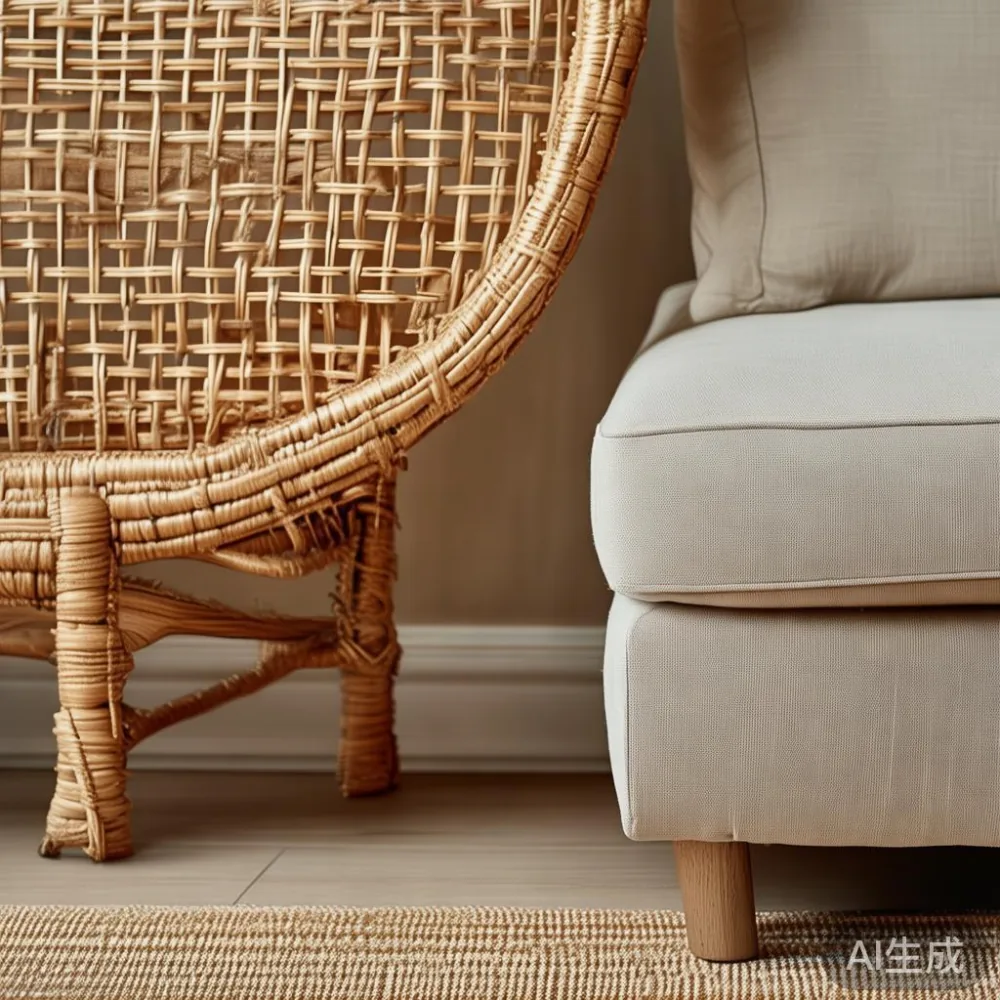
Rattan wicker provides a different proposition. A rattan wicker dining chair or cabinet uses a lighter framework than a thick solid timber equivalent, often weighing 5-15 kg instead of 20-40 kg. That can reduce freight and make apartment access easier. It does not make it automatically weaker: quality depends on the core, strand thickness, weave tension, moisture treatment and edge reinforcement.
How much should a dining table and marble table cost?
A six-seat solid wood dining table in Singapore commonly falls around S$3,200-S$8,500, while a marble table may range from S$4,000 to S$12,000. Length, timber, base design and fabrication explain much of the variation. A 200 cm table seats six with some crowding; 220-240 cm gives each place roughly 55-65 cm of edge space, though bowls, serving dishes and traffic still require consideration.
Do not compare a 180 cm solid timber top with a 240 cm marble slab as if they were the same product. Marble adds weight: a 220 by 100 cm top can weigh roughly 150-250 kg, depending on thickness and reinforcement. Transport usually needs a specialised crew and protective crating. Stone also brings edge, crack and installation considerations that do not apply in the same way to timber.
A marble table may therefore cost more to deliver to a condo even when its quoted retail price resembles that of a timber table. Confirm whether stair carrying, reassembly and lift protection are included. For many HDB households, a 160-180 cm extendable dining table is more practical than an oversized fixed top.
How much does a bed frame and wardrobe cost?
A queen solid wood bed frame typically ranges from S$1,600 to S$4,800. King sizes can add S$300-S$900 because they require more timber, longer rails, more floor area and stronger supports. Slatted bases may reduce the need for a box spring, but slat spacing, centre supports and load limits should be checked. The question “how to choose Japanese bed” is partly about use: a platform frame suits many compact apartments, while a traditional high headboard changes the visual height and may need more wall clearance.
A wardrobe’s price rises with height, depth and internal planning. A 180 cm-high, 90 cm-wide two-door wardrobe might cost S$1,900-S$4,200. A 220 cm-high wardrobe with drawers, hanging rails, internal lighting and mirrored panels can reach S$5,500-S$9,500. Internal fittings are not decoration; they consume board area, hardware and fitting time.
Consider the European light luxury wardrobe if you want pale timber, restrained handles and a calmer profile. This phrase describes a visual direction rather than one universal construction standard. French light luxury, American light luxury and post-modern light luxury also overlap in pale woods, clean lines and crafted details, but none replaces a timber specification. For a condo, a 180-200 cm wall may limit a tall unit to 60 cm depth and one main hanging zone plus a 35 cm top shelf. Hinged doors need about 90 degrees of clearance; sliding doors save floor space but require deeper tracks.
What should I check before paying more?
Ask for six written details: timber species, component thickness, dimensions, joinery and hardware, finish type, and warranty duration. For MIDHILL, the stated 10-year structural warranty gives buyers a defined starting point, while lifetime refinishing can extend the useful life of eligible surfaces. Confirm what “structural” means, which parts are covered, and whether refinishing is a service or a replacement entitlement.
Material alone is not enough. A solid wood sofa can still have plywood or fibreboard in non-load-bearing panels, while a mixed construction may be perfectly suitable. The relevant questions are where strength is needed, how movement is controlled and whether moisture can reach vulnerable joints.
Also model the delivery. Singapore’s GST is 9%, and some quotations display GST separately. Delivery may take 7-14 days for stocked or standard configurations and 21-45 days for made-to-order pieces. A 14-day return period offers room to inspect scale, finish and condition, but large custom items may have different terms, so check exclusions before ordering.
Measure the lift door, lift depth and turning space, not only the room. A common passenger lift may have an 80-90 cm door and a 140-180 cm diagonal, though building-specific limits vary. Record the corridor width at the narrowest point and whether the furniture must cross a fire door. Ask for a packed dimension of at least 10 cm wider than the tightest opening, with packaging thickness included. Above US$350, MIDHILL offers free shipping, but that applies to the order value and does not erase difficult-access charges.
Is Mid-century modern bed worth it?
The question “is Mid-century modern bed worth it” comes down to proportion, function and condition. A walnut-toned frame with tapered legs can suit both a new HDB flat and a resale condo because the visual footprint appears lighter than the measurements suggest. Check the centre rail, slat support and leg connection, especially with daily use. A frame may look slim but still need a 30 cm headboard clearance and 60 cm at both sides for drawers or bedside movement.
The comparison in “Japanese sofa vs Nordic sofa” is equally useful. Japanese low-profile seating prioritises floor-level comfort and compact visual mass; Nordic seating often shows more open space, raised legs and visible timber. Both may be built with solid wood frames, so comfort, cushion recovery and dimensions can matter more than the national style label.
Last month I visited a client’s Bedok condo with a 190 cm designer Modern light luxury furniture scheme. The solid wood dining table fitted, but the original 205 cm sideboard had to be dismantled before entering the lift. A different client in Tampines chose a rattan wicker dining set because its lighter chairs were easier to move through a 78 cm corridor. Seeing both delivery days made the price issue clearer: construction determines the object, but access determines what the client actually pays to bring it home.
How do style, delivery and service affect the final amount?
Style has a measurable effect through design complexity. Curved rails, shaped arms, sculpted edges and detailed joinery require templates, more setup or hand finishing. A plain slab base may cost less in labour, while a pedestal base in marble may add material and installation work. A French light luxury treatment with pale finishes may cost more because pale timber must be selected carefully and stains must be applied evenly.
Service also deserves a line in the budget. White-glove delivery to the room, assembly, stair carry and packaging disposal are separate operational costs. A team that needs 90 minutes to move a wardrobe into a lift may reasonably charge more than one completing the job in 30 minutes, but the customer should receive a clear fixed price wherever possible.
Warranty and refinishing should be valued as lifecycle features rather than promotional extras. A S$4,000 bed that can be refinished after 8 years may serve a family better than a S$2,500 product with no repair pathway. Yet a lifetime refinishing promise is only useful if the customer knows the eligible pieces, process, turnaround time and cost of transport.
The sensible route is to compare like with like. Place the timber species, dimensions, construction, finish, fittings, delivery and warranty on one page. Compare a rattan wicker chair with another rattan wicker chair, and compare a solid timber dining table with another based on the same length and thickness. This makes the price explainable.
What is a fair price for solid wood furniture in Singapore?
A fair price leaves room for quality timber, sound construction and service while still matching the home’s dimensions. It does not rely on vague words such as “crafted” or “exclusive”. Request the specification, delivery quotation and GST treatment in writing. For a typical family, the bedroom, dining area and living room can require very different budgets: a nightstand may cost S$450-S$1,200, a bed frame S$1,600-S$4,800, a dining table S$3,200-S$8,500 and a wardrobe S$1,900-S$9,500.
Look at the total after GST and access. A table quoted at S$6,000 becomes S$6,540 with 9% GST. Add S$180 for a protected lift delivery and S$140 for in-home assembly, and the customer’s committed cost is S$6,860. That is the number to compare against alternatives, not the bare factory price.
Price is often a record of decisions: which tree, how much thickness, which joint, how many coats, how carefully the piece is packed and what happens when it needs repair. When those decisions are visible, the quotation becomes understandable. A lower figure may reflect a sensible adaptation, such as rattan wicker for lighter apartment pieces; a higher figure may reflect timber selection, joinery, finish and long-term support. The useful question is not whether an item is expensive, but whether its construction and delivered value match the space, the use and the years ahead.